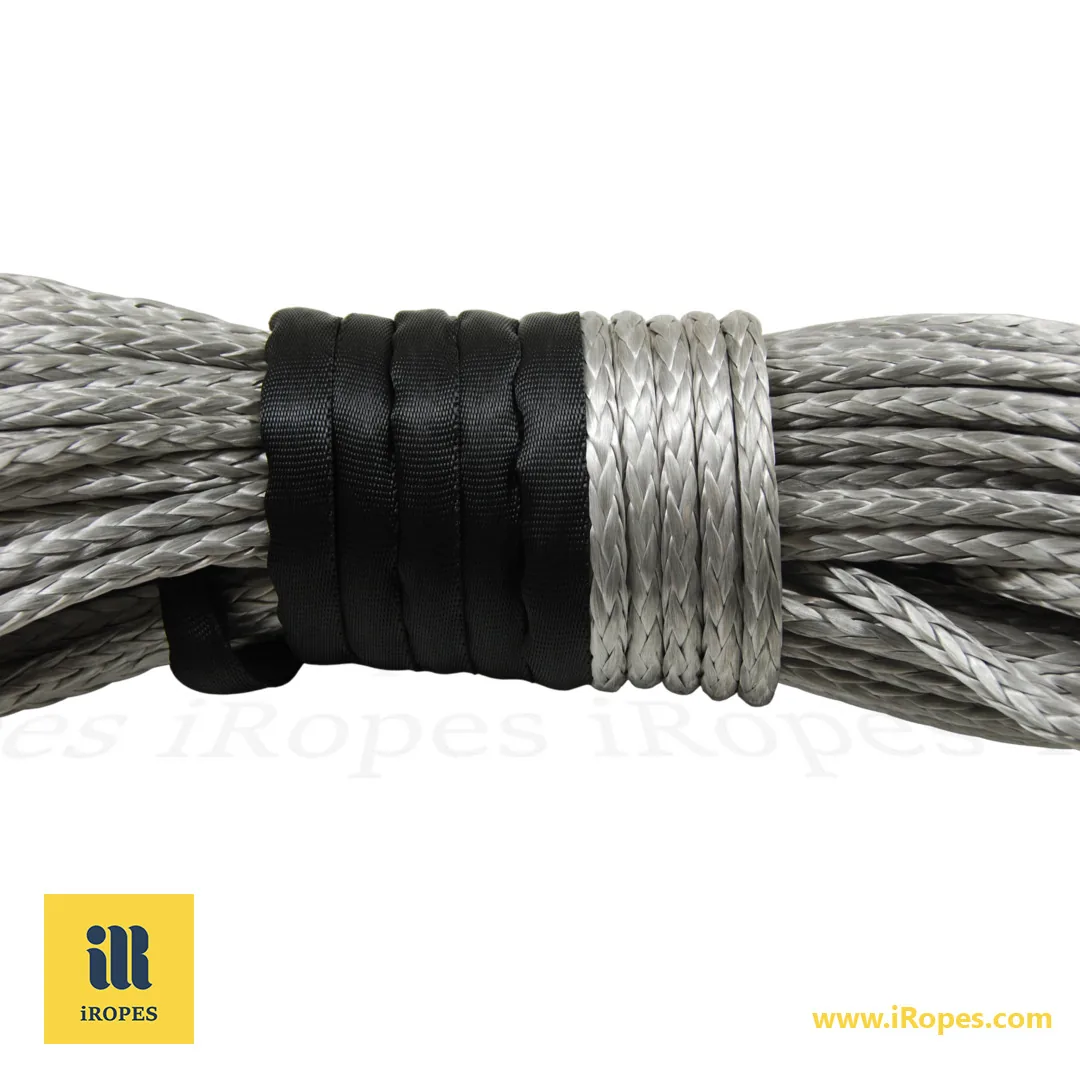
A 1/4‑in UHMWPE (Spectra/Dyneema) shock cord typically delivers up to 450 lb tensile strength with about 100–125% elongation — manufactured under ISO 9001 and ready for marine, racing, or industrial use.
5‑minute read: Your rope‑spec cheat sheet
- ✓ Choose the right diameter and length using a 4× safety factor to match your target load without over‑specifying.
- ✓ Calculate safe working loads with a 4× safety factor in seconds, avoiding costly failures.
- ✓ Compare Spectra, Dyneema, Nylon and Polyester side‑by‑side, spotting the strength‑to‑weight advantage of UHMWPE.
- ✓ Unlock iRopes’ OEM/ODM customisation (colour, reflective strips, terminations) to align performance and branding.
Selecting rope should never be guesswork. A simple three‑times‑length rule and a 4× safety factor turn rough estimates into predictable, repeatable results. In the sections ahead, you’ll find the exact spectra rope specifications, bungee cord specifications, shock cord specifications, calculations, and custom options to make sizing straightforward.
Spectra Rope Specifications
Building on the idea that material properties drive the size options you’ll see later, let’s explore the exact spectra rope specifications that make this fibre a favourite for marine, racing and industrial safety applications. iRopes manufactures ropes in UHMWPE (Spectra/Dyneema), Technora™, Kevlar™ and Vectran™, as well as nylon and polyester, so understanding the fibre, the construction and the numbers behind the strength will help you pick the right rope without guessing.

Material Performance
Why each fibre matters
UHMWPE
Provides up to 15× the strength of steel by weight, resists water absorption and floats.
Technora™
Offers superior heat resistance and maintains tensile strength at elevated temperatures.
Kevlar™
Delivers excellent cut resistance and dimensional stability under impact.
Construction Choices
Tailoring rope to the job
Core Types
Solid rubber, multi‑strand latex or high‑modulus fibre cores dictate stretch and load rating.
Sheath Materials
Polyester, nylon or cotton weaves protect against abrasion, UV exposure and marine salt.
Coatings
UV‑blocking, waterproof or glow‑in‑the‑dark finishes extend service life in harsh environments.
- Tensile strength - Ranges from ≈100 lb for a 1/8″ diameter to ≈450 lb for a 1/4″ UHMWPE‑core shock cord.
- Elongation - Typical stretch of 100–125% before break, providing energy absorption in dynamic loads.
- Strength‑to‑weight - UHMWPE offers very high strength at low mass and floats, whereas nylon and polyester are heavier for the same strength.
iRopes manufactures under ISO 9001 quality management. On request, we build to your required standards for specific programmes, including applicable MIL‑SPEC or EN requirements. With that foundation, the next part of the guide shows how these material traits translate into the standard diameters and length ranges you’ll encounter in bungee cord specifications.
Bungee Cord Specifications
Building on the material traits discussed earlier, the next step is to see how those properties translate into the actual dimensions you’ll order. In everyday language the term bungee cord is used, but technically the same product is listed as shock cord; both describe an elastic core surrounded by a woven sheath, the distinction being the industry that prefers one name over the other.
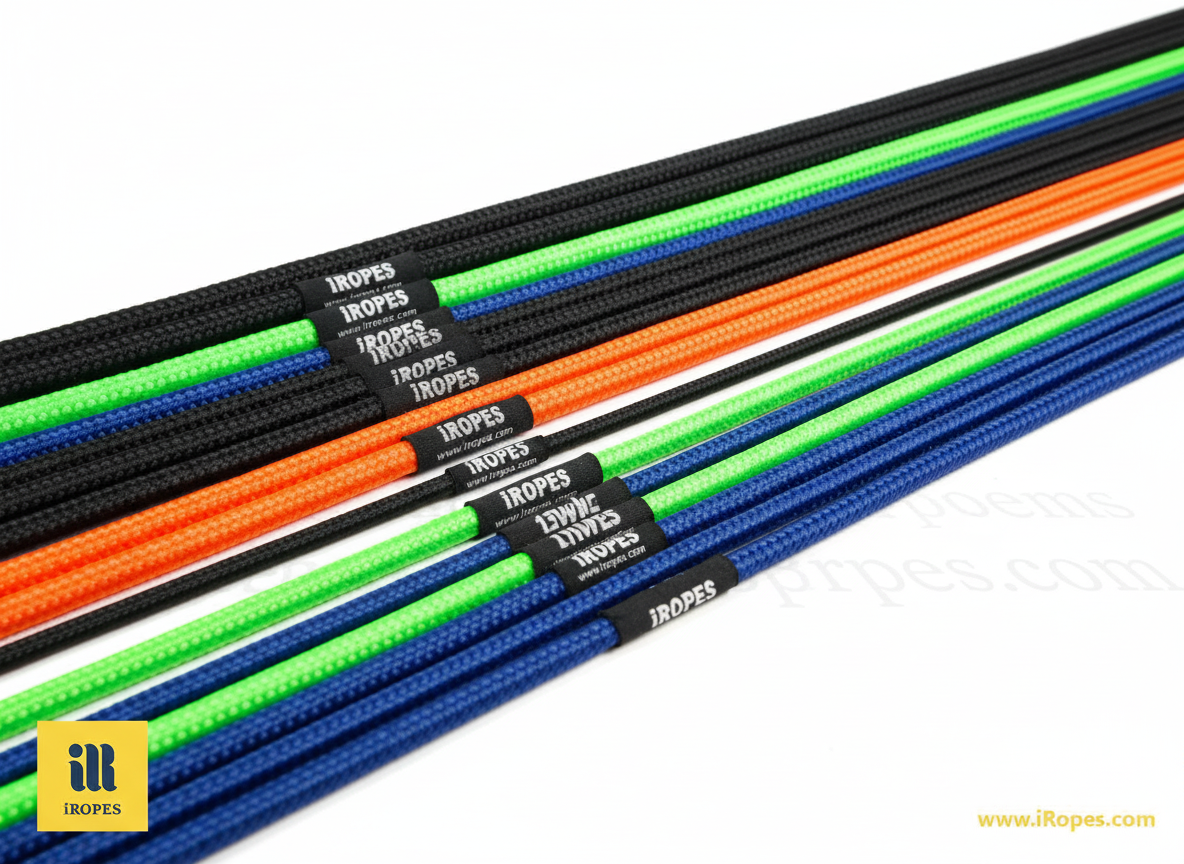
iRopes offers a predictable catalogue of sizes. Diameters typically start at 1/8 inch (2 mm) and step up to 1/2 inch (12 mm). Lengths are available in 10 ft, 25 ft, 50 ft and 100 ft increments, with custom yard‑by‑yard cuts on request.
- 1/8‑in — ≈100 lb tensile, ≈100–115% stretch
- 3/16‑in — ≈250–725 lb tensile (construction dependent), ≈110–120% stretch
- 1/4‑in — ≈250 lb (polyester core) to ≈450 lb (UHMWPE core), ≈100–125% stretch
To calculate a safe load, apply a safety factor of four for dynamic uses. Multiply the tensile rating by 0.25: a 1/4‑inch cord rated at 450 lb yields a recommended working load of about 112 lb. This quick formula keeps rigs, harnesses and cargo nets well within their limits.
Typical marine applications include boat‑deck tie‑downs, sail‑control tensioners and gear lashings. In racing sports, the cords secure pit‑lane equipment, tool kits and cargo nets. Industrial settings use them for tool lanyards, machine‑guard containment and equipment lashings.
Consistent stretch and UV‑stable sheaths are essential in marine environments — specify UV‑resistant polyester or UHMWPE covers for long service life.
When you later move on to shock‑cord specifications, remember the same safety‑factor approach applies, and a handy rule of thumb is to add about 20% extra length while staying below 80% of the cord’s total stretch capacity.
Shock Cord Specifications
Picking up from the safety‑factor tip in the bungee‑cord section, shock cords follow the same principle — add roughly 20% extra length and never exceed 80% of the cord’s total stretch. This ensures a reliable margin whether you’re securing a sail‑flap or a rocketry launch rig.

What is the difference between shock cord and bungee cord? Both describe an elastic core wrapped in a woven sheath; “shock cord” is the term favoured by engineers and industrial users, while “bungee cord” is the everyday label you’ll hear on consumer‑grade kits.
To size a cord correctly, start with the object’s total length, multiply by three (the classic rocketry rule), then add 20% for slack. Finally, verify that the required stretch stays under 80% of the cord’s rated elongation — this keeps the system well within its safe working range.
Typical tensile‑strength figures illustrate why material choice matters. A 1/4‑inch (6 mm) shock cord with a polyester core holds about 250 lb (113 kg), whereas the same diameter built on UHMWPE (Spectra/Dyneema) can resist up to 450 lb (204 kg). Both variants elongate between 100% and 125% before breaking.
Quick‑Calc
Working load = (Tensile rating ÷ Safety factor).
For a 1/4‑in UHMWPE cord rated at 450 lb, use a factor of 4 → 112 lb safe load.
iRopes also offers a suite of customisation options so the cord fits your brand and safety needs. For advanced splicing techniques, check out our expert rope splicing guide.
- Colour & pattern – choose from a full palette, neon shades, or custom graphics.
- Reflective or glow‑in‑the‑dark strands – add high‑visibility for night‑time or low‑light work.
- Termination types – loops, cord‑locks, thimbles, or eye‑splices, all available as OEM/ODM solutions.
With these specifications in hand, you can confidently select the right shock cord for marine‑grade tie‑downs, racing‑team kit, or industrial equipment lashings, and then move on to the FAQ matrix that clears up the final doubts.
Frequently Asked Questions & Comparison
Now that you’ve seen the core specs for shock cords, let’s clear up the most common doubts and line up the material choices side by side. The answers below are concise enough to appear in a Google snippet, and the comparison grid helps you spot the right cord at a glance.
For dynamic loads, apply a safety factor of four — the safe working load equals the cord’s tensile rating divided by four.
What is the difference between shock cord and bungee cord? Both consist of an elastic core wrapped in a woven sheath. Engineers tend to label the product “shock cord” on technical drawings, while retailers and hobbyists usually call it “bungee cord.” The performance is identical; only the terminology changes.
How do I determine the correct shock‑cord length? Measure the distance between the two anchor points, multiply that span by three, then add roughly 20% extra for slack. Finally, check that the required extension stays under 80% of the cord’s total elongation — that keeps the system comfortably within its safe range.
What is the tensile strength of a 1/4‑inch shock cord? A 1/4‑inch (6 mm) shock cord typically has a tensile strength of 250 lb (≈113 kg) for polyester cores, and up to 450 lb (≈204 kg) for UHMWPE (Spectra/Dyneema) cores.
Which diameter should I pick for a 200‑lb load? Use a 4× safety factor for dynamic loads, so target ≥800 lb tensile. Choose 5/16‑in UHMWPE (≈1500 lb) or run multiple cords in parallel to achieve the required capacity.
What standards apply to marine‑grade shock cords? Specify UV‑resistant sheaths (polyester or UHMWPE) and manufacturing under ISO 9001. If your contract calls for MIL‑SPEC or EN requirements, iRopes can build to those standards on request. Learn more about our military‑grade shock cord options.
Can I customise colour or add reflective strips? Yes. iRopes offers a full colour palette, neon options, and optional high‑visibility reflective or glow‑in‑the‑dark yarns, plus a range of terminations such as loops, cord‑locks or thimbles.
Spectra & Dyneema
High‑performance options
Strength
Delivers far higher load capacity than standard nylon, suitable for heavy‑duty tasks.
Weight
Roughly one‑third the mass of comparable nylon cords, ideal when every gram counts.
Buoyancy
Floats on water, preventing loss in marine applications.
Nylon & Polyester
Standard‑grade choices
Strength
Provides moderate load capacity, fitting most hobby‑level projects.
Weight
Heavier than UHMWPE, adding noticeable load to the system.
Buoyancy
Sinks, so extra flotation devices may be required for offshore use.

Ready for a personalised rope solution?
By now you understand how precise spectra rope specifications, bungee cord specifications and shock cord specifications translate into safe, high‑performance applications — from marine tie‑downs to racing gear. Discover why UHMWPE ropes surpass wire rope for hoist applications. With 15 years of experience in China and a catalogue of 2,348 cordages, iRopes can tailor material (UHMWPE, Technora™, Kevlar™, Vectran™, polyamide, polyester), diameter, colour and termination to match your exact load‑capacity and branding needs. Every order is produced under ISO 9001, with OEM/ODM services, IP protection, and build‑to‑standard options (including MIL‑SPEC if specified).
For a customised quote or technical guidance, use the enquiry form above and our rope specialists will help you select the perfect solution for your project.