Upgrade to iRopes’ synthetic winch line and maintain over 97% of tensile strength—even with glow-in-the-dark fibres—while saving up to 84% in weight versus steel.
≈4-minute read – What you’ll gain
- ✓ Up to 15 × higher strength-to-weight ratio than steel, allowing longer lines without extra load.
- ✓ 84% weight reduction lowers a vehicle’s centre of gravity and improves handling.
- ✓ Glow-in-the-dark construction retains over 97% tensile strength, boosting night-time safety.
- ✓ ISO 9001-backed precision manufacturing guarantees ±2% dimensional tolerance and on-time global delivery.
Most recovery crews still haul steel cables, believing they’re the only heavy-duty option. Yet, they often shackle performance with needless weight and hazardous snap-back. Imagine swapping that bulk for a rope that’s 84% lighter, glows in the dark, and still delivers over 97% of its original strength. The result? Faster, safer pulls every time. In the sections that follow, you’ll discover exactly how iRopes’ custom winch lines make that switch effortless and profitable.
Understanding the Winch Line: Evolution and Benefits
A winch line is the flexible cable that transfers pulling force from a winch drum to the load you’re trying to move. Its purpose spans various applications, from off-road vehicle recovery and marine anchoring to heavy-industry lifting, acting as the crucial link that makes every pull possible.

The industry’s shift from steel cable to synthetic winch line was driven by three practical concerns. Steel is heavy, prone to rust, and stores a dangerous amount of kinetic energy that can result in a violent snap-back if the cable fails. By contrast, a synthetic line is dramatically lighter, floats if it lands in water, and releases significantly less energy on breakage. This makes the entire operation much safer for both operators and equipment.
For a line winch, this weight reduction means the vehicle’s centre of gravity remains lower, improving handling on steep terrain. It also allows for carrying longer lengths without sacrificing payload, a significant benefit for recovery crews working far from a tow-point.
- Strength-to-weight ratio – Synthetic fibres deliver up to 15 times the strength of steel per kilogram, meaning you can lift more while transporting less.
- Safety advantage – Reduced snap-back energy and inherent buoyancy lower the risk of injury and simplify water recoveries.
- Load capacity – Modern winch line rope can achieve breaking strengths of up to 35,000 lb for a ½-inch diameter, providing ample margin for most off-road and industrial tasks.
iRopes has further advanced this evolution with a single-strand parallel-wound design that incorporates glow-in-the-dark fibres. Even with the luminescent coating, the rope retains over 97% of its original tensile strength, ensuring you gain visibility without compromising performance. This breakthrough is particularly useful for night-time recoveries, where quickly spotting the winch line can prevent costly delays.
Now that you understand the core benefits and the technical leap from steel to synthetic, the next logical step is to explore how iRopes’ customisation options can tailor a winch line exactly to your line winch's unique demands.
Optimising Line Winch Performance with Synthetic Technology
Having seen how iRopes’ single-strand parallel-wound design maintains over 97% strength, even with glow-in-the-dark fibres, the next step is to understand how this technology translates into real-world performance for a line winch.
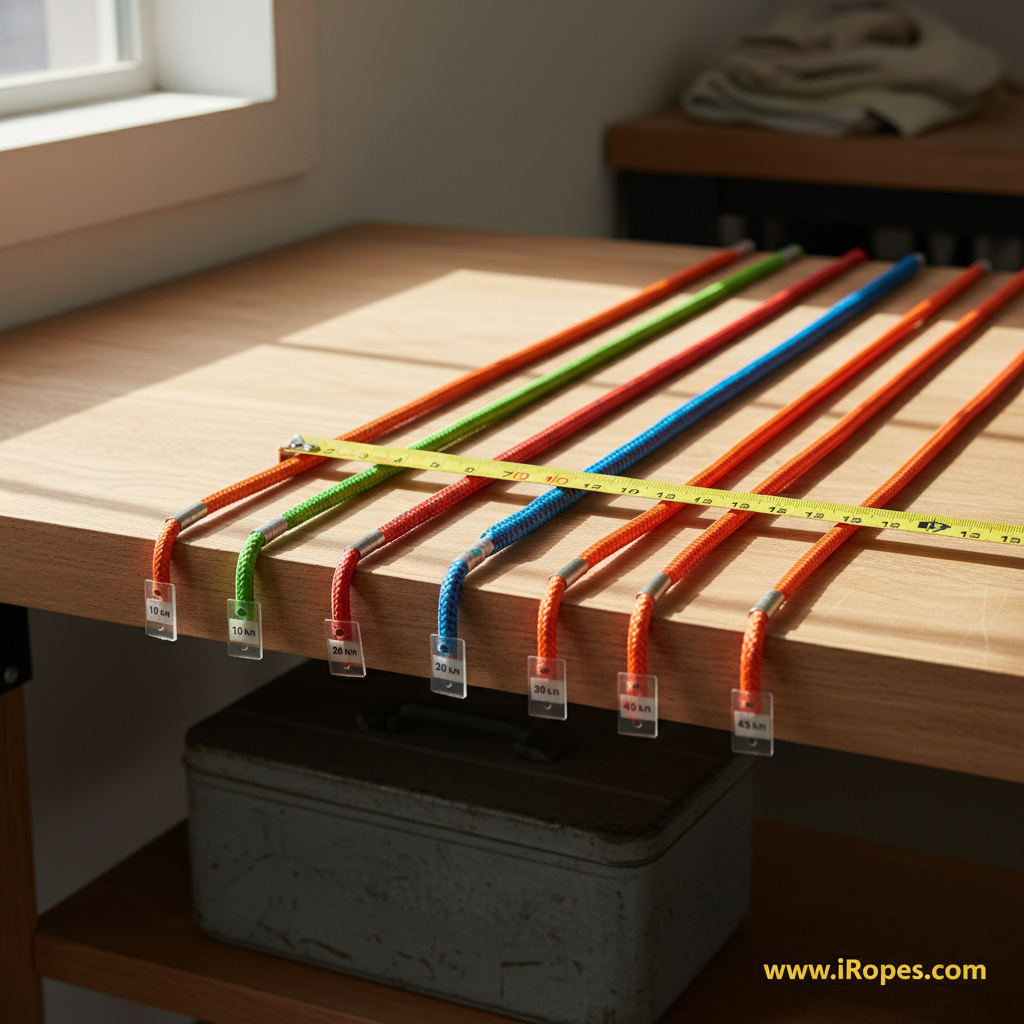
When you compare a 5/16-inch synthetic winch line rope to its steel counterpart, the minimum breaking strength falls between 12,000 lb and 14,000 lb. This is enough to tackle most mid-size recovery jobs while remaining under half the weight of an equivalent steel cable. A 3/8-inch option extends the limit to roughly 19,000 lb to 22,000 lb, providing a comfortable safety margin for heavy-duty trucks. Because these fibres have a low elongation rate (about 3-5%), the line holds its pull tighter, ensuring smoother operation and less chance of sudden give-away under load.
Beyond raw strength, synthetic winch lines excel in durability. Ultraviolet-stable coatings protect the fibres from sun-induced degradation, ensuring a rope that spends weeks on a desert trail won’t lose its core performance. Abrasion-resistant jackets guard against sharp edges and rough drum surfaces, significantly extending service life well beyond what a plain steel cable can achieve. These traits make a synthetic rope a low-maintenance choice for line winch setups operating in harsh environments.
- Diameter & breaking strength – Choose a size that meets your winch’s working load limit.
- Material grade – UHMPE (Dyneema) offers the highest tensile strength per kilogram.
- Construction type – Parallel-wound, braided, or twisted cores affect flexibility and wear resistance.
Even the most robust rope benefits from the right accessories, as detailed in our winch cable clamp guide. Thimbles protect eye splices, hardened-steel hooks provide a secure attachment point, and low-friction fairleads ensure the line moves smoothly across the drum. Pairing these components with a high-grade synthetic winch line ensures the entire system works in harmony, reducing wear and maximising safety.
Choosing a synthetic rope reduces snap-back energy and resists UV degradation, extending service life while keeping operators safer.
With the performance figures, durability factors, and accessory checklist in mind, you're ready to specify a winch line that not only outperforms steel but also integrates seamlessly into your line winch system. This sets the stage for the next step: tailoring a custom rope that fits your exact application.
Customisation Options for Winch Line Rope Solutions
With the advantages of synthetic technology firmly established, the next logical step is to shape a rope that fits your exact recovery or lifting scenario. iRopes treats each specification as a design variable, allowing you to fine‑tune performance without compromising the over 97% strength benchmark.
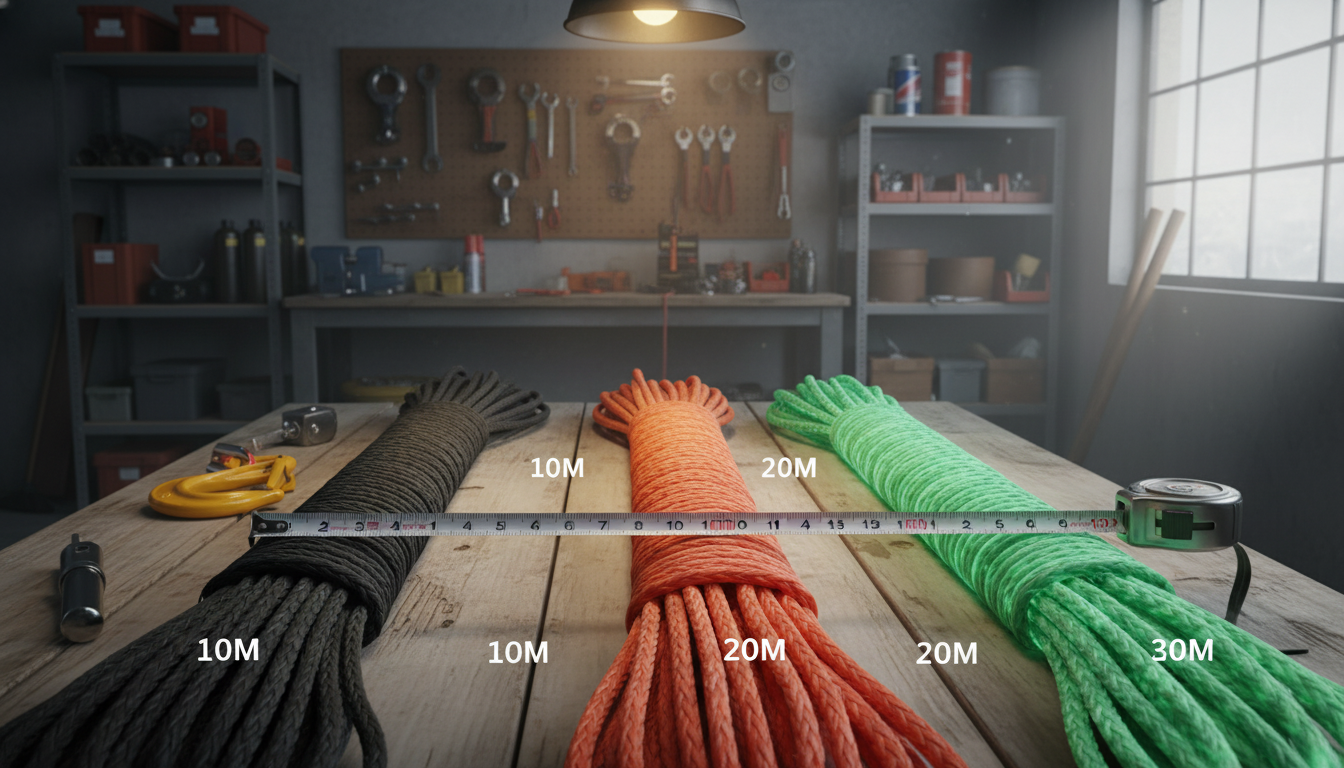
The material palette starts with premium UHMPE (Dyneema) fibres for maximum tensile strength, but iRopes can also blend high-modulus polyesters when extra abrasion resistance is needed. Choosing the correct diameter and length hinges on your winch’s working load limit; for instance, a 5/16-inch line typically delivers around 12,000 lb breaking strength, while a 3/8-inch option extends towards 20,000 lb, providing a comfortable safety margin for heavy-duty trucks or industrial hoists.
Colour isn’t merely aesthetic. High-visibility orange or safety yellow improves line tracking on dusty trails, while reflective strips or our proprietary glow-in-the-dark fibre aid night-time recoveries. This luminescent additive is woven into the single-strand parallel-wound core, preserving over 97% of the rope’s original strength.
OEM / ODM Services
iRopes can imprint your logo on the rope sheath, supply custom-branded packaging (such as bags, colour boxes, or cartons), and protect your proprietary design with full IP safeguards. Wholesale partners benefit from a streamlined order flow that includes sample approval, batch tracking, and direct pallet shipping to any global destination.
Consider the case of a European off-road equipment distributor who needed a 50-foot, 3/8-inch line with a custom teal colour and reflective stitching for night-time rescues. iRopes delivered the rope with the dealer’s branding printed on the sheath and a protective sleeve that met the region’s UV-exposure standards. This custom solution resulted in a 15% reduction in on-site inspection time because the line’s enhanced visibility eliminated guesswork.
All custom designs are covered by iRopes’ IP protection policy, ensuring that your unique specifications remain exclusive to your brand.
When you ask “What kind of rope do you use for a winch?” the answer depends heavily on the application. Parallel-wound constructions excel where maximum strength-to-weight is critical, while a 12‑strand braided core offers superior flexibility for frequent spooling around small drums. Pairing the right construction with the appropriate diameter, colour, and accessory set (like a thimble, hook, or low-friction fairlead) creates a holistic system that maximises safety and performance.
Having defined your perfect custom profile, the next phase will walk you through installing and tensioning the new line to guarantee reliable operation throughout its service life.
Installation, Maintenance, and the iRopes Advantage
After you’ve selected the ideal custom rope, the real test begins: getting it onto the drum and keeping it in peak condition. Proper installation not only guarantees the full pull rating but also protects the line from premature wear. When you wonder “How do you tension a new winch rope?” the answer lies in three simple actions.
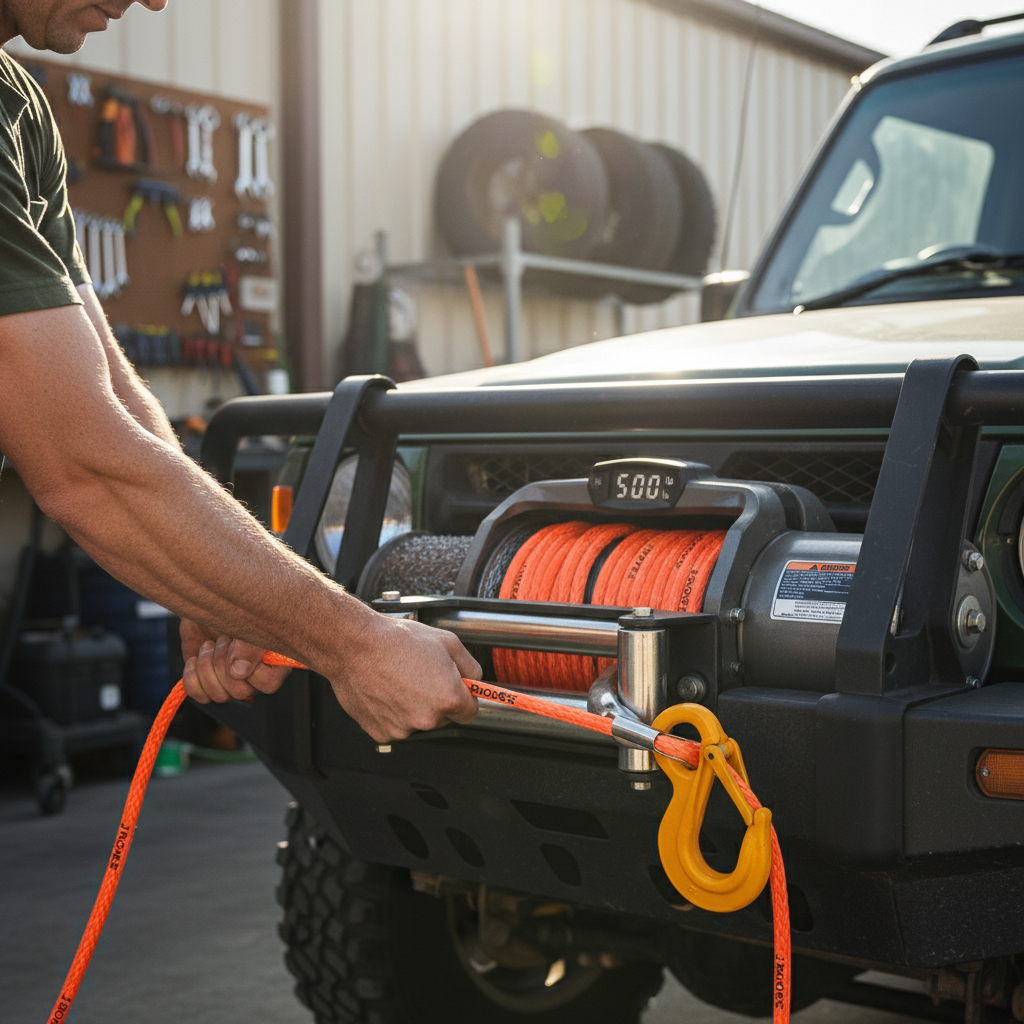
First, thread the line through the drum’s groove and fasten it with the supplied thimble; the eye splice must sit flush against the drum surface. Second, spool the rope evenly, carefully avoiding overlaps that could create weak spots. Finally, apply tension by either pulling the free end with a helper or using the vehicle’s weight on the winch lever until the line feels firm but still has a slight give. This achieves the ideal tension that maximises both safety and performance.
Installation & Tensioning
Key steps for a reliable winch line
Attach securely
Fasten the line to the winch drum using the supplied thimble and ensure the eye splice aligns with the drum groove.
Even spooling
Lay the rope evenly across the drum to prevent twists and maintain consistent tension throughout the run.
Proper tension
Use vehicle weight or a helper pull to achieve a firm yet slightly flexible line, avoiding over-tightening.
Maintenance & Longevity
Keep your rope performing year after year
Inspect regularly
Look for wear, fraying, or UV damage before each use and replace if the core shows any compromise.
Clean gently
Rinse with fresh water after exposure to salt or mud, then air-dry out of direct sunlight.
Store properly
Coil loosely in a breathable bag and keep away from sharp edges or chemicals.
iRopes backs every line with ISO 9001 certification, precision-engineered manufacturing, and a robust logistics network that delivers pallets directly to your warehouse—expect no surprises, just reliability.
Ready to upgrade?
Contact iRopes for a custom quote, sample, or partnership today, and discover why iRopes synthetic winch rope outperforms steel cables.
With the rope properly installed, tensioned, and cared for, you’re set to extract maximum power from your line winch while enjoying the peace of mind that only a certified, globally‑shipped solution can provide.
Looking for a custom solution?
Having seen how synthetic fibres deliver a superior strength-to-weight ratio, you now understand why iRopes’ core business focuses on continuously upgrading the winch line. We offer a single-strand parallel-wound, glow-in-the-dark winch line rope that maintains over 97% of its tensile strength while being fully customisable for any line winch system.
If you’d like personalised assistance in specifying the perfect rope for your application, please use the form above to discuss your requirements with our specialists, or read about the top benefits of synthetic winch cable.
