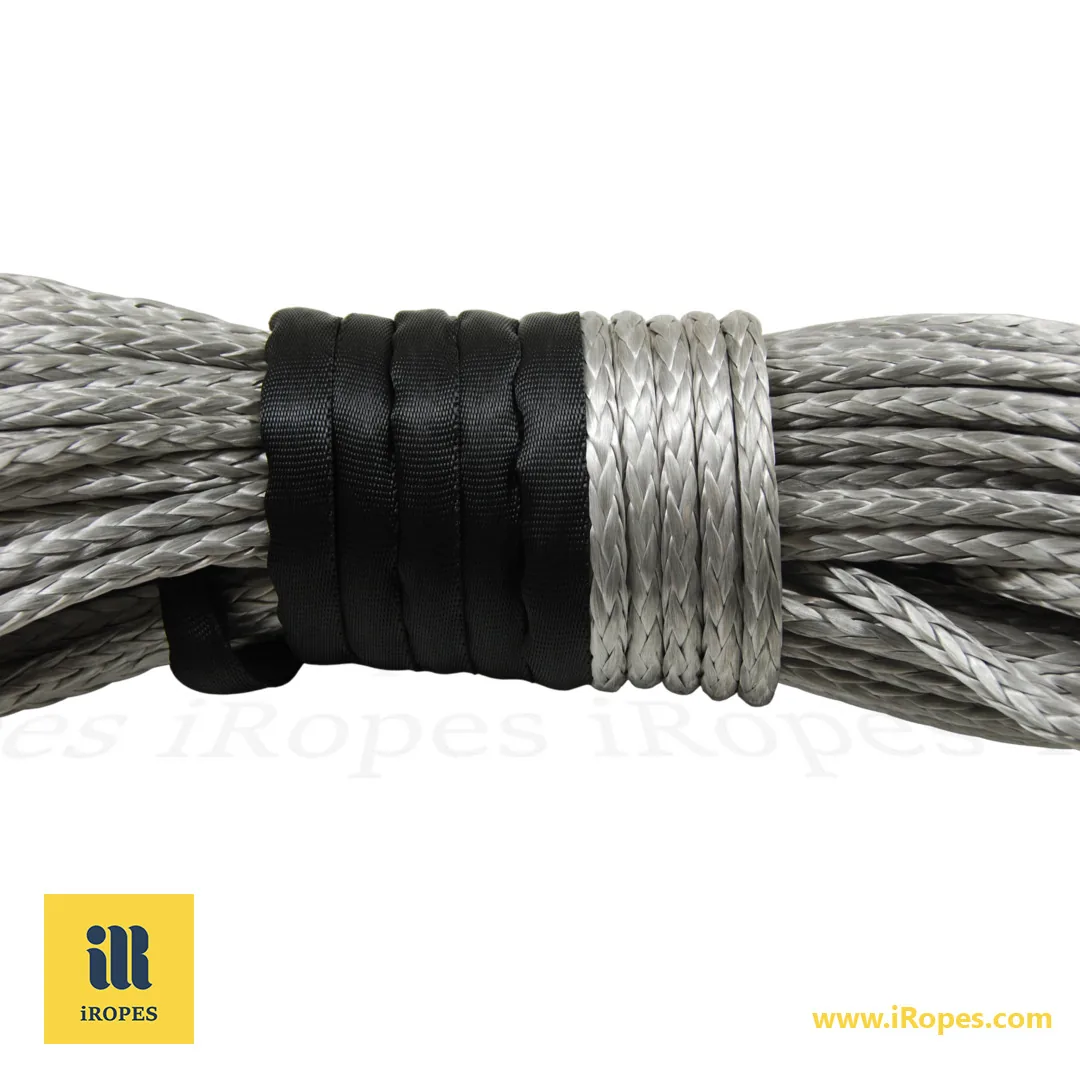
Kinetic recovery ropes stretch 20–30% under load to absorb shock and smooth vehicle recoveries; common 7/8″ models are rated around 9,000 lb WLL.
What you’ll gain – ≈ 3‑minute read
- ✓ Smooth, controlled pulls that reduce drivetrain shock and component wear.
- ✓ Precise sizing formula (vehicle weight × 3 = MTS) for any 4×4, eliminating guesswork.
- ✓ Built for durability – nylon‑66 with a Cordura sleeve resists abrasion and can deliver years of service.
- ✓ Custom branding, colour options, and reflective elements from iRopes, protecting your IP while you stand out.
Some off‑roaders still swear by rigid snatch straps, believing they’re the fastest way out of a ditch. In practice, the physics favour stretch: a kinetic rope’s 20–30% elongation absorbs shock and reduces the risk of drivetrain damage. A kinetic recovery rope is designed to recover a stuck vehicle from mud, ditches, or similar situations. Most are made from nylon‑66 for optimal elongation. Curious how a simple elasticity tweak can turn a risky yank into a safe glide? The next sections reveal the key maths and the ASR rope that makes it happen.
Understanding the vehicle recovery rope and its kinetic advantages
Picture a 4×4 sunk waist‑deep in mud, the engine humming but the wheels stuck. You reach for a vehicle recovery rope that feels almost like a thick elastic band, attach it to a solid eye, and watch the rope stretch as the recovery vehicle eases forward. That stretch is the rope’s secret weapon, turning a sudden jolt into a smooth, controlled motion.
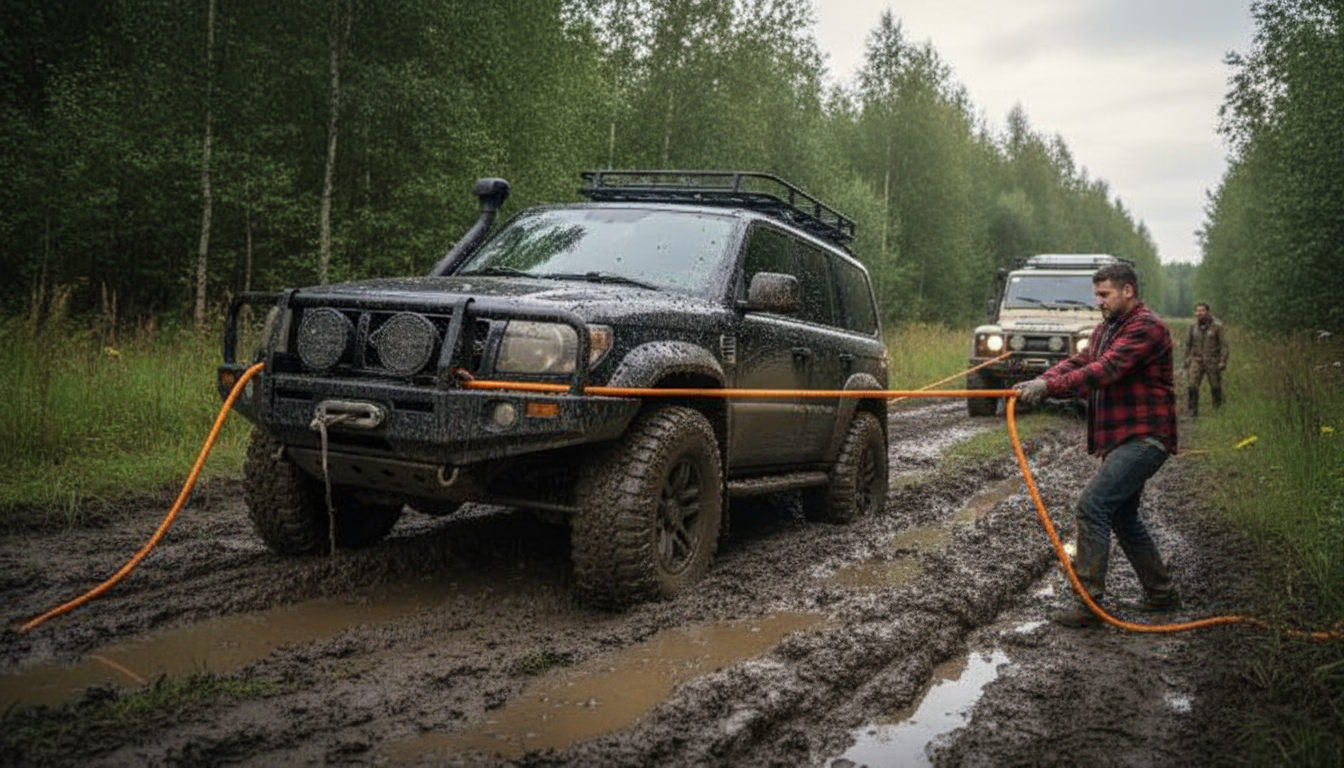
The core of most kinetic ropes is nylon‑66, a polymer prized for its high tensile strength and consistent elongation. When a load is applied, the fibres flex and store energy, allowing the rope to extend roughly 20% under normal stress and up to 30% at its maximum rating. That elastic behaviour absorbs shock, so both vehicles’ recovery points and drivetrains feel far less abrupt force than they would with a rigid line.
So, what really sets a kinetic recovery rope apart from a traditional snatch strap? The answer lies in three key characteristics:
- Elasticity – kinetic rope stretches 20–30% under load, while a snatch strap is far less elastic.
- Force absorption – the stretch dissipates kinetic energy, reducing shock to both vehicles.
- Drivetrain protection – smoother pulls lower the risk of drivetrain damage.
- Speed limit – both systems should be used slowly (≤ 5 mph ≈ 8 km/h) to stay within rated limits.
- Attachment – use rated soft‑shackles or bow shackles with proper recovery points; never use a tow ball.
- User safety – gradual tension gives the operator more reaction time if something goes wrong.
Those safety benefits are why a recovery rope 4x4 is more than just a piece of synthetic fibre; it’s a built‑in shock absorber. The 20–30% stretch means the pull feels like a gentle tug rather than a hammer blow, keeping both vehicle and operator out of harm’s way.
When I first tried a kinetic rope, the gradual stretch felt like a safety net. It took the shock off the drivetrain and made the pull feel controlled rather than violent.
With these fundamentals clear, you’re ready to move on to selecting the proper size and safety factors for any 4×4 adventure.
Choosing the right recovery rope 4x4 – sizing, materials, and safety factors
Now that you understand why elasticity matters, the next step is making sure the rope you pick can handle the load you intend to move. Getting the maths right prevents surprise failures and keeps the pull smooth for both vehicle and operator.

Two technical terms dominate every spec sheet: Minimum Breaking Strength (MTS) – the load at which the rope will snap, and Working Load Limit (WLL) – the safe, continuous load, usually one‑fifth to one‑third of the MTS. Industry best practice recommends a 3:1 factor of safety, meaning the assisting vehicle should weigh no more than one‑third of the rope’s MTS.
- Identify your 4×4’s gross weight (vehicle + gear). Multiply by 3 to estimate the minimum MTS you need.
- Choose the smallest diameter whose published MTS meets that figure (typical mappings: ½″ ≈ 7,400 lb; 5/8″ ≈ 14,800 lb; ¾″ ≈ 19,000 lb; 7/8″ ≈ 28,300 lb; 1″ ≈ 33,500 lb; 1¼″ ≈ 52,300 lb).
- Example: a 4,000 lb vehicle × 3 = 12,000 lb MTS. The ¾″ rope (≈ 19,000 lb MTS) offers a safe margin.
That three‑step process directly answers the common query, “How do I size a recovery rope for my 4×4?” By applying the 3:1 safety factor, you avoid over‑loading the line while still keeping the rope light enough to handle comfortably.
When you’ve landed on the correct diameter, the material choice becomes the next decision point. Most kinetic ropes use double‑braid nylon‑66 because it delivers consistent stretch (around 20% under normal load) and excellent abrasion resistance. Cordura sleeves add a protective skin that guards the eye from sand, rocks, and sharp edges, and can extend service life beyond five years in harsh terrain. High‑modulus polyethylene (HMPE) options exist for ultra‑light builds, but they sacrifice the familiar stretch that makes kinetic ropes forgiving.
Material options
Nylon‑66 (standard) – reliable stretch and strength; Cordura‑sleeved – extra abrasion protection for rugged off‑road use; HMPE – ultra‑light with reduced elasticity, best for weight‑critical applications.
Understanding the benefits of nylon rope stretch can further guide your choice, especially when balancing durability and elasticity for demanding off‑road recoveries.
Remember, the right combination of MTS, diameter, and material gives you a rope that behaves predictably under stress, keeping both the vehicle and the operator safe. With the correct size in hand, the next section will explore the flagship ASR recovery rope and why it’s become a favourite among serious 4×4 enthusiasts.
Deep dive into the ASR recovery rope – specs, certifications, and customisation
Now that you’ve nailed the sizing basics, it’s time to look at the flagship ASR recovery rope. This line is engineered for the toughest recovery rope 4x4 scenarios, from river crossings to deep‑mud extractions.

ASR lists MIL‑R‑24050 among its specifications, signalling military‑grade construction. For custom or private‑label projects, iRopes manufactures under ISO 9001 quality systems, adding process control and traceability. The combination of a nylon‑66 core and a Cordura‑sleeve eye means the rope can absorb shock while resisting abrasion from rocks, sand, and sharp edges.
Core Sizes
Everyday 4×4 recovery
½"
7,400 lb MTS • 2,500 lb WLL • 20% stretch • $68–$80
5/8"
14,800 lb MTS • ~4,800 lb WLL • 20% stretch • $90–$110
¾"
19,000 lb MTS • 6,000 lb WLL • 20% stretch • $120–$140
Heavy‑Duty Options
For larger rigs
7/8"
28,300 lb MTS • 9,000 lb WLL • 20–30% stretch • $150–$180
1"
33,500 lb MTS • 11,000 lb WLL • 20–30% stretch • $200–$230
1¼"
52,300 lb MTS • 17,400 lb WLL • 20–30% stretch • $300–$350
A common query is, “What warranty does ASR offer on its ropes?” See the note below.
ASR backs each rope with a limited 1‑year warranty that covers manufacturing defects; the Cordura sleeve is protected against normal abrasion wear.
Beyond the stock catalogue, iRopes offers OEM/ODM services that let you tailor the vehicle recovery rope to your brand. Choose custom colours, add reflective strands for night pulls, or print your logo on the sheath. If you need specialized terminations such as eye splices, our custom eye splice solutions can be integrated. Every order benefits from full IP protection, ensuring your proprietary design stays exclusive.
For a deeper comparison of kinetic recovery ropes versus traditional tow ropes, explore the key advantages of kinetic rope technology. With the ASR lineup, its specifications, and the ability to customise, you now have a clear picture of why this rope is a go‑to for serious off‑roaders. The next part will put ASR side‑by‑side with other leading brands to see how it stacks up on price, strength, and warranty.
Ready for a custom kinetic recovery rope solution?
A kinetic recovery rope built from nylon‑66 delivers the ideal elongation to turn a sudden jolt into a smooth pull, protecting both vehicles and their recovery gear during mud or ditch extractions. When you size a recovery rope 4x4 for your rig and apply the 3:1 safety factor, matching the rope diameter to your vehicle’s weight ensures reliable performance for any off‑road adventure.
The ASR recovery rope line brings military‑grade specifications and optional Cordura sleeves. Through iRopes’ OEM/ODM customisation, you can colour‑code, add reflective strands, or brand the sheath – all backed by ISO 9001 quality at iRopes. If you’d like a tailored recommendation or a quote, simply fill out the form above and our specialists will help you select the vehicle recovery rope for your fleet.