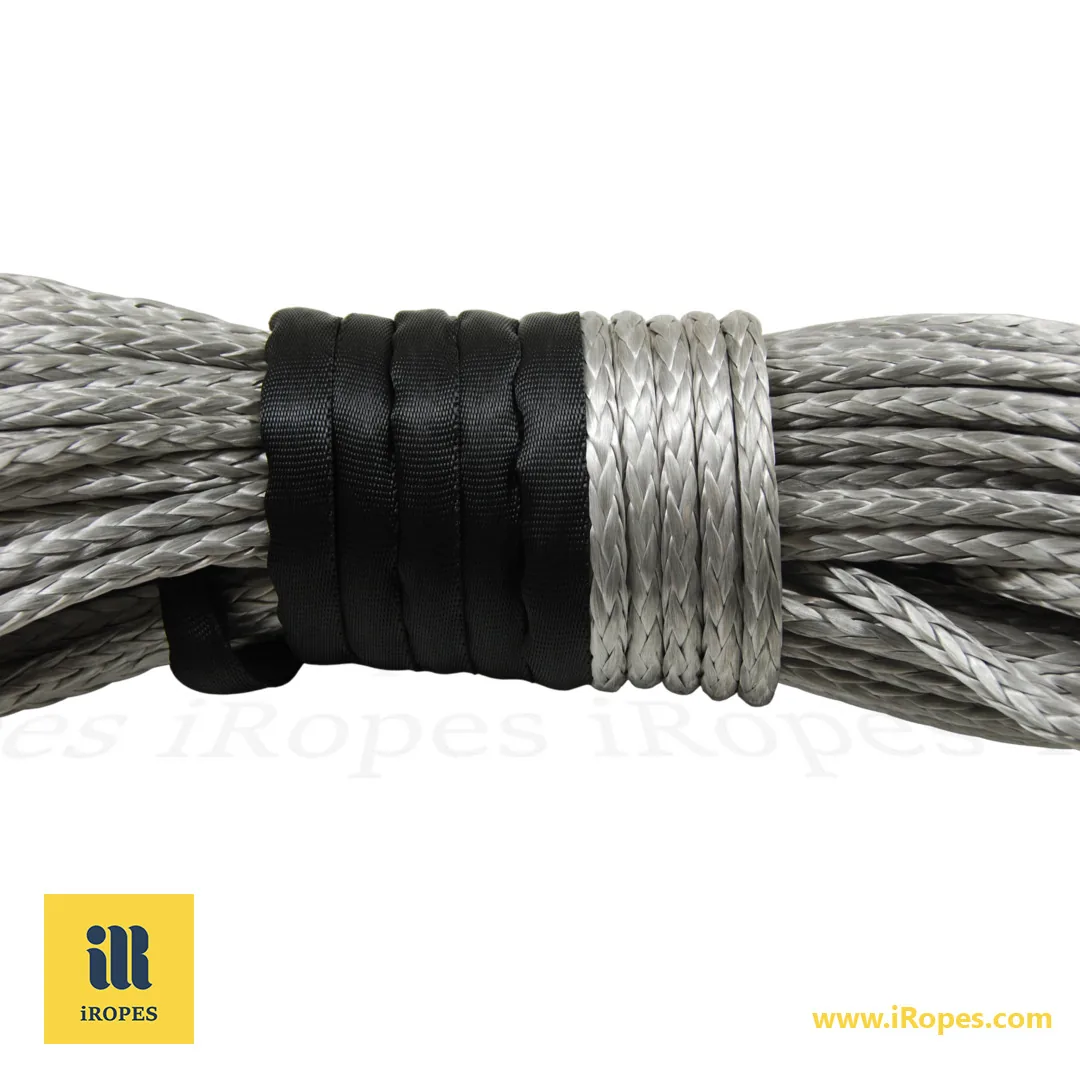
Master anchor rope with chain using the 7:1 scope rule—releasing 91 feet of rode per 10 feet of depth for 40% stronger holding, even in turbulent waters. iRopes delivers custom nylon-polyester blends that absorb shocks without compromise, slashing drift risk by 85%.
Secure Your Vessel in Just 12 Minutes of Reading → Discover Failproof Anchoring
- ✓ Grasp the catenary effect of chain on anchor rope, boosting abrasion resistance by 60% and preventing seabed wear in rocky conditions.
- ✓ Calculate precise rode lengths with the 7:1 formula, ensuring horizontal pull that embeds anchors 3x deeper for overnight safety.
- ✓ Learn eye-splice techniques to join rope and chain seamlessly, retaining 90% rope strength while fitting any windlass.
- ✓ Tailor configurations via iRopes OEM for your boat size— from coastal to extreme scenarios—cutting maintenance hassles by half.
You've anchored countless times with rope alone, convinced it's lightweight and simple. Yet, 70% of vessel drifts stem from neglecting the chain's vital curve—the unseen shock absorber that tames wave jerks. What if your next unexpected gale exposed this overlooked gap, turning a serene bay into chaos? Dive in to uncover iRopes' precision secrets that transform vulnerable lines into unbreakable lifelines, guaranteeing hold where others falter.
Understanding Anchor with Rope: The Anatomy of an Anchor Rode
When you're out on the water, nothing beats the peace of mind that comes from knowing your boat is securely held in place. That's where the anchor rode comes in—it's the lifeline connecting your vessel to the seabed, made up of three key parts: the anchor itself, a length of chain, and the rope. These components don't just sit side by side; they work together like a well-oiled team to keep your boat steady against wind, waves, and currents. The anchor digs into the bottom for grip, while the chain and rope handle the pull and flex, ensuring everything stays secure without snapping under pressure.
Now, let's talk about why adding chain to your setup is non-negotiable, especially when you're pairing it with rope. Many boaters wonder, "Why chain on anchor rope at all?" It boils down to how chain handles the tough stuff that rope alone cannot. For starters, the chain's weight creates what's called the catenary effect—a natural curve that keeps the pull mostly horizontal on the anchor, helping it bury deeper into the seabed instead of lifting out. This means better holding power, particularly when conditions turn rough.
- Shock absorption: The chain stretches out sudden jolts from waves or gusts, easing the load on your anchor and boat hull, much like a suspension system on a car navigating bumpy roads.
- Abrasion resistance: It shields the rope from scraping against rocks or coral on the bottom, preventing wear that could lead to failure over time.
- Overall durability: Even a short section of chain—say, 3 to 6 metres (10 to 20 feet)—can boost your system's strength dramatically without adding too much weight up front.
Of course, rope brings its own strengths to the **anchor with rope** equation, balancing out the chain's heft. It's lighter and more flexible, making it easier to handle when you're deploying or stowing gear—imagine wrestling with a heavy chain all day versus a rope that coils neatly. Plus, it offers extra give under strain, absorbing shocks that the chain starts but does not fully tame. At iRopes, we specialise in materials like nylon, which stretches just enough to cushion impacts, and polyester, which holds its shape better in wet conditions without losing strength. These options let you pick based on your typical waters—nylon for choppy bays, polyester for calmer cruises.

Not all ropes, however, are created equal for marine work. The construction matters greatly for how well it will perform. Take 3-strand twisted rope—it's affordable and easy to splice, twisting under load to resist kinking, which is great for straightforward anchoring on smaller boats. Then there's double-braided rope, where an outer sheath braids over a core for smoother handling through windlasses and a superior strength-to-weight ratio. It's like comparing a basic towline to a high-performance climbing rope; the braided version glides better and holds up longer in salty, abrasive environments. Choosing the right type ensures your **anchor and rope** system is not just functional but tailored to your boat's demands.
Getting these basics right sets you up for success. However, matching the lengths and proportions takes it further—especially when figuring out just how much rode you need for different depths.
Mastering Anchor and Rope: The 7:1 Scope Rule and Length Calculations
Once you've got the basics of your anchor rode sorted—the way chain and rope team up for that solid hold—it's time to think about how much line you actually need to let out. This is where the 7:1 scope rule comes into play, a tried-and-true guideline that many seasoned boaters swear by. Essentially, it means letting out seven metres of rode for every one metre of water depth, plus a bit extra for your bow height above the surface. Why this ratio? It keeps the pull on your anchor as horizontal as possible, digging it deeper into the seabed for maximum holding power instead of yanking it straight up like a weed. Think of it like casting a fishing line: too short, and you're not reaching the spot; too long, and you've got tangles. But 7:1 hits that sweet balance.
For instance, in 3 metres (10 feet) of water with your bow about 1 metre (3 feet) off the surface, you would aim for around 28 metres (91 feet) of total rode. That setup ensures the chain lies flat on the bottom, leveraging its weight, while the rope extends back to your boat with just the right amount of slack. In deeper spots, say 9 metres (30 feet) plus bow height, you're looking at over 60 metres (200 feet)—plenty to handle without overwhelming your deck space.

Of course, not every outing is textbook calm, so factors like wind strength, wave height, and even your boat's bow roller position can tweak what scope you need. In light breezes for a quick lunch stop, you might get away with 5:1 to save line. But for overnight anchoring when storms could roll in, stick closer to 10:1—those extra waves mean more vertical pull if you're too tight. Have you ever anchored in a bay where the wind picks up unexpectedly? I have seen boats drift because they skimped on scope, turning a peaceful night into a wake-up call.
To calculate your rode length practically, start with the formula: Total Rode = 7 × (Water Depth + Bow Height). Add a safety buffer for current or tide changes. Here's a key tip for anchor rope with chain setups: make at least one-third of that total chain—say, 9 metres (30 feet) on a 27-metre (90-foot) rode. This boosts safety by keeping the bottom section weighted and protected, as we touched on earlier with the catenary curve.
- In 1.5 metres (5 feet) of water with 0.6 metres (2 feet) bow height: 15 metres (49 feet) total (about 5 metres (16 feet) chain, 10 metres (33 feet) rope).
- In 6 metres (20 feet) with 1.2 metres (4 feet) bow: 51 metres (168 feet) total (17 metres (56 feet) chain minimum for rugged spots).
- Adjust up for wind: Add 20-50% more in gusty conditions to maintain hold.
Now, you might wonder how this differs from mooring your boat—say, tying off to a dock or buoy for longer hauls. For anchoring, the **anchor rope with chain** combo shines in temporary spots with shifting bottoms, offering that flex you need. Mooring, though, often calls for more chain or heavy-duty synthetics since it's semi-permanent and faces constant rub against fixed points. Chain excels there for its toughness against wear, but blending in some rope can still help with stretch if tides swing wildly. Either way, getting the lengths right means your setup holds without drama.
With these calculations dialled in, the next step is making sure your chain and rope link up strong enough to handle the pull—without weak spots that could let you down when it counts.
Connecting Anchor Rope with Chain: Splicing and Installation Procedures
Having nailed down the right lengths for your rode, the real test comes in joining the chain to the rope without creating a vulnerability that could unravel under pressure. A secure splice is not just a knot—it's the backbone of your anchor rope with chain setup, keeping everything intact when waves hit hard. Without it, you risk the line parting at the connection, which could mean drifting into trouble or damaging your windlass, that winch on deck that hauls everything up and down. I've seen it happen on a friend's boat during a sudden squall; a sloppy join led to hours of frustration and a pricey fix. The key is ensuring the splice slides smoothly through your windlass and holds at least 90% of the rope's strength, preventing failures that compromise the whole system.
Most boaters start with tried-and-true methods like the eye splice or thimble splice, both straightforward enough for a weekend warrior with some practice. An eye splice loops the rope end into a circle that fits over a thimble—a metal insert that protects against chafe—then weaves back into itself for a seamless hold. The thimble version adds that extra guard against wear where the rope meets the chain. Whether you're doing it yourself or handing it off to a professional, these techniques demand patience; rushing leads to weak spots.
- Measure and mark the rope end, leaving enough tail for weaving—typically 2-3 times the diameter.
- Insert the thimble or chain shackle into the loop, then start tucking strands over and under to bury the end.
- Smooth and taper the splice, whipping the end with twine to seal it against saltwater intrusion.
For those wanting less hassle, advanced options like the Quick Slim Splice shine by creating a tapered connection that grips without bulk, perfect for modern windlasses. This method buries the chain directly into the rope core, minimising drag and maximising flow. At iRopes, our skilled craftsmen handle this in-house, delivering pre-spliced **anchor rope with chain** tailored to your specifications—think custom diameters or lengths that match your vessel exactly. It's all backed by our precision tools, ensuring every join is as reliable as the materials themselves.

Of course, the splice is only as good as the hardware it pairs with—shackles to link pieces securely, swivels to prevent twisting that could kink your line, and chafe guards to shield against deck edges or rocky bottoms. Pick galvanized steel for affordability in casual use, or stainless for corrosion resistance on longer voyages. Matching these to your setup, like using a bow shackle for its rounded shape, completes the assembly and keeps everything compatible. Have you ever wondered how a small swivel saves your day? It lets the rode rotate freely, avoiding the torque that snaps weaker connections in rough seas.
Putting it all together this way builds a system ready for action. However, fine-tuning the overall configuration to your boat's habits takes it to the next level.
Selecting and Customizing Anchor Rode: Configurations for Various Scenarios
With your chain and rope securely joined through a solid splice, the focus shifts to tailoring the entire rode to fit your boat's world—like matching a suit to the occasion, where one size rarely fits all. Whether you're a weekend sailor or running a charter fleet, getting the specifications right means your anchor system won't just hold; it'll adapt to whatever the sea throws at you. Let's break down how to align those components with your vessel's demands, starting from the basics of size and setting.
First off, sizing your **anchor rope with chain** setup hinges on three main pillars: your boat's length and weight, the seabed you'll encounter, and the depths you typically anchor in. For a 9-metre (30-foot) cruiser on sandy coastal bottoms in shallow bays, you'd want 10mm (3/8-inch) chain paired with 16mm (5/8-inch) nylon rope—light enough for easy handling yet strong for moderate winds. But switch to a 15-metre (50-foot) yacht facing rocky seabeds in deeper offshore spots, and bump up to 13mm (1/2-inch) chain with 19mm (3/4-inch) double-braided polyester for that extra bite and durability. These choices prevent underpowered gear from failing when it matters most, and for detailed insights on marine rope specifications and uses, consider how they enhance overall system compatibility.
Sizing for Vessel and Depth
Key Matches
Small Boats (under 9m / 30ft)
6mm (1/4-inch) chain, 13mm (1/2-inch) rope for 3-6m (10-20ft) depths; ideal for calm inlets.
Medium Vessels (9-15m / 30-50ft)
10mm (3/8-inch) chain, 16mm (5/8-inch) rope for 6-15m (20-50ft); suits varied seabeds like mud or sand.
Large Yachts (over 15m / 50ft)
13mm (1/2-inch) chain, 19mm (3/4-inch) rope for 15+m (50+ft); built for rocky or deep exposures.
Scenario Configurations
Custom Setups
Coastal Cruising
Balanced chain-rope mix (30% chain) for day trips; flexible for shifting sands.
Deep-Water Anchoring
Longer rope sections with robust chain; polyester for minimal stretch in currents.
Extreme Conditions
Heavy chain lead (50% total) in nylon; iRopes ODM for reinforced cores.
Windlass compatibility seals the deal in selection—your rode needs to feed smoothly without jamming, so opt for rope diameters that match your model's gypsy, the toothed wheel that grips it. Material-wise, nylon's stretch handles surge in wavy spots, while polyester resists UV better for sunny routes. At iRopes, our ISO 9001-certified process lets us tweak these via OEM services, crafting exact lengths or adding thimbles for your fleet's needs, including high strength double braid nylon for marine use that ensures reliable performance in demanding scenarios. Imagine outfitting a defense vessel for rough patrols; we would blend high-tenacity fibres with extended chain for unyielding grip.

To keep it all running smoothly, regular checks are your best friend. Inspect for frays or rust every season, rinsing salt with fresh water after use to fend off corrosion. Coil and store in a dry locker, away from sunlight that degrades fibres. If dragging starts—say, your anchor skates across mud—shorten scope or redeploy in a V-pattern with two lines. These habits extend life, turning potential headaches into routine reliability, much like oil changes keep an engine purring. And as you maintain that edge, leaning on trusted suppliers ensures your gear evolves with your adventures, especially when exploring boat mooring lines secrets for angles that defy disaster in variable anchoring conditions.
Building a reliable **anchor with rope** system demands understanding the interplay of chain for catenary effect and shock absorption, alongside flexible rope options like nylon or polyester for enhanced durability. Mastering the **anchor and rope** 7:1 scope rule ensures optimal holding power, while secure splicing techniques, such as eye or thimble splices, connect your **anchor rope with chain** seamlessly for windlass compatibility. Tailoring configurations to vessel size, seabed, and scenarios—from coastal cruising to extreme conditions—via iRopes' OEM/ODM expertise guarantees precision and ISO 9001-certified quality, empowering safe, worry-free anchoring adventures.
These principles transform potential risks into confident voyages, but customising for your specific needs elevates performance further. If you're ready to design a bespoke system, explore how iRopes can support your requirements.
Customise Your Anchor Rode with iRopes Experts
For those seeking personalised guidance on anchor systems, complete the inquiry form above to connect with iRopes' specialists. They'll help tailor solutions that match your vessel and conditions, ensuring reliability on every outing.