UHMWPE offers a higher strength‑to‑weight ratio and is far lighter than steel wire rope—delivering stronger, easier handling for lifting operations.
≈9‑minute read – Your quick‑win checklist
- ✓ High strength‑to‑weight ratio → in many lifts you can reduce rope diameter.
- ✓ Major weight reduction vs steel → easier handling and lower equipment wear.
- ✓ Size correctly to meet the minimum 5× safety factor in OSHA/ASME guidance.
- ✓ Lower total ownership costs through faster rigging and less wear‑related downtime.
Most riggers still reach for steel wire rope, assuming mass equals strength. However, modern UHMWPE shows that you can achieve the required load capacity with far less weight and excellent durability—often at a better cost‑performance over the service life. In the sections ahead we compare UHMWPE with traditional wire rope for lifting, outline practical selection tips for slings and clamps, and close with a clear path to a custom iRopes solution.
Advantages of UHMWPE over wire rope for lifting
Ultra‑high‑molecular‑weight polyethylene (UHMWPE) brings high tensile strength at a fraction of the mass of steel. In many cases, a smaller‑diameter UHMWPE line can match the working capacity of a larger steel wire rope, while remaining dramatically lighter. This higher strength‑to‑weight ratio is a decisive advantage for any wire rope for lifting scenario where crew safety, speed, and fatigue matter.
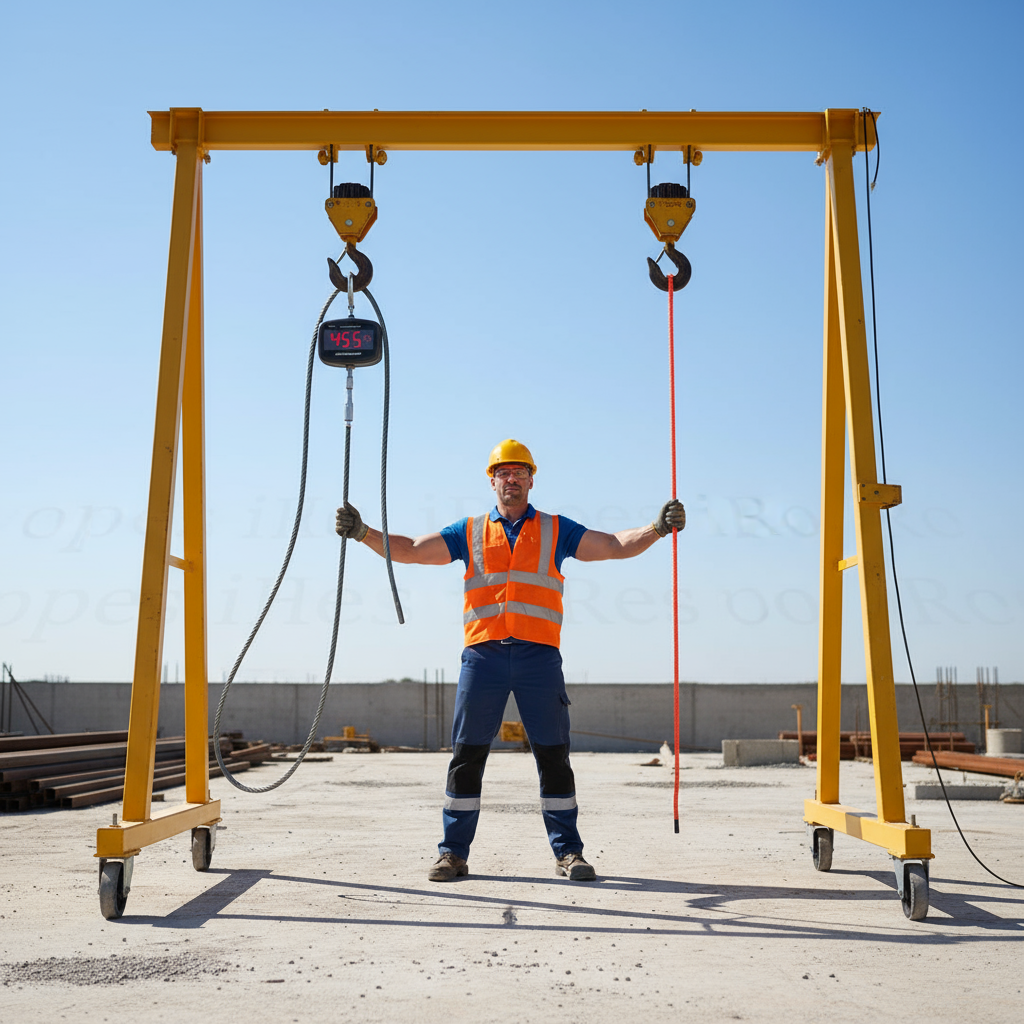
The weight advantage is more than a convenience; it reshapes the workflow. A lighter rope means crews move faster with less fatigue, forklifts burn less fuel, and wear on sheaves and drums is reduced. In offshore or remote projects where every kilogram matters, those savings can be the difference between a feasible lift and a cancelled job.
Safety benefits follow. UHMWPE exhibits low elongation under load and excellent fatigue resistance, helping to minimise shock loads and preserve associated hardware. This does not remove the need for inspections—OSHA and ASME B30.9 expect pre‑use checks and documented periodic inspections—but it can help extend service life when the equipment is sized and used correctly.
From a cost‑performance perspective, the story is compelling. While UHMWPE often costs more upfront than conventional steel, the total cost of ownership can be lower thanks to faster rigging, reduced handling injuries, and less wear‑related downtime. For high‑tonnage or high‑frequency lifts, those gains translate into meaningful savings over time.
Answering a common market question—“What size wire rope can lift 10 tons?”—requires careful use of ratings and safety factors. Typical data shows that a 1‑inch 6×25 steel rope has an approximate minimum breaking load (MBL) of 34,000 lb (≈ 17 tons). With a 5× safety factor, its working load limit (WLL) would be around 6,800 lb (≈ 3.4 tons), which is below 10 tons. Consequently, lifting 10 tons safely requires a larger diameter or different construction/grade. UHMWPE can meet the same WLL at smaller diameters in many cases, but always select based on verified manufacturer ratings and applicable standards.
- Higher strength‑to‑weight – unlocks smaller diameters for equivalent capacity in many lifts.
- Significant weight savings – reduces handling effort and equipment wear.
- Safety‑friendly performance – low elongation helps control dynamic effects on the load.
- Improved cost‑performance – lifecycle efficiencies can outweigh higher upfront purchase price.
“Switching to UHMWPE reduced our lift‑team fatigue and streamlined inspections,” says a senior rigging supervisor who upgraded his fleet last year.
With these material gains clear, the next step is to see how they influence the design of wire slings for lifting, where low stretch and high strength translate into stable, predictable lifts.
Choosing the right wire slings for lifting with UHMWPE solutions
Understanding UHMWPE’s benefits is only half the job. You also need the right sling configuration to harness those gains safely and efficiently. The arrangement you choose determines both capacity and handling ergonomics on site.
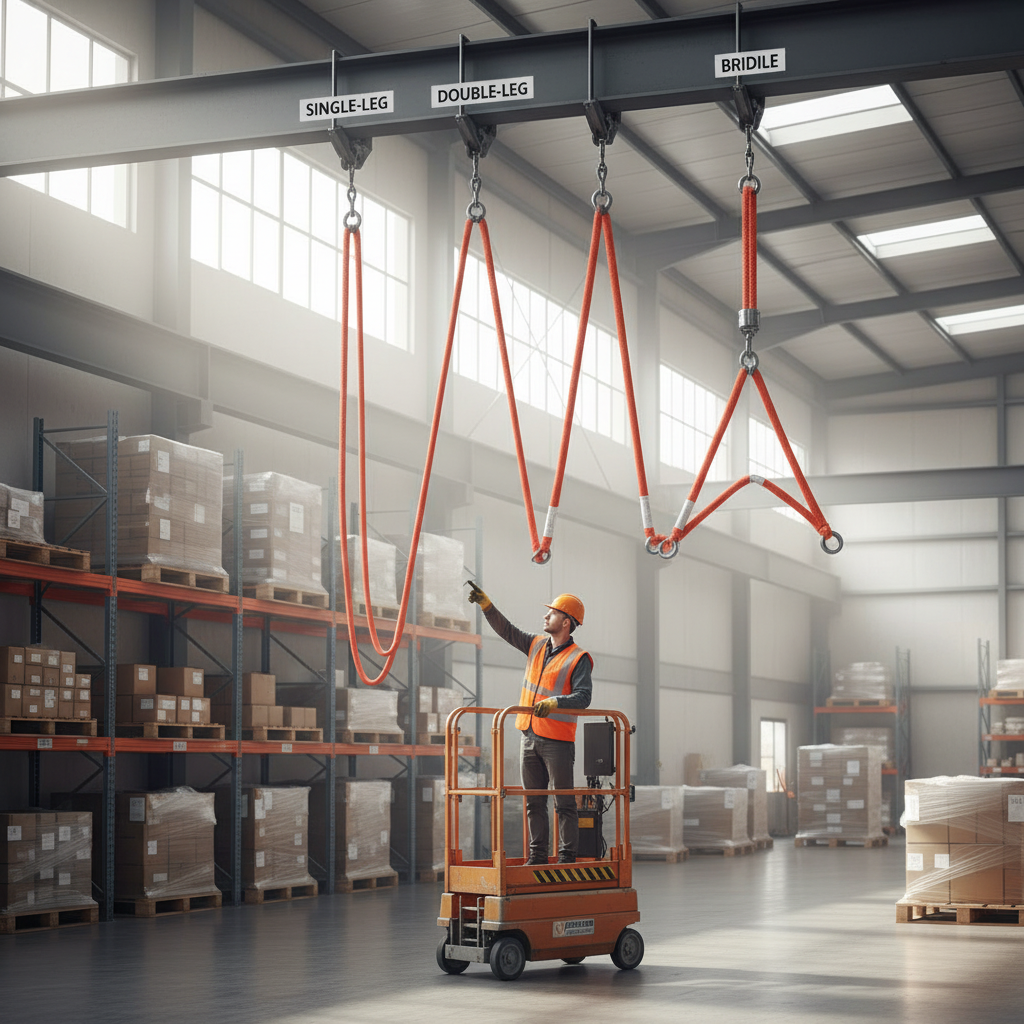
Use this quick‑reference guide to decide which arrangement suits your load and rigging geometry.
- Single‑leg – ideal for vertical lifts where the load hangs directly beneath the crane hook.
- Double‑leg – spreads the load across two parallel legs, reducing angle‑induced tension.
- Bridle – three‑or‑more‑leg arrangement for balancing off‑centre loads and minimising sway.
Each configuration works best when the rope diameter aligns with the required capacity. UHMWPE’s low elongation helps maintain stable geometry under load. Select the rope size using verified capacity tables and apply the required safety factor to account for sling angle and hardware.
Load‑capacity tables
Match rope diameter, construction (e.g., 6×25, 6×36, 7×19), and safety factor to the lift weight. A compact table lets you input the required tonnage and see the minimum UHMWPE size alongside steel equivalents.
Customization
Colour‑code each leg, add reflective strips for night work, or embed your brand logo on the eye fittings. iRopes provides comprehensive OEM/ODM, ISO 9001‑backed quality control, IP protection, non‑branded or customer‑branded packaging, and pallet‑direct shipping worldwide.
Angle optimisation
Avoid sling angles below 30° from the horizontal; lower angles increase tension and reduce capacity. Aim for higher angles (60°–90°) where practical, and refer to ASME B30.9 angle charts.
Regulatory compliance
When sized and installed correctly, configurations can meet OSHA and ASME B30.9 requirements. Document pre‑use inspections and keep records of periodic examinations and load tests.
When you compare steel constructions, typical data shows a 1‑inch 6×25 rope around 34,000 lb MBL and a 1‑inch 7×19 around 45,000 lb MBL. That difference can guide your choice between a single‑leg lift for moderate loads and a multi‑leg bridle for heavier, off‑centre lifts. Always confirm with manufacturer‑published ratings. For a deeper dive into UHMWPE versus steel rope performance, see our UHMWPE vs steel rope performance guide.
Visual cues—such as bright orange legs or reflective strips—are not just aesthetic. They help crews pick the correct sling in busy environments, reduce errors, and support the safety margins built into your plan.
With the right configuration and a well‑chosen diameter, your lift benefits from UHMWPE’s performance without the weight penalty of steel. The next piece of the puzzle is securing those slings with the proper clamps.
Selecting wire rope clamps for lifting: UHMWPE compatibility and best practices
Now that you have the ideal wire slings for lifting in place, the final link in the chain is a secure termination. Choosing the right wire rope clamps for lifting helps maintain grip under load and prevents slip that could compromise the lift.

The most common families are:
- U‑bolt clips – widely used and versatile; install with the saddle on the live end.
- V‑bolt/fist‑grip clips – provide a robust alternative with a serrated saddle that resists slip.
- Malleable clips – for light‑duty applications; not typically recommended for critical overhead lifting.
- Drop‑forged clips – the preferred option for lifting and fatigue‑critical service.
Follow the simple installation rule used across the industry: apply the “3× rule” for clip count. For a 1‑inch rope, use at least three correctly sized clips, spaced evenly along the termination. This directly answers the frequent query, “How many clips are needed on a 1‑inch wire rope?”—use three as a minimum, and add a fourth for redundancy on demanding jobs. Consult the clip manufacturer for exact spacing and torque values.
- Inspection frequency – visual check before every lift, magnetic test quarterly, and a full load test annually.
- Corrosion resistance – choose stainless‑steel or galvanised clips for marine or humid environments.
- Regulatory compliance – ensure components meet OSHA and ASME B30.9; keep documentation ready for audits.
Quick tip
Always torque U‑bolt and fist‑grip clips to the manufacturer’s recommended values. Under‑tightening can allow creep; over‑tightening may damage the rope.
By matching the clip family to your rope construction, applying the correct number of clips, and following a disciplined inspection regime, you create a termination that respects both UHMWPE’s high tensile capacity and the safety standards governing every lift. Compare different clamp options in our synthetic rope clamp comparison.
Ready for a custom UHMWPE lifting solution?
Across industry, UHMWPE is widely used for lifting and slings because its cost‑performance often surpasses conventional wire rope for lifting. This guide showed how to choose the right wire slings for lifting and match them with compatible wire rope clamps for lifting while staying aligned with OSHA and ASME B30.9. If you need a tailored system, iRopes can help. Explore our custom rope solutions for precise specifications.
As an ISO 9001‑certified manufacturer based in China, iRopes specialises in OEM and ODM rope solutions with full customisation—material, diameter, colour, accessories, and packaging—plus dedicated IP protection and on‑time, pallet‑direct global shipping. For personalised advice, complete the form above and our team will design an efficient, compliant solution for your specific lifting challenges.
