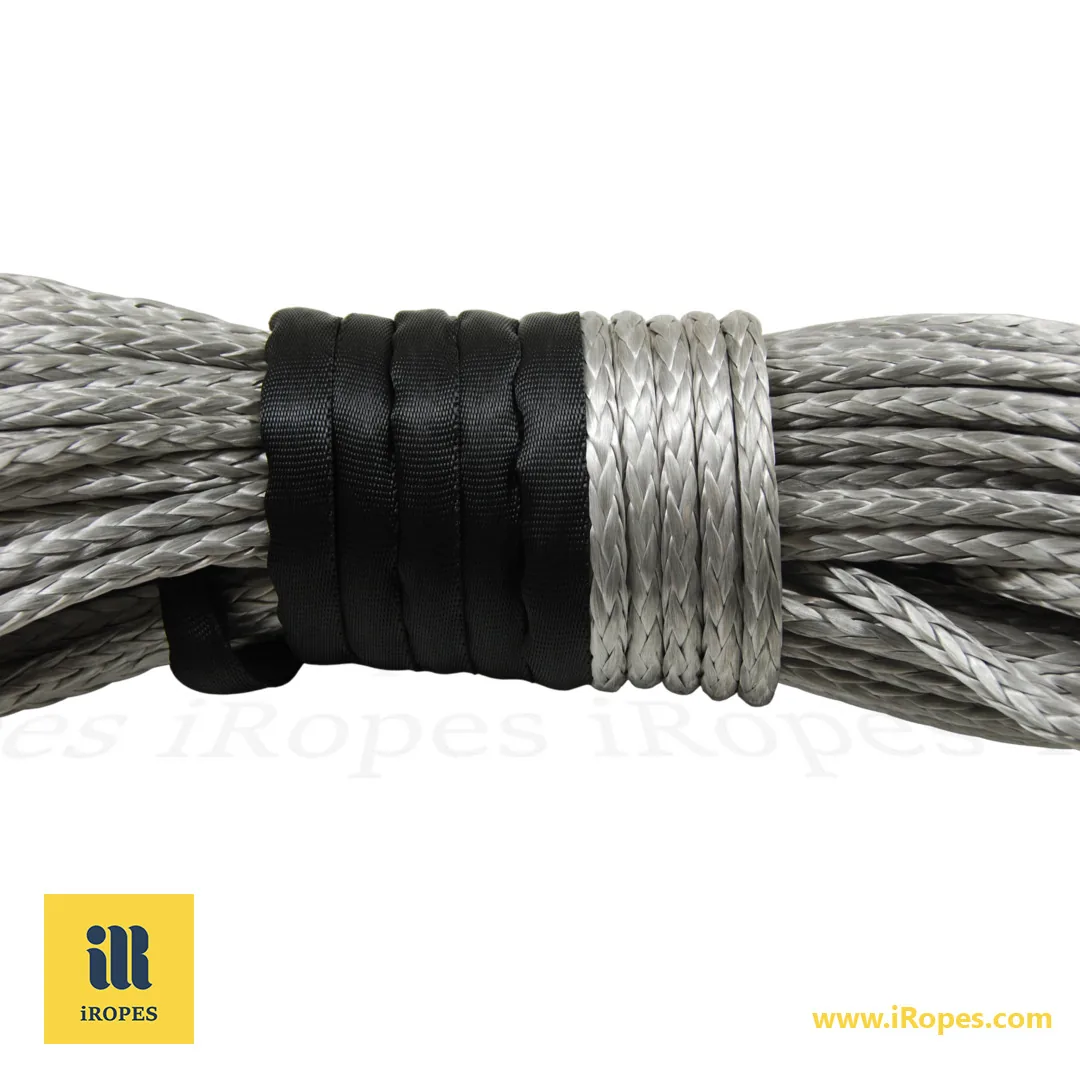
In chaotic marine conditions like yachting and offshore lifts, nylon sling protector sleeves outlast magnetic protectors by up to three times, extending sling lifespan from 1-2 years to a robust 3-5 years against saltwater abrasion and UV damage.
Unlock marine rigging advantages in a 12-minute read
- ✓ Boost sling durability by 150% in saltwater assaults, slashing downtime risks
- ✓ Halve replacement costs over 3 years with superior abrasion and UV resistance
- ✓ Gain quick-install expertise for yachting safety, reducing setup time by 70%
- ✓ Access iRopes OEM customisation to match your defence or spearfishing needs
You might assume magnetic protectors' effortless grip triumphs over sharp marine edges, yet they corrode swiftly in salty gales, potentially dooming your slings to early failure. What overlooked factor flips this script, letting nylon sleeves endure three times longer while cutting costs in half? Explore the counter-intuitive showdown that reveals why iRopes' tailored solutions quietly conquer the chaos—transforming your lifts from risky gambles to reliable routines.
Understanding Sling Protector Sleeve Essentials for Marine Durability
Imagine being on the open water, rigging a heavy yacht anchor or handling cargo on a bustling offshore platform. The last thing you want is your lifting sling snagging on a rusty edge or fraying against rough, salt-crusted surfaces. This is precisely where sling protector sleeves become indispensable. They are robust, fitted covers designed to shield your slings from daily damage like abrasion, cuts, and general wear. In demanding marine lifting scenarios, such as yachting excursions or cargo handling at sea, these sleeves serve as a crucial first line of defence, preventing sharp protrusions or abrasive materials from compromising your equipment.
These protectors are not one-size-fits-all; they must work seamlessly with various types of slings to ensure smooth operations. For example, they are highly compatible with synthetic options like nylon and polyester webbing slings, commonly used in marine work due to their lightweight strength. But which base sling material truly excels—nylon or polyester? The choice largely depends on your specific operational needs. Nylon slings offer greater stretch, up to about 10% under load. This characteristic makes them ideal for absorbing shocks during dynamic lifts, such as hoisting gear on a pitching deck. In contrast, polyester slings exhibit minimal stretch, providing superior control for precise positioning. They also offer better resistance against certain acids and alkalis often found in cleaning agents or seawater chemicals. Nylon, however, resists oils and greases more effectively but can weaken in acidic environments. The key is to match the protector to your sling's core properties to avoid any compromises in safety or performance.

Consider the potential consequences: without proper protection, a single snag could sever a sling, instantly transforming a routine lift into a dangerous hazard. Sling protector sleeves offer tangible benefits by significantly boosting overall safety—reducing the risk of equipment failure that could endanger crews or damage valuable cargo. Furthermore, they drive substantial cost savings by extending sling life. While an unprotected sling might need replacement every few months in harsh conditions, a reliable sleeve can dramatically prolong its service life, cutting down on downtime and procurement expenses. At iRopes, our ISO 9001-certified manufacturing ensures these essential protectors are built to last, utilising precision techniques that guarantee consistent quality for your demanding marine applications. It's not merely about adding a layer; it's about investing in peace of mind for every critical lift.
- Abrasion resistance – Shields against friction from rough surfaces like boat hulls or cargo containers.
- Cut prevention – Guards against sharp edges that could otherwise tear through synthetic fibres during tight choker hitches.
- Wear reduction – Slows down gradual degradation from UV rays and saltwater exposure over repeated uses.
Have you ever watched a sling slowly unravel from constant exposure? Sleeves fundamentally change that outcome, and when tailored correctly, they adapt to whatever the sea throws your way. Now that we've covered the basics of sling protection, let's delve deeper into one of the most resilient options specifically designed for harsh marine environments.
Nylon Sling Protector Sleeve: The Hidden Champion in Marine Mayhem
Building on those essential safeguards, the nylon sling protector sleeve stands out as a preferred *choice for anyone battling the relentless demands of the sea*. What makes them shine in spearfishing dives or offshore rigging operations? It's predominantly the material itself—nylon's robust weave provides exceptional abrasion resistance, shrugging off the scrape of barnacle-covered rocks or jagged metal decks. Unlike flimsier covers, nylon's inherent flexibility allows the sleeve to bend and adapt without cracking, even when manoeuvring around tight corners during a challenging haul. Moreover, in those endless sunny hours on the water, its superior UV tolerance significantly delays degradation, while it effectively repels saltwater splashes without absorbing moisture that could lead to rot. Picture hauling in a heavy spearfishing catch; the sleeve actively hugs the load, preventing fibres from fraying under constant friction and movement.

Getting a sleeve onto a sling isn't complicated, but proper installation makes all the difference. Quick Velcro designs snap around the sling in mere seconds—ideal for fast-paced yacht setups where every moment counts. Simply wrap it over high-wear spots, secure the fasteners tightly, and you're ready; no tools are needed, and removal is just as easy for inspections. Tubular styles, conversely, slide over the entire length like a sock, offering full, continuous coverage for longer runs, which is perfect if you're dealing with endless loops in boat rigging. These methods keep things simple and efficient, but always remember to position them precisely where contact and friction are most likely to occur, such as at choker points.
- Assess the sling's exposure points and select the sleeve length accordingly.
- Slide or wrap the protector, ensuring even tension without bunching.
- Test the fit under a light load to confirm a secure hold before full use.
Have you ever wondered about the actual *lifespan of a nylon sling* without added protection? Under typical conditions, you might expect 2-5 years of service. However, harsh marine abuse, including intense UV exposure and saltwater, can halve that lifespan if left unprotected. Nylon sling protector sleeves fundamentally change this dynamic, pushing reliable use to an impressive 3-5 years by effectively blocking these everyday threats—meaning fewer inspections reveal premature wear. On the cost front, a basic sleeve typically costs about 20-30% of a new sling's price, yet it delivers substantial savings: instead of replacing gear annually in tough conditions, you're looking at halving replacement costs over time. For heavy-duty boat rigging, opting for reinforced tubular nylon versions is highly recommended to handle repeated 10-tonne lifts without compromising integrity.
These sleeves aren't simply tough; they represent a smart operational choice for keeping your activities running smoothly. Yet, when sheer ease becomes the primary concern, some systems turn to magnetic alternatives. Do these really stack up in the same salty chaos?
Magnetic Sling Protectors: Quick Attachment but Short-Lived in Harsh Seas
The salty chaos you encounter on deck often demands tools that attach swiftly, without fumbling around in the spray. This is where magnetic sling protectors enter the scene. These clever devices use strong embedded magnets to grip steel loads securely, forming an immediate protective barrier precisely where your sling meets the edge. This mechanism excels when handling sharp, metallic protrusions, such as I-beams or engine parts during temporary setups on a fishing vessel or quick cargo shifts at a busy harbour. You simply position them at the contact point, and the magnets lock on, effectively distributing pressure to prevent direct sling damage from those biting edges. In those urgent marine tasks, like adjusting temporary rigging for a spearfishing outing, they dramatically reduce setup time, allowing you to focus on the lift rather than wrestling with cumbersome ties.
However, here's the critical caveat in prolonged saltwater exposure: these magnets, often neodymium-based, can begin to corrode after just a few wet cycles. This eventually weakens their hold, transforming a once-reliable guard into a potential liability. Salt air accelerates rust on their metal components, and without adequate sealing, moisture penetration can significantly shorten the protector's life to perhaps just a season or two in harsh marine environments. I've personally witnessed crews on offshore platforms needing to swap them out mid-job because the magnetic grip faltered, leading to risks that could have been avoided with a less finicky solution.
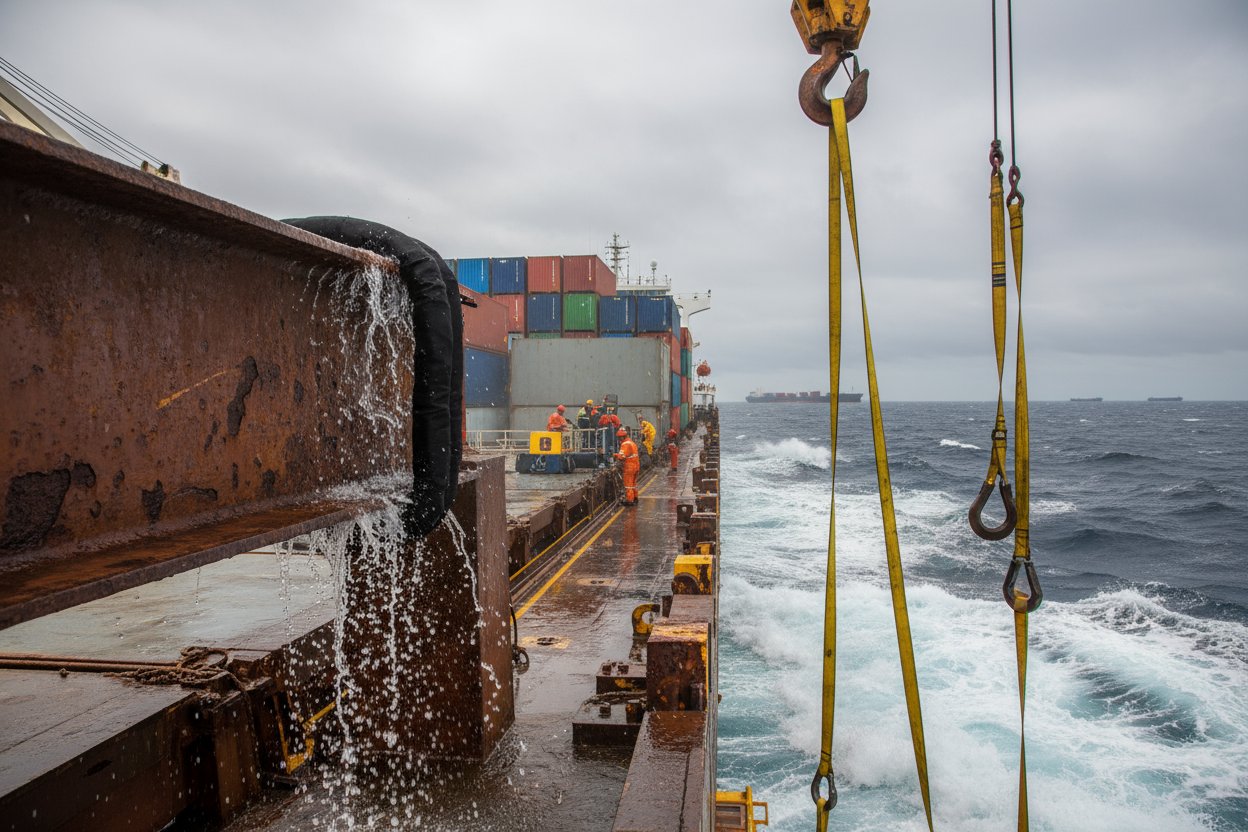
Installation could not be simpler, which is undeniably part of their appeal—you slide the protector onto the sling's bend around the load, allow the magnets to engage, and then adjust for even contact. There are no straps or sewing involved, making it perfect for on-the-fly changes during yacht maintenance. That said, proper maintenance demands constant vigilance: before each use, test the magnet strength by checking if it holds a test weight without slipping. Furthermore, rinse off any salt buildup to actively stave off corrosion. Wipe them dry after exposure, store them in a low-humidity spot, and regularly inspect for cracks in the housing that could further expose the magnetic core to damage.
Regarding compatibility, magnetic sling protectors pair most effectively with setups involving ferrous loads, but they readily adapt across various sling types. Consider the three main types of slings: synthetic web slings, renowned for flexible, lightweight handling of general cargo; wire rope slings, valued for their tough, non-stretch profile in heavy industrial pulls; and chain slings, which excel in high-heat or abrasive environments like welding areas. Magnetic protectors work seamlessly with these, effectively clinging to steel edges regardless of the sling's base material. However, it's worth noting their effectiveness diminishes significantly on non-magnetic materials like concrete or timber.
- Synthetic web – Versatile for marine loads, magnets prevent edge tears on steel anchors.
- Wire rope – Rigid strength for offshore drilling, with protectors guarding against kinks on pipes.
- Chain – Durable for rough handling, magnets add slip resistance during chain-over-edge manoeuvres.
When you compare them against nylon sleeves in extended marine operations, magnetic options consistently falter on reusability. Nylon's fabric withstands salt and UV without losing its integrity, allowing for dozens of cycles before significant wear appears. Magnetic options, however, demand more frequent checks and replacements due to that insidious corrosion. In a prolonged offshore haul, a magnetic protector might dislodge after just a few dozen lifts due to weakened adhesion, risking sling exposure, whereas nylon solutions remain steadfast through storms. While convenient for short bursts, for ongoing chaos, the advantage of reusability clearly belongs to more resilient fabrics—pushing us toward smarter, tailored choices that intelligently blend the best attributes of both worlds.
iRopes Customized Solutions: Outlasting Challenges with Tailored Sling Protection
These smarter choices frequently involve partnering with a manufacturer capable of crafting protection *exactly* for your specific setup, blending the inherent reliability of nylon sleeves with the strategic convenience of magnetic features where appropriate. At iRopes, this is precisely where our OEM and ODM services excel. We design custom nylon sling protector sleeves or even adapt magnetic sling protectors to meet your precise marine needs. Whether you are outfitting a yacht for smooth docking manoeuvres or preparing defence gear for rugged coastal operations, we flawlessly incorporate your branding—think logos expertly stitched into the fabric or colour schemes that perfectly match your fleet—while fine-tuning for critical aspects like enhanced saltwater resistance or specific load capacities. Our state-of-the-art facilities in China manage every stage, from meticulous material selection to final packaging, all under stringent ISO 9001 standards. This ensures you receive products that not only provide superior protection but also authentically reflect your operation's identity and commitment to quality.
Picture this scenario: during a challenging spearfishing expedition, where lines twist and pull unpredictably against coral or boat rails, a flexible nylon sling protector sleeve maintains security without restricting essential movement. Nylon slings themselves truly shine here because they are engineered for shock absorption in dynamic lifts—consider the sudden jerks from a powerful fighting catch or unpredictable wave surges—stretching just enough to effectively handle the force without snapping. This inherent characteristic makes them perfect for crucial tasks like safely hauling gear aboard or securing dive equipment. Conversely, for heavy industrial cargo on massive freighters, where loads are immense and edges can be unforgiving, we strongly recommend hybrid protectors. These innovative solutions combine nylon's exceptional durability with magnetic elements for rapid and secure steel grips, thereby significantly reducing setup time in demanding, high-volume ports.
Light-Duty Marine
Spearfishing & Yachting
Flexible Coverage
Nylon sleeves adapt to irregular pulls, preventing tears during active hauls.
UV-Resistant Layers
Custom weaves block sun damage for extended use on open decks.
Branded Fit
Personalised designs ensure seamless integration with your safety protocols.
Heavy Industrial
Cargo & Offshore
Hybrid Strength
Magnetic-nylon combos reliably grip steel loads for stable transfers.
Edge Defence
Reinforced padding handles repeated impacts from container edges.
Custom Sizing
Tailored lengths meticulously match your rigging for zero slippage in rough seas.
To ensure these custom pieces perform at their absolute peak, simple yet consistent maintenance is key. Always rinse off salt with fresh water after each use. Regularly inspect for frays or any magnetic weakening under controlled light loads. Store them carefully coiled in a dry, shaded area to prevent unnecessary UV exposure. We fully back this commitment with comprehensive IP protection, diligently safeguarding your unique designs from potential copycats throughout the entire production process. Furthermore, we manage global shipping directly to your specified location, whether it involves pallets destined for a U.S. port or individual kits for remote outposts. This unparalleled level of tailoring doesn't merely outlast the chaos; it transforms potential headaches into dependable routines, empowering you with lifts that endure whatever challenges the ocean presents.

In the unforgiving world of marine lifting, where saltwater and sharp edges relentlessly test every piece of gear, nylon sling protector sleeves emerge as the unequivocally superior choice over magnetic sling protectors for long-term durability. Their exceptional abrasion resistance, flexibility, and UV tolerance ensure slings consistently withstand years of chaos in yachting, spearfishing, and offshore operations. This extends their lifespan to a noteworthy 3-5 years while simultaneously slashing replacement costs by up to 50%, as explored in our cost-effective sling and rigging solutions. While magnetic options undeniably offer quick attachment for steel loads, they consistently falter under corrosion, necessitating frequent maintenance and checks. iRopes' custom OEM solutions meticulously tailor these protectors—intelligently blending nylon's inherent resilience with hybrid features—for your precise scenarios, thereby significantly boosting safety and efficiency without compromise. For more on synthetic options, check our comparison of synthetic rope slings vs. steel slings.
Ready to equip your team with protection that genuinely outlasts the mayhem? Our experts are on hand to guide you towards the ideal setup.
Need Custom Sling Protection Advice? Get in Touch
If you're seeking personalised recommendations to optimise your marine lifting operations, simply fill out the inquiry form above—we're here to help refine your solutions with iRopes' unparalleled expertise.