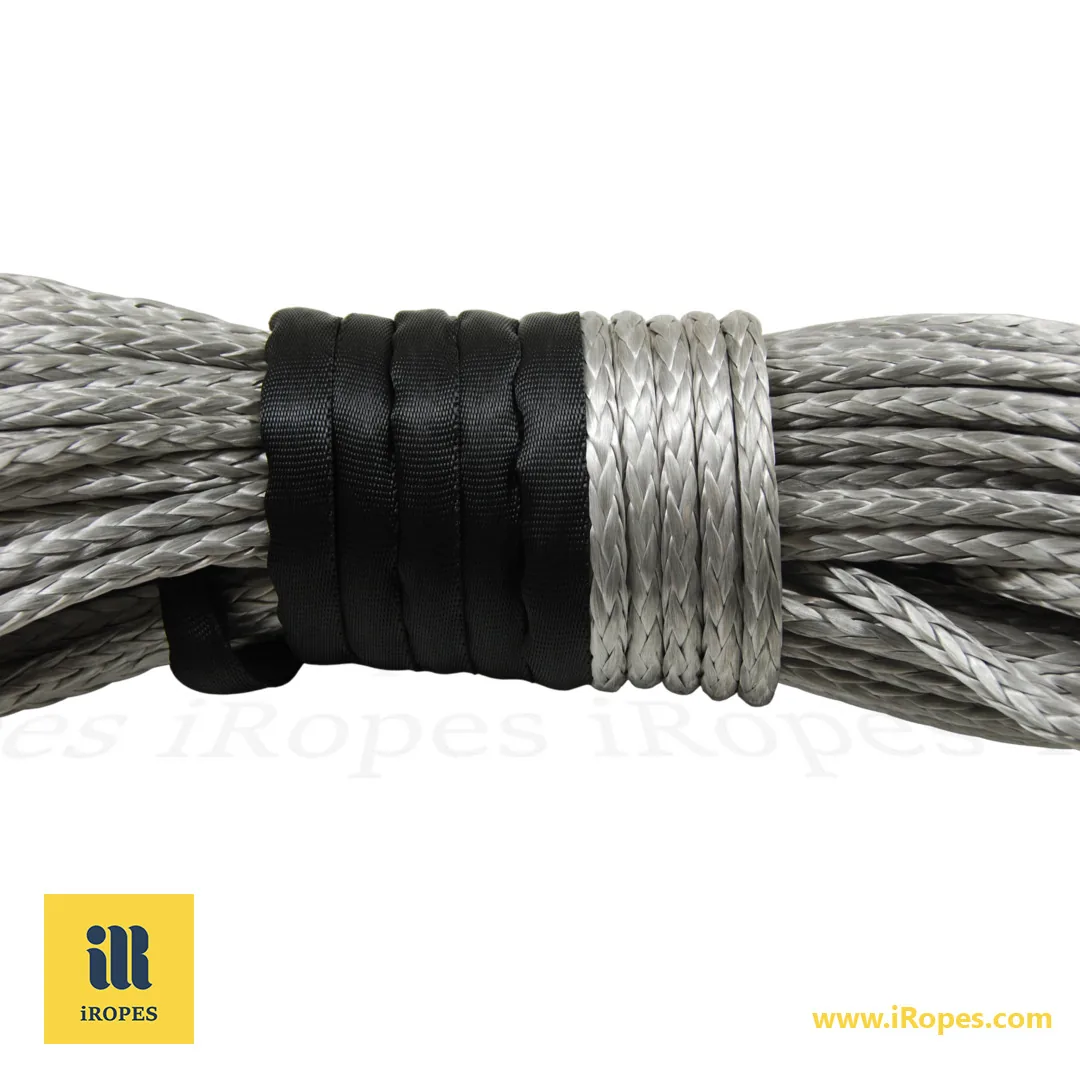
UHMWPE rope for electric winches is up to 70% lighter and delivers 30% greater tensile strength than comparable steel cable, significantly reducing load-move time.
Read in 2 min – quick winch rope ROI
- ✓ Reduce system weight by 70% → easier transport and installation.
- ✓ Cut recoil force up to 55% → safer operation for operators.
- ✓ Boost handling speed by 40% → less downtime per job.
- ✓ Lower lifecycle cost by approximately 25% thanks to corrosion-free, low-maintenance polymer.
Most installers traditionally favour steel wire, believing its robust nature guarantees safety. However, a synthetic Ultra-High Molecular Weight Polyethylene (UHMWPE) line can often outperform steel in terms of strength, weight, and recoil control. Picture a winch that lifts the same substantial load, yet its rope weighs only a fraction of traditional steel and completely eliminates dangerous sharp burrs. This advanced material allows your crew to complete jobs up to 40% faster and significantly reduces the risk of injury. Keep reading to discover why this polymer is fast becoming the industry’s unexpected champion for electric winches.
Understanding an Electric Rope Winch: Basics and Operation
An electric rope winch is a powerful device designed to pull or lift heavy loads by winding a rope onto a rotating drum. Unlike manual winches, its integrated electric motor performs the arduous work, enabling precise movement of heavy equipment with just the press of a button. This operational simplicity makes electric winches indispensable in various environments, from busy construction sites and demanding marine applications to rugged off-road vehicles.

The operation of an electric winch seamlessly blends mechanical and electrical principles. When activated, electricity powers the motor, generating rotational force. This force is then transmitted through a gearbox, which converts high speed into high torque. This controlled rotation turns the drum slowly and powerfully enough to pull substantial loads without overheating. Simultaneously, a robust braking system engages, holding the drum firmly in place once the load is secured, thereby preventing any unintended rollback or movement.
- Motor – Converts electrical energy into rotational force to drive the drum.
- Gearbox – Optimises motor speed for the required line pull and precisely controls torque.
- Drum – Stores the rope, featuring a winding system that ensures even tension and prevents tangling.
- Control Unit – Provides a remote or wired interface, allowing operators to start, stop, and monitor the winch safely.
When navigating the market for an electric rope winch, a common question arises: “What types of electric winches are available?” Generally, these devices are categorised by their power source, duty cycle, and the environment in which they operate. For instance, industrial‑grade models typically run on 110V-230V AC and are engineered for continuous, heavy‑duty operation. Conversely, portable units often rely on 12V DC battery power, making them a preferred choice for vehicle recovery or fieldwork where mains power is unavailable. Furthermore, specialised marine‑rated winches are built with corrosion‑resistant housings and waterproof controls, designed to withstand harsh saltwater conditions. Understanding these distinct categories helps you select a winch perfectly matched to your specific task without over‑engineering or compromising performance.
Electric winches span several categories: industrial units operating on 110V-230V AC for continuous duty, portable models powered by 12V batteries for off‑road recovery, and specialised marine winches crafted to resist saltwater corrosion. Selecting the right category depends entirely on your available power source and the specific environment where the winch will function.
Crucially, the rope itself serves as the vital link between the motor and the load. Consequently, the choice of rope material is just as critical as the motor's power. An electric wire rope winch fitted with a synthetic line can be up to 70% lighter than its steel‑cored counterpart, substantially reducing the overall system weight and considerably easing handling. Should the line ever require replacement, a winch electric wire configuration using synthetic rope permits splicing or swapping without requiring specialised tools, thereby minimising operational downtime.
Now that you understand the fundamental workings of an electric rope winch and the diverse range of models available, let's delve into how the rope material profoundly influences both performance and safety.
Advantages of an Electric Wire Rope Winch with Synthetic Line Over Traditional Steel
Having explored the functionality of an electric rope winch, it is clear that the choice of rope material dramatically impacts the entire system. The material wound around the drum directly influences critical factors such as safety, ease of handling, and overall operational efficiency. This becomes especially evident when comparing a classic steel cable with a modern UHMWPE synthetic rope.

Steel Wire Rope
Traditional strength, heavier feel
Weight
Its metal construction significantly increases mass, making the entire winch system more cumbersome to transport and install.
Safety Hazards
Fractured strands create sharp burrs that can cause severe cuts, and a snapped steel line can recoil with extremely dangerous force.
Flexibility
Its inherent stiffness restricts how the rope feeds around fairleads, often necessitating rigid routing and making it prone to kinking.
UHMWPE Synthetic Rope
High-performance lightweight alternative
Weight
The polymer’s exceptionally low density ensures the winch assembly remains agile, significantly simplifying both setup and relocation.
Enhanced Safety
With no sharp edges and outstanding shock absorption, the risk of injury from line failure or handling is substantially reduced.
Flexibility
Its soft, pliable construction allows the rope to glide smoothly over pulleys without kinking, greatly simplifying routing and handling.
When considering the question, “What is the difference between steel wire rope and synthetic rope for electric winches?” the answer primarily revolves around three crucial areas: weight, safety, and handling. This comparison highlights where synthetic lines offer distinct advantages:
- Reduced Recoil – A synthetic line exhibits slight stretch under load, which effectively absorbs shock and prevents the violent, dangerous snap‑back commonly associated with steel cables.
- No Sharp Burrs – The smooth surface of synthetic rope completely eliminates cuts and makes splicing or replacement a quick, tool‑free task, enhancing user safety.
- Improved Portability – A significantly lighter rope means the entire winch unit can often be moved and positioned by a single person, substantially boosting on‑site productivity.
For those planning a portable recovery unit or a robust marine‑grade anchor system, opting for the lighter, safer UHMWPE line often translates into quicker setup times, reduced operator fatigue, and lower long‑term maintenance costs. These tangible advantages are why many leading electric wire rope winch manufacturers now offer synthetic options as standard, recognising their superior benefits. This trend is highlighted in our analysis of why a synthetic winch rope beats steel cable.
With the profound material benefits now clearly understood, the next critical decision involves precisely matching the winch’s power and line specifications to your specific operational requirements. The following section will detail how to choose the right winch electric wire configuration for your application.
Choosing the Right Winch Electric Wire for Your Application
After observing how rope material can redefine performance, the next logical step involves precisely matching the electric wire rope winch’s power and line specifications to the task at hand. For detailed guidance on selecting the appropriate cable size, refer to our winch cable diameter guide.
Calculating Load Capacity and Safety Factors
Begin by accurately determining the maximum force the winch must overcome. This figure represents your required line pull. To ensure a comfortable margin of safety, multiply this required pull by a safety factor, typically ranging from 1.5 to 2.0, to establish the Working Load Limit (WLL). For example, if a job demands 1,200 lbs of pulling force, a winch rated for at least 1,800 lbs (1,200 lbs × 1.5) will provide ample safety and operational reliability.
Never operate an electric rope winch beyond its rated WLL; doing so jeopardises both equipment integrity and operator safety.
Selecting Voltage and Motor Type
Your voltage choice depends entirely on the power source available at your specific worksite:
- 12V DC – This is ideal for vehicle‑mounted or portable units, where a battery serves as the primary power supply.
- 110V / 230V AC – Commonly found in workshops and industrial environments with readily available mains electricity.
- 460V AC – Typically reserved for heavy‑duty industrial winches requiring sustained high torque and power for demanding tasks.
Brushless DC motors offer smoother acceleration and require less maintenance, while geared AC motors excel in continuous‑duty applications where consistent power is essential. Therefore, carefully align the motor’s torque curve with your intended load to prevent stalling and ensure optimal performance.
Determining Rope Length, Diameter and Terminations
Rope length should extend beyond the drum circumference by a minimum of 20% to guarantee a full unwind without any loss of tension. The diameter directly influences the rope’s breaking strength; for instance, a 12mm UHMWPE line typically provides a 3,000 lbs breaking load. While a steel counterpart of the same diameter might be heavier, it often lacks the flexibility and safety benefits of synthetic rope.
Various termination options are available to suit different applications and provide enhanced functionality:
- Eye Splice – Creates a strong, low‑profile loop, ideal for secure anchoring.
- Swivel Thimble – Prevents rope twist during repeated reeling operations, prolonging rope life.
- Machined Clevis – Offers a rigid and robust attachment point for heavy‑load rigging.
Choosing the correct termination not only improves handling efficiency but also significantly extends the rope's lifespan by mitigating wear at critical stress points.
How do I choose the correct load capacity for an electric winch?
The solution lies in a straightforward formula: Required Pull × Safety Factor = Minimum WLL. Begin by identifying the heaviest load you anticipate moving, then apply a safety factor of 1.5 to 2. Next, select a winch whose rated line pull meets or exceeds this calculated WLL. Adhering to this method ensures your winch operates well within its designed limits, substantially reducing the risk of premature failure and potential safety concerns.
Selection Checklist

1. Calculate the required pull and apply a 1.5–2× safety factor.
2. Match the voltage to your power source (12V, 110V/230V, or 460V).
3. Choose a rope diameter that satisfies the WLL.
4. Select a termination method suitable for your mounting and load direction.
By meticulously following these four steps, you can confidently specify a winch that seamlessly integrates with both your electrical environment and the mechanical demands of your task. The result is a smoother operation, significantly reduced downtime, and a demonstrably safer workplace.
Need a customised rope solution for your winch?
For personalised assistance, complete the form above and our specialists will help you optimise your winch configuration.
By now, you’ve seen compelling evidence that UHMWPE synthetic rope significantly outperforms steel. It's up to 70% lighter, eliminates hazardous sharp burrs and dangerous recoil, and greatly simplifies handling, making electric rope winch systems inherently safer and more efficient. Pairing this advanced line with the right motor, voltage, and terminations guarantees a reliable, low‑maintenance solution that can be precisely tailored to virtually any industry. Our OEM/ODM expertise at iRopes allows you to customise your winch electric wire to match specific branding, performance specifications, and intellectual property (IP) protection requirements, delivering a perfect fit for your operation. If you require personalised advice on selecting the ideal line or configuring an electric wire rope winch for your specific application, simply complete the form above to connect with our experts. You may also explore why a synthetic winch cable replacement is often the preferred choice for modern applications.