⚠️ Untuned sail rigging triggers 70% of catastrophic failures, compressing masts up to 55% beyond safe limits and risking instant dismasting mid-voyage. Discover how precise tuning—aiming for 15-20% breaking strength on key stays—transforms this hidden killer into your boat's unbreakable backbone.
Unlock Safer Sailing in a 7-Minute Read →
- ✓ Master components: Break down standing and running rigging to spot weaknesses before they fail, cutting inspection time by 40%.
- ✓ Acquire tuning skills: Follow step-by-step procedures for even load distribution, boosting vessel stability in 25-knot winds.
- ✓ Solve failure risks: Learn prevention tactics and upgrades like low-stretch Dyneema ropes, extending rigging life by 3-5 years.
- ✓ Gain upgrade insights: Tailor iRopes customisations for your rig type, enhancing performance without exceeding 10% of upgrade costs.
You reckon sail rigging's just a bunch of ropes holding things together—until a rogue gust snaps a shroud and your mast comes crashing down, as happened to that regatta crew last summer. But what if overlooked tuning tweaks could slash those odds by 80%, turning vulnerability into unshakeable control? Dive in to uncover the exact load paths and custom solutions that keep you afloat, no matter the swell.
Understanding Sail Rigging Fundamentals
Imagine you're out on the water, the wind picking up, and suddenly your boat heels too far—could that be a sign your rigging isn't up to the task? Sail rigging forms the backbone of any sailing vessel, a network of wires, ropes, and hardware that keeps everything from the mast to the sails in place and under control. At its core, sail rigging is the system that supports the mast and controls the sails, ensuring stability and efficient power from the wind. It breaks down into two main parts: standing rigging, which provides fixed structural support, and running rigging, which you adjust on the fly to trim the sails. This setup isn't just mechanical; it's what translates wind into forward motion while keeping your boat upright.
Think about it: without proper sail rigging, even the strongest winds can turn a leisurely sail into a fight for survival. I've seen it firsthand on a club race where loose shrouds led to a dismasted boat mid-regatta; the crew was safe but the lesson stuck. Quality rigging matters because it directly impacts safety by preventing collapses that could lead to sinking or injury. It boosts performance by allowing precise sail shape and speed, and it enhances durability against constant saltwater exposure and UV rays. In essence, it's the hidden guardian against the title's grim warning—untuned or worn rigging can indeed be a silent threat on the waves.

To get a handle on this, let's break it down simply. Standing rigging handles the heavy lifting of support—think of it as the boat's skeleton. It includes components like shrouds that run sideways from the mast to the hull for lateral stability, and stays that go fore and aft to prevent forward or backward sway. These are usually made from sturdy wire or synthetic lines, tensioned tightly and rarely adjusted. On the other hand, running rigging is your hands-on toolkit for sail adjustment. Halyards hoist sails up the mast, sheets control their angle to the wind, and other lines like vangs tweak shape for optimal airflow. These move freely, often using low-friction ropes that you can haul through blocks.
Historically, sail rigging evolved from ancient woven cordage on square-rigged ships, where sails hung across the wind, to today's fore-and-aft setups on modern sloops that slice through waves more efficiently. This shift, driven by naval innovations in the 19th century, adapted rigging for speed and manoeuvrability, paving the way for the precise, customizable systems we rely on now. What surprises many is how these fundamentals tie into everyday sailing—getting them right means less worry and more enjoyment.
Ever wondered why some boats feel rock-solid while others creak under pressure? It's all in these basics. Understanding them sets the foundation for everything from casual cruises to high-stakes races. With the basics of sail rigging established, let's dive deeper into its key components to see how standing and running elements work together for optimal sailing.
Key Components of Sailing Rigging Systems
Building on those foundational elements, the real magic of sailing rigging happens when you understand how its parts fit together like pieces of a well-oiled machine. Standing and running rigging aren't just abstract ideas—they're the tangible bits that keep your sailboat stable and responsive. Let's unpack them, starting with the fixed framework that holds everything upright.
Standing rigging forms the unyielding support structure for your mast and sails. At its heart is the mast itself, a tall spar that rises from the deck to carry the sails aloft—often made from aluminium or carbon fibre for lightness and strength. Flanking it are the shrouds, diagonal wires or lines from the mast to the hull's sides, preventing sideways lean in gusts. Forward and aft, stays like the forestay (to the bow) and backstay (to the stern) counter front-to-back forces, keeping the mast from buckling. Spreaders, those angled arms off the mast, push shrouds outward for better leverage, while turnbuckles at the base let you fine-tune tension with a simple twist. For modern setups, synthetics from manufacturers like iRopes offer a lighter alternative to traditional wire, using high-strength fibres that resist corrosion without sacrificing hold.
Standing Rigging Essentials
Structural Support Components
Shrouds
Lateral braces that stop mast sway, typically tensioned to handle side loads from wind pressure.
Forestay
Forward cable anchoring the mast bow-ward, crucial for headsail attachment and preventing forward bend.
Turnbuckles
Adjustable fittings for precise tension, allowing easy tweaks during setup or after heavy use.
Running Rigging Essentials
Adjustable Control Lines
Halyards
Lines that raise and lower sails, chosen for low stretch to keep sails taut without slippage.
Sheets
Control ropes that trim sail angle, often in polyester blends for grip during tacks and gybes.
Vangs
Boom downhauls that maintain sail shape, benefiting from Dyneema's minimal elongation under load.
Shifting to running rigging, these are the dynamic lines you handle constantly. Halyards hoist sails via pulleys, sheets pull them in or let them out to catch wind just right, vangs pull the boom down for a flat sail in puffs, and control lines manage finer tweaks like outhauls for the foot or reefing for storms. Rope choice here is key—low-stretch options like Dyneema from iRopes minimise sag, letting you maintain speed without constant adjustments. I remember swapping to such lines on a friend's ketch; the difference in responsiveness was night and day, especially in choppy waters.
Beyond lines, hardware makes it all workable. Blocks act as smooth pulleys to redirect forces and cut friction, winches provide leverage for hauling heavy loads, cleats lock lines in place with a quick wrap, and furling systems let you roll sails away in seconds for quick reefing. These components, often stainless or alloy, tie the system together seamlessly.
When it comes to sailboat rigging types, configurations vary to suit boat size and purpose. A sloop rig, with one mast and a mainsail plus headsail, keeps things simple for nimble handling on smaller vessels. Ketch rigs add a shorter mizzen mast aft, spreading sail area for easier management on larger cruisers—think balanced power without overwhelming one spar. These setups influence everything from speed to stability, but whatever your boat's style, quality components ensure they perform reliably.

Grasping these components shows why tuning them properly is next—get the tension wrong, and even the best setup can falter under strain.
Tuning Procedures and Load Path Analysis in Sailboat Rigging
Getting the components right is only half the battle—now comes the part where you make them work in harmony. Tuning your sailboat rigging ensures that every line and stay shares the load evenly, transforming potential weak spots into a resilient system. It's like tightening the strings on a guitar; too loose, and everything flops; too tight, and something snaps. For most sailors, this process starts shoreside before you even cast off, focusing on balance to handle real-world stresses on the water.
So, how do you rig a sailboat step by step, especially when it comes to tensioning those critical elements? The basics boil down to a methodical sequence that prioritises safety and even load distribution. First, step the mast securely, ensuring it's plumb side-to-side with temporary guys if needed. Next, attach and loosely fit the shrouds and stays, then use a tension gauge or Loos tool to snug them up gradually—aim for about 15-20% of breaking strength on the forestay for a typical cruiser. Adjust the turnbuckles in small increments, checking mast bend with a straightedge, and rake the mast slightly aft for better helm balance. Finally, tension the backstay last to fine-tune overall alignment, always double-checking for symmetry to avoid uneven wear. This isn't a one-and-done; revisit it after a few hours underway as the rig settles.
- Step the mast and attach initial stays loosely.
- Tension shrouds evenly using a gauge for lateral stability.
- Adjust forestay and backstay for proper mast rake.
- Test under light sail and refine for even load.
Once tuned, understanding the load path becomes your roadmap to reliability. This analysis traces how forces from wind and waves travel through the rigging—starting at the sails, compressing the mast downward while shrouds pull sideways, and stays counter fore-aft bends. Key stress points include the mast step, where compression can exceed 50% of total load, and chainplates, prone to fatigue from cyclic tension. If tuning is off, like over-tight cap shrouds, it amplifies these pressures, leading to metal fatigue or sudden failures that invert the mast or even capsize the boat. I've felt that uneasy creak on a downwind run once, realising a loose lower shroud was shifting loads unpredictably—tightening it mid-sail saved the day, but it underscored how small imbalances snowball.
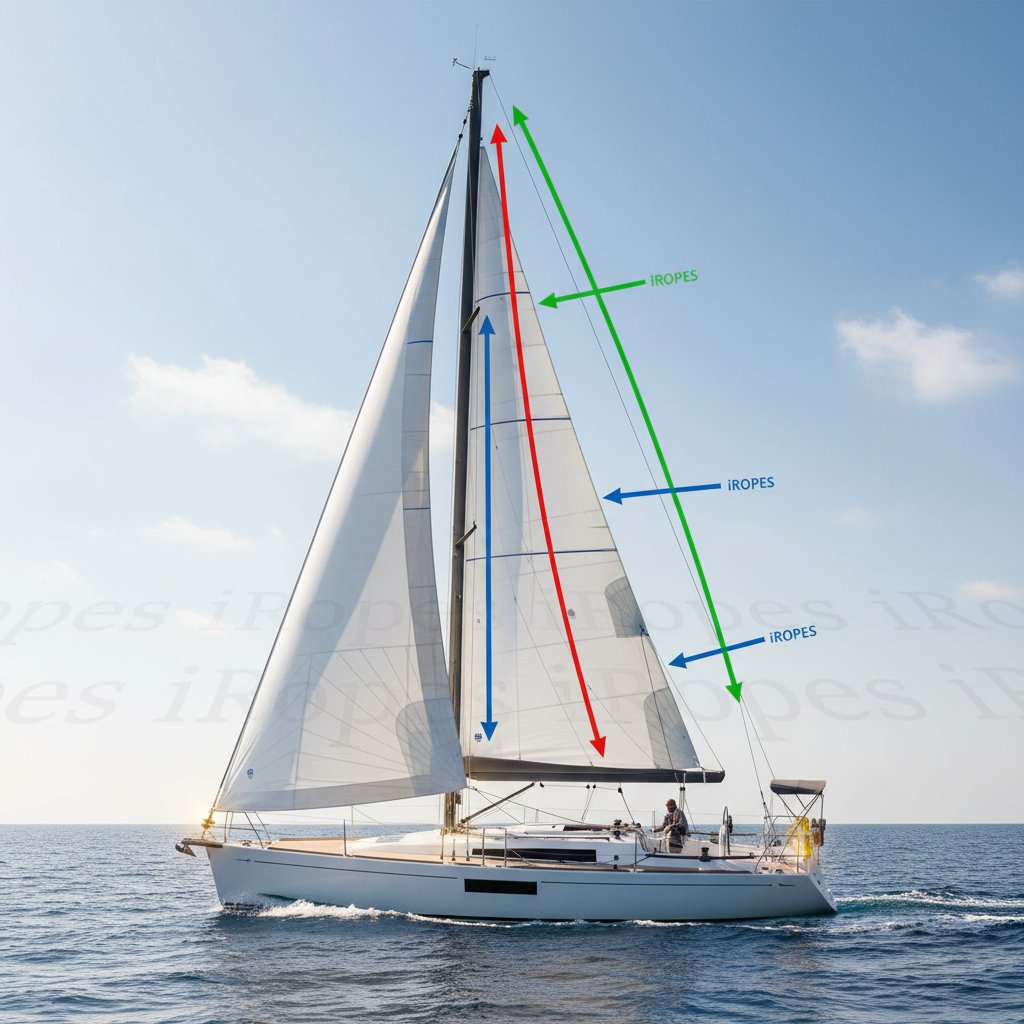
Tuning isn't static; it adapts to conditions. For racing, crank up the rig for a stiff mast and flat sails, emphasising minimal stretch to hold shape in puffs—think precise mast rake at 8-10 degrees for pointing high. Cruising calls for softer settings, allowing some give to absorb waves without constant tweaks, paired with sail trim that eases the mainsheet for comfort over speed. What works for a brisk upwind leg might overload downwind, so monitor with telltales and feel the helm's feedback. Companies like iRopes step in here with tailored options: select a parallel core for even load spread in high-compression scenarios, or bump diameters from 8mm to 10mm for added safety margins in rough seas. Their specialists match these to your boat's specifics, ensuring the rigging not only tunes well but lasts through seasons of varied use, as detailed in their marine rope specifications guide.
By dialling in these adjustments, you sidestep the pitfalls that turn adventures sour, paving the way for checks that keep everything shipshape over time.
Failure Prevention and Upgrade Recommendations for Sailboat Rigging
With tuning in place, the next step is staying ahead of the wear that can creep up unnoticed, turning a solid setup into a liability. Sailboat rigging faces relentless punishment from the elements and motion, so spotting trouble early keeps you sailing instead of scrambling. Common culprits include chafe, where friction from sails or hardware rubs through lines over time, UV degradation that weakens fibres after prolonged sun exposure, and overloads from sudden gusts or improper loading that push components beyond their limits. Have you ever noticed a faint fuzz on a sheet after a long summer season? That's UV breaking down the outer cover, a subtle sign that demands attention before it leads to snaps under strain.
To catch these issues, routine inspections form your best defence—think of them as quick health checks for your boat's backbone. Sailors often wonder how often to inspect rigging; experts recommend a full visual once a month during active use, plus thorough exams at season's start and end. Look for cracks in fittings, discoloured or brittle ropes, and any unusual play in connections. A simple hands-on pass can reveal problems before they escalate, saving costly repairs or worse.
- Check for chafe marks - Run your fingers along lines near blocks and sails for smooth wear spots that could deepen.
- Inspect UV damage - Feel for stiffness or fading colours, especially on exposed running lines, and test a small section by bending it sharply.
- Assess overload signs - Look for stretched stays or bent hardware, and measure tension with a gauge to ensure even distribution.
- Examine fittings - Tighten loose turnbuckles and scan chainplates for corrosion or cracks that might compromise support.
Preventing these failures starts with smart habits from the outset. Proper installation means aligning everything symmetrically and using the right splices to avoid weak points—skip shortcuts, and you'll avoid uneven stresses later. Seasonal care involves rinsing salt off after every outing and storing gear dry to fend off mildew or further breakdown. Opting for certified materials makes a big difference; iRopes' ropes, backed by ISO 9001 standards, undergo rigorous testing for strength and longevity, giving you peace of mind in harsh conditions, especially with their high-performance yachting ropes.
For upgrades that elevate your setup, consider shifting to low-stretch synthetics like those from iRopes, which hold shape better under wind without sagging and reduce fatigue on hardware. Adding reflective elements to key lines boosts visibility at dawn or dusk, a smart move for safer night-time passages or foggy races. These changes not only sharpen performance but also cut down on maintenance hassles, as explored in their guide to overcoming halyard line flaws.

iRopes takes this further with OEM and ODM services, crafting tailored solutions that match your racing demands or offshore needs—custom diameters for heavy loads or glow features for low-light ops. Their approach ensures upgrades fit seamlessly, boosting both safety and speed without guesswork. Implementing these tactics means fewer surprises and more confidence on the water, turning what could be vulnerabilities into strengths for every outing.
Mastering sail rigging fundamentals—from standing components like shrouds and stays to running elements such as halyards and sheets—ensures your vessel's stability and performance on the water. By following precise tuning procedures and analysing load paths, you can distribute stresses evenly, preventing fatigue at critical points like chainplates and masts. Regular inspections for chafe and UV damage, coupled with upgrades to low-stretch synthetics, safeguard against failures in racing or cruising conditions, turning potential hazards into reliable adventures.
With these strategies, sailors can boost safety and efficiency, especially through custom solutions that optimise diameters and core types for your specific needs. As we've explored sailing rigging and sailboat rigging intricacies, embracing proactive maintenance elevates every voyage.
Optimise Your Rigging with Expert Customisation
If this has sparked ideas for tailoring your sail rigging setup, the inquiry form above connects you directly with iRopes specialists for personalised OEM guidance and global delivery options.
