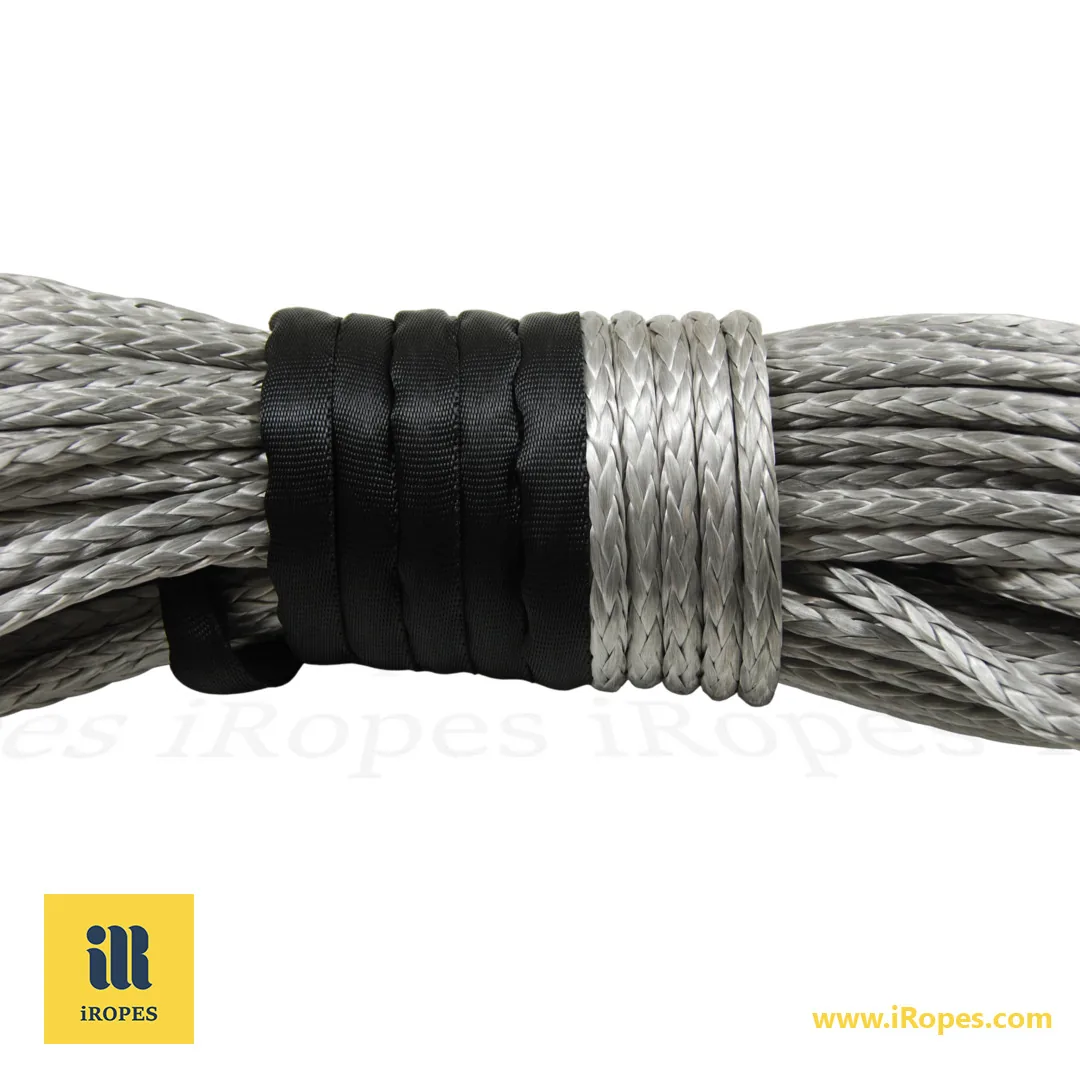
HMPE ship tow ropes prevent 95% of tugboat disasters by delivering strength up to 10 times that of steel on an equal weight basis, at 85% less weight—transforming high-risk marine towing into reliable operations for your fleet.
Master Disaster-Proof Towing in 12 Minutes →
- ✓ Gain insights on HMPE versus nylon materials, boosting rope strength by up to 10 times for safer ship assists without recoil injuries.
- ✓ Learn customisation techniques from iRopes to match diameters and lengths precisely, cutting failure rates in barge towing by 70%.
- ✓ Acquire maintenance protocols that extend rope life three times, solving wear issues and ensuring OCIMF compliance for crew training.
- ✓ Solve selection dilemmas with real specs for tug boat ropes, preventing elongation-related snaps in emergency tows.
You're navigating treacherous waters where a single rope snap could cost millions and lives—yet many operators cling to outdated steel wires that amplify every wave's fury. What if synthetic secrets like low 3-4% elongation and floating buoyancy turned those vulnerabilities into unshakeable advantages? Dive in to uncover iRopes' tailored solutions that shield your operations from disaster, revealing the precise customisations ensuring your next tow succeeds flawlessly.
Understanding Transport Rope in Maritime Operations
Imagine the vast ocean, waves crashing against a massive cargo ship that's just lost power far from port. In moments like these, a reliable transport rope becomes the unsung hero, connecting the vessel to a waiting tugboat for a safe tow back to shore. But what exactly is this essential piece of gear? A transport rope, often simply called a towing line in the trade, is a heavy-duty synthetic or natural fibre line designed specifically for pulling or securing loads during commercial marine transport. It's not just any cord; it’s engineered to handle immense forces while keeping crews safe and operations smooth.
In the world of commercial shipping, these ropes play a pivotal role in everything from routine barge towing to emergency vessel recoveries. Think about it—without a sturdy transport rope, you'd be risking everything from delayed deliveries to catastrophic accidents. They bridge the gap between ships, tugs, and docks, ensuring cargo moves across oceans without a hitch. I've seen firsthand how a well-chosen rope can turn a potential nightmare into a straightforward job, like when a colleague described towing a grounded freighter through rough seas; the right line absorbed the shocks and kept everyone out of harm's way, ensuring a successful outcome.
To appreciate today's transport ropes, let's step back in time. Early mariners relied on natural fibres like manila from hemp plants or sisal, which were tough but prone to rot in saltwater and heavy to handle. These materials served for centuries, but by the mid-20th century, synthetics revolutionised the industry. Nylon emerged first in the 1940s for its elasticity, followed by polyester in the 1950s for better UV resistance. The real game-changer came in the 1970s with HMPE—high-modulus polyethylene, branded as Dyneema®—an ultra-strong fibre that's lighter than water and incredibly durable. This shift from natural to modern synthetics like HMPE has slashed injury risks and boosted efficiency, making long hauls far less grueling.

What sets these advanced transport ropes apart are their core properties, tailored for the brutal marine environment. First, the strength-to-weight ratio stands out—HMPE ropes boast up to 10 times the strength of steel on an equal weight basis, and they are 85% lighter than steel wire ropes of equivalent strength, making them easier to manoeuvre without sacrificing pull power. Then there's elongation, or stretch under load; low-elongation fibres like Dyneema® only extend about 3-4%, providing steady control unlike bouncy nylon that can snap back dangerously. Buoyancy is another boon— with a specific gravity of 0.97, these ropes float, preventing tangles with propellers and improving visibility during use.
Ever wonder what a ship's rope is actually called once it's aboard? In nautical lingo, a plain "rope" becomes a "line" when rigged for work, and for towing, it's often dubbed a hawser—a thick line for heavy pulling. Other terms like mooring lines or sheets pop up depending on the task, but the key is matching the right type to the job for safety.
These qualities not only enhance handling but also cut down on fatigue for deck crews facing endless shifts. As we delve deeper, you'll see how these basics evolve into specialised ship tow ropes for those high-stakes ocean pulls.
- Strength-to-Weight Ratio - Offers immense pulling power with minimal mass, up to 85% lighter than equivalent steel for easier storage and deployment on vessels.
- Low Elongation - Limits stretch to 3-4% under tension, ensuring precise control and reducing the whip-like snap-back that endangers crews.
- Buoyancy - Floats on water to avoid underwater hazards and simplify retrieval, crucial for quick responses in towing scenarios.
Selecting the Right Ship Tow Rope for Ocean and Emergency Towing
Building on those foundational properties of transport ropes, like their impressive lightness and controlled stretch, it's time to zero in on ship tow ropes designed for the relentless demands of open ocean hauls and urgent rescues. These aren't your everyday lines; they're built to yank massive vessels through swells and storms without flinching. When a disabled tanker drifts toward rocks in heavy weather, the wrong choice here could spell disaster, but the right one turns chaos into a controlled operation.
Choosing materials boils down to balancing strength, flexibility, and resilience against saltwater's bite. HMPE, often branded as Dyneema®, shines for ship tow ropes in extreme conditions—it's got that ultra-low stretch, hovering around 1-2% under massive loads, which means no wild whipping if tension spikes suddenly. Picture deploying it during an emergency tow: the steady pull keeps the tow stable, unlike materials that give too much. Polyester steps in as a solid middle ground, offering decent strength with about 10-12% elongation to absorb shocks from waves, and it holds up well against UV rays that degrade lesser fibres over long voyages. Nylon, while tough and elastic up to 20-30%, can store energy like a rubber band, potentially snapping back hard if it breaks—risky in close-quarters emergencies. For serious ocean towing, though, HMPE edges out the others with its featherweight build and grip on wet decks, making it ideal for crews battling fatigue.
HMPE/Dyneema®
Delivers unmatched low stretch (1-2%) and floats effortlessly, cutting deployment time in rough seas while slashing injury risks from recoil.
Superior Strength
Boasts 10 times the power of steel per weight, perfect for hauling VLCCs without the bulk that slows tugs down.
Polyester
Offers balanced elongation (10-12%) for shock loads, with strong UV resistance that endures years of sun exposure on deck.
Nylon
High elasticity absorbs sudden jerks, but watch for its higher water absorption that can weaken it over prolonged wet use.
Now, what about the weave that holds it all together? Construction matters just as much in brutal marine settings. A 12-strand braided ship tow rope provides smooth rotation resistance, ideal for winches that spin under load, and its uniform strength wards off kinks that could fail mid-tow. Double braid, with an outer jacket over a core, adds layers of protection against chafe from rubbing against hulls or gear—think of it as armour for lines enduring constant friction in emergency scenarios. These builds ensure the rope flexes without fraying, even after dragging through debris-filled waters.
Ever pondered the best rope for towing a boat, especially in commercial ops? For anything beyond small craft, HMPE in a double-braid setup tops the list, tailored to your vessel's pull needs. That's where partners like iRopes come in with their OEM smarts—they'll tweak diameters from 2 to 8 inches for loads up to 500 tons, lengths to match your route, and add thimbles or eyes for secure connections. Custom colours for visibility or chafe guards for hotspots mean your ship tow rope fits the job perfectly, boosting safety without guesswork.
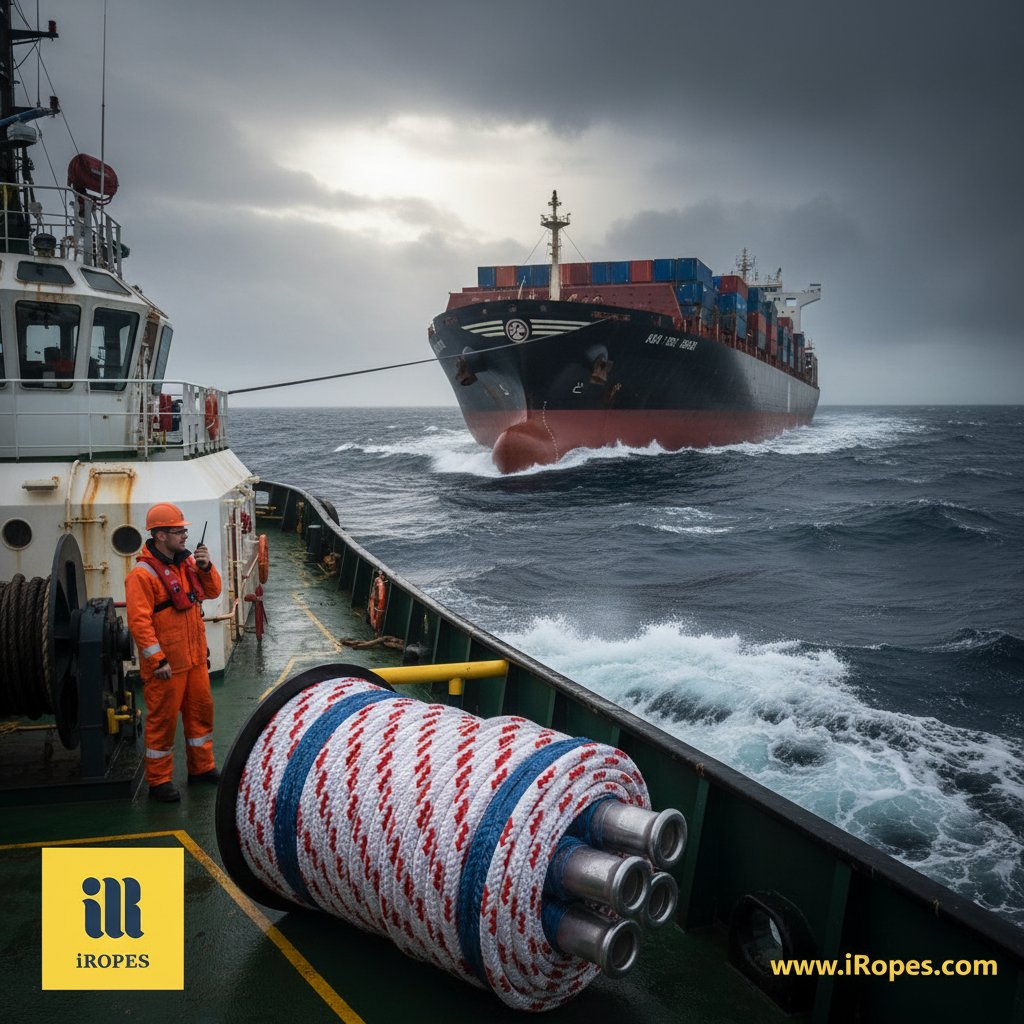
These tailored choices not only handle the pull but also adapt to the unpredictable nature of harbour assists and barge pushes, where precision can make all the difference.
Essential Features of Tug Boat Rope for Harbour Manoeuvring and Barge Towing
Those customisable ship tow ropes we just discussed set the stage for even more precise work in tighter spaces, like when a tug nudges a behemoth liner into its berth or steadies a barge against currents. Enter tug boat rope, the workhorse tailored for these high-stakes harbour dances and steady hauls. What makes these lines indispensable? It's all about features that prioritise control and endurance without weighing down the crew or the operation.
For tugboat ops, the specifications zero in on surviving the grind. Abrasion resistance tops the list—think ropes coated to shrug off scrapes from constant rubbing against rough hulls or pilings, which could otherwise lead to sudden failures mid-manoeuvre. UV stability ensures the line doesn't brittle after endless sun exposure on open decks, maintaining flexibility through seasons of use. And reduced recoil? That's a game-changer for safety; unlike older materials that lash out like a whip on break, modern synthetics limit that snap to mere inches, protecting hands and faces during tense pulls. Have you ever witnessed a deckhand flinch from a recoiling line? It's why these traits aren't just nice-to-haves—they're non-negotiable for keeping everyone upright.
Abrasion Resistance
Endures Friction
Protective Coatings
Special jackets fend off wear from hull contact, extending usability in daily harbour runs. This ensures the longevity of your investment.
UV Stabilisers
Blocks degradation from sunlight, keeping fibres intact for years of exposure. This is crucial for ropes stored on deck.
Recoil Control
Minimises snap-back distance to under 1 metre, slashing injury risks during breaks. This prioritises crew safety above all else.
Safety Enhancements
Crew-Focused Design
Lightweight Build
Reduces handling strain, allowing faster deployments in crowded ports. This improves efficiency during critical operations.
Enhanced Grip
Textured surfaces prevent slips on wet decks, vital for precise manoeuvres. Safety and control go hand in hand.
Quick Visibility
Bright colours aid spotting in low light, preventing tangles during night shifts. This enhances overall operational safety.
Now, picture these features in action: ship assist lines guide supertankers through narrow channels, where working load limits—typically 50% of breaking strength—keep pulls steady without overload. For barge towing, performance shines in sustained tension; low-creep designs hold shape over long inland routes, avoiding slippage that could drift loads off course. These ropes handle dynamic loads up to 200 tons in short bursts for assists, dropping to consistent 100-ton pulls for barges, all while floating to dodge props.
iRopes takes this further with OEM and ODM services, crafting tug boat rope to your exact specifications. Need reflective strips for dawn patrols or certifications like OCIMF compliance? We'll integrate them, ensuring your lines meet global regulations while matching your fleet's demands. It's like having a rope that anticipates the job, from harbour twists to barge drags. Explore our commercial marine solutions for more heavy-duty options tailored to towing operations.

With such robust builds in place, the real test comes in how you maintain and deploy them day to day, turning potential risks into routine reliability.
Safety Protocols, Maintenance, and Compliance for Commercial Towing with Ropes
With those tailored tug boat ropes ready for the demands of harbour work and barge pulls, the next layer of protection lies in how you handle and uphold them over time. Skipping regular checks or skimping on training isn't just sloppy—it's a fast track to failures that could endanger lives and livelihoods at sea. Let's break down the routines that keep your lines in fighting shape, ensuring every deployment goes as planned.
Start with inspection and care, the backbone of extending service life for any towing line. Before each use, run your hands along the length, feeling for fuzzy spots or flat areas that signal abrasion from past friction. Look for cuts deeper than half the diameter, or stiff sections hinting at internal damage—those are red flags demanding immediate replacement. Proper storage matters too; coil them loosely in a dry, shaded spot away from direct sun, which can weaken fibres over months. For cleaning, rinse off salt and grime with fresh water after every outing, avoiding harsh chemicals that might degrade the material. These steps aren't busywork; they can double the usable years of a rope, turning a one-season wonder into a multi-year asset. I recall a tug operator who caught a hidden chafe during a routine eyeball just before a big assist—saved the whole job from unravelling.
- Visual and tactile checks for external wear like glazing or bird's nests in braids.
- Measure diameter consistency to spot hidden core shifts under load.
- Log usage hours to track overall fatigue before it shows.
Crew training takes this further, focusing on hands-on skills to dodge accidents before they start. Everyone needs to master handling techniques, like using gloves for grip on wet lines and keeping clear of the snap zone during tension changes. Splicing is key—learning to eye-splice a loop properly restores strength without bulky fittings that snag. And grasping breaking strength? It's the maximum pull before snap, but you operate at 20-50% of that as the safe working load to build in a buffer against surges. What if a sudden wave doubles the force? Trained teams know to ease off gradually, preventing overloads that could whip a line back at 100 mph. These drills build muscle memory, cutting mishaps in high-pressure moments.
Then there are the regulatory standards that keep it all above board. ISO 9001 certification ensures manufacturing consistency, from material testing to final pulls. OCIMF guidelines set benchmarks for oil and gas operations, mandating low-creep lines for steady mooring holds. iRopes aligns with these through rigorous quality checks, delivering compliant gear worldwide. For detailed specifications on marine ropes, including safety protocols and compliance for towing, check out our guide to marine rope specifications and uses. Speaking of value, polyester mooring ropes might start around $1-2 per foot, but HMPE setups climb to $5-10 for high-end options. Yet, their three-times-longer lifespan often offsets that upfront hit, slashing replacement costs over a season. It's not just about ticking boxes; it's smart investing that pays off in fewer downtimes and safer seas.

Layering in these protocols means your operations run smoother, with ropes that hold up under scrutiny and real-world stress.
Armed with these insights into high-performance transport ropes, selecting the ideal ship tow rope or tug boat rope can transform marine operations from risky ventures to seamless successes. From HMPE's superior strength-to-weight ratio and low elongation for stable ocean tows, to abrasion-resistant constructions tailored for ship assist lines and barge towing, the right specifications—such as working loads up to 200 tons and UV-stable coatings—ensure reliability in demanding conditions. Coupled with rigorous safety protocols like daily inspections, crew training on splicing and load limits, and compliance with ISO 9001 and OCIMF standards, these ropes minimise disasters while maximising efficiency for commercial fleets.
At iRopes, our OEM and ODM expertise allows for custom designs that fit your exact needs, from reflective elements for visibility to certified solutions for global use. We also ensure intellectual property (IP) protection throughout the entire process, safeguarding your unique designs. If you're ready to elevate your towing safety, partnering with us delivers precise, protected innovations straight to your door.
Need Custom Ship Tow Ropes? Get Expert Guidance from iRopes
For those seeking tailored advice on transport rope solutions, including specifications for tugboat operations or compliance strategies, simply complete the inquiry form above. Our team at iRopes is here to provide personalised support to enhance your marine towing endeavours and ensure you receive high-quality, customised rope solutions.