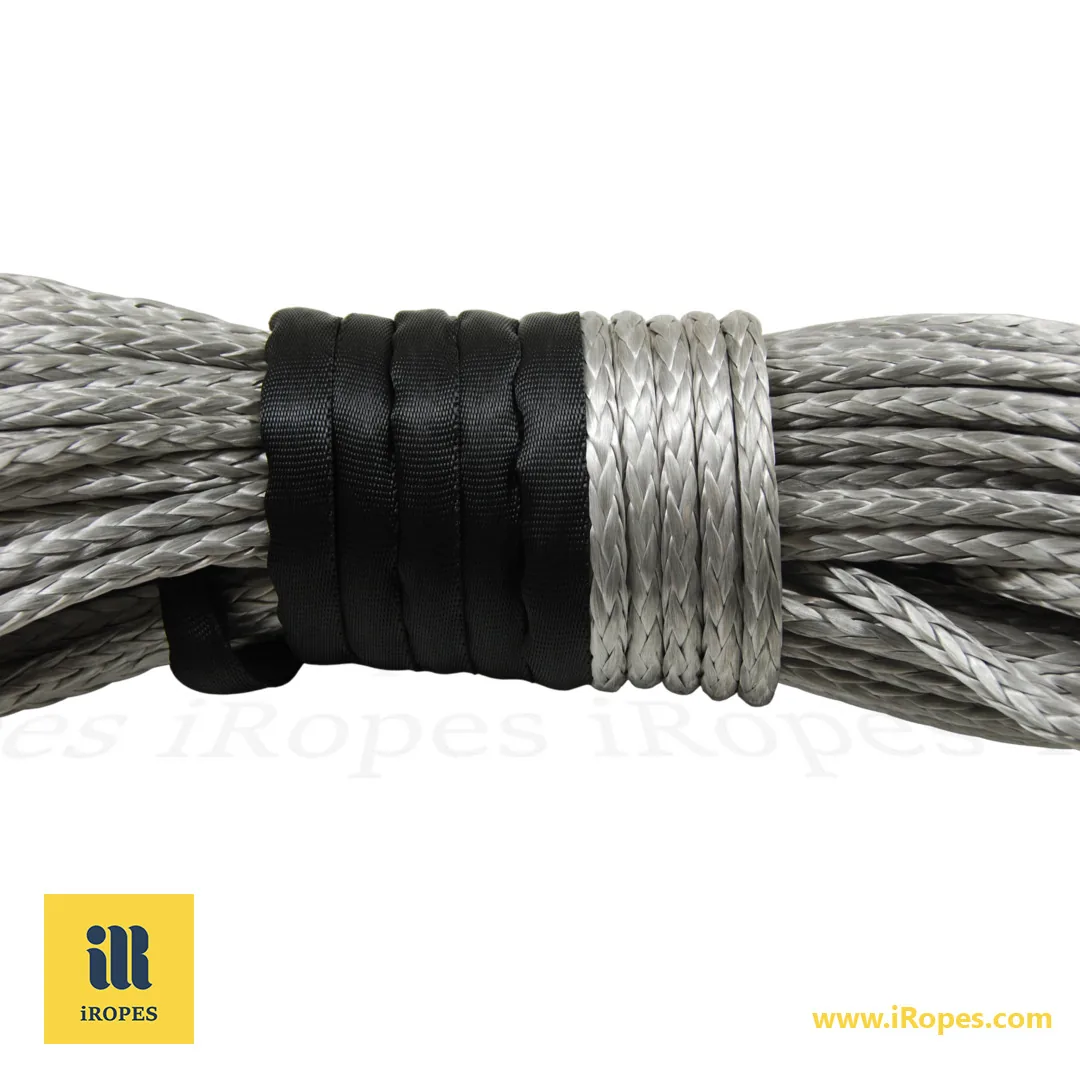
Fibre rope outperforms steel cable with 17.8% greater tensile strength per kilogram and a 44.6% weight reduction, delivering more lift with less mass.
Key benefits – ≈2‑minute read
- ✓ 17.8% higher tensile strength per kg versus steel cable
- ✓ 44.6% lighter, cutting handling effort and rig‑up time by up to 30%
- ✓ Up to 2.3 years extra service life from superior fatigue resistance
- ✓ ISO 9001‑certified custom fibre solutions ensure consistent performance worldwide
You might traditionally consider steel cable the undisputed heavyweight in lifting, but the data often challenges this belief. Our high‑modulus fibre ropes consistently out‑lift steel equivalents while weighing less than half as much. This counter‑intuitive advantage stems from advanced filament technology and specialised core designs that boost both tensile strength and fatigue resistance. Keep reading to discover the exact metrics, crucial safety protocols, and why switching could significantly reduce the load on every lift you make.
Understanding Cable Steel Wire: Definitions and Core Concepts
After highlighting how modern lifting solutions are significantly reshaping safety standards, you'll naturally want to understand the specifics behind the term cable steel wire. Fundamentally, this phrase describes a high‑strength rope, meticulously fabricated from steel strands. It's engineered to bear significant loads while retaining essential flexibility. Understanding this terminology is crucial, as it enables you to ask precise questions when comparing products or requesting a custom quote.
The industry often uses steel cable wire rope interchangeably with various other terms, yet subtle distinctions exist. A cable steel wire is constructed from individual wires twisted into strands, which are then wound around a central core. This intricate construction provides the rope with its characteristic tensile strength and resistance to crushing forces. When you encounter the term “steel rope wire,” it generally refers to the same family of ropes, although manufacturers might emphasise particular features like a specific coating or core type.
To better visualise its internal structure, consider the three essential components that form every steel rope:
- Wires – These are the smallest metallic elements, twisted together to form a strand.
- Strands – These are bundles of wires, subsequently twisted around a central core.
- Core – Acting as the rope's spine, the core can be either fibre or an independent wire rope, providing critical support and maintaining its shape.
One common question that frequently arises is: “What is the actual difference between wire rope and steel cable?” Practically speaking, a wire rope typically refers to a larger‑diameter assembly with a specific strand pattern, often designated for heavy lifting or rigging operations. Conversely, a steel cable can refer to smaller‑diameter versions, such as aircraft cable. Though still constructed from the same fundamental wires and strands, these are often marketed for lighter‑duty or even decorative applications. Ultimately, the distinction is largely historical, based more on typical applications than on inherent material composition.
When you choose a steel rope, you’re trusting a structure engineered to resist fatigue, corrosion, and crushing forces—a level of reliability that is genuinely hard to match.
Opting for a product from an ISO 9001 certified supplier further enhances confidence. iRopes’ ISO 9001‑certified facilities guarantee that every length of steel rope wire consistently meets precise tensile specifications, undergoes rigorous testing, and comes with traceable documentation. This assurance means the rope you receive will perform exactly as outlined in the data sheet, whether you're securing a marine rig or installing a high‑rise architectural railing.

Material and Construction Choices for Steel Cable Wire Rope
Building on the assurance that iRopes’ ISO 9001‑certified production ensures consistent quality in every length, your next crucial step involves selecting the appropriate material and construction. The decisions made here will directly determine how the rope performs when subjected to harsh weather, corrosive salty air, or abrasive environments.
When you order a cable steel wire, the available material options typically include four popular finishes. Galvanised steel features a hot‑dip zinc coating, providing effective rust protection while remaining cost-effective—an ideal choice for indoor warehouses or occasional outdoor applications. Type 304 stainless steel offers good corrosion resistance, suitable for freshwater environments or mild industrial settings, though its performance can diminish in saline conditions. For superior resistance to chloride‑induced pitting, particularly in marine environments, Type 316 stainless steel is the preferred upgrade due to its added molybdenum. Finally, vinyl‑coated variants encase the steel in a protective polymer sheath, which boosts abrasion resistance and offers a distinct colour that can also serve as a visual safety indicator.

The specific construction pattern you select profoundly influences the rope’s flexibility, fatigue life, and crush strength. Below, you’ll find a quick reference that addresses the common query: “What are the different types of steel wire rope construction?”
- 1x19 – This construction consists of a single strand made of 19 wires. It is exceptionally rigid, making it ideal for static loads such as architectural railing.
- 7x7 – Composed of seven strands, each containing seven wires, this construction provides a balanced combination of flexibility and strength, suitable for general‑purpose rigging.
- 7x19 – With seven strands, each comprising 19 finer wires, this variant maximises flexibility and fatigue resistance, making it perfect for dynamic applications like winch cables and sailboat sheets.
For applications demanding superior crush resistance, a 6x19 IWRC (Independent Wire Rope Core) is often specified. This construction replaces the traditional fibre core with a smaller steel rope, significantly enhancing its load‑bearing capacity, particularly under impact. The choice of core also fundamentally influences how the rope manages bending stresses.
Core Choices
A fibre core ensures the rope remains lightweight and effectively dampens vibration, making it well‑suited for tree‑work or light‑duty lifting. In contrast, an Independent Wire Rope Core (IWRC) provides greater rigidity and higher crush strength, which is why many engineers prefer it for heavy‑duty industrial lifts. iRopes can precisely tailor the core to your exact steel rope wire specifications, whether your project demands a softer feel or rock‑solid rigidity.
By carefully matching the material, construction, and core to the specific environment and application, you will acquire a rope that not only adheres to the required Working Load Limit but also confidently endures the daily wear and tear. The following section will translate these crucial choices into tangible real‑world performance metrics and essential safety checklists.
Performance, Safety, and Application Insights for Steel Rope Wire
Once you’ve made your material and construction decisions for a steel rope wire, the crucial question becomes: how does it perform under actual load? Understanding the key performance metrics and adhering to daily safety checks transforms a high‑strength cable into a consistently reliable and safe partner.
Two critical figures are standard in our industry: the Working Load Limit (WLL) and the Minimum Breaking Load (MBL). The WLL represents the maximum load you should ever apply in service. This is rigorously calculated by dividing the MBL by a safety factor, which is typically set at five to one. Therefore, a rope rated with a 10‑tonne MBL should never carry more than two tonnes during regular operation. This crucial buffer protects against sudden shocks, mitigates the effects of wear, and guards against unexpected overloads, ensuring optimal safety.
- Visual Inspection – Always look for frayed wires, signs of corrosion, or broken strands before each use.
- Measure Elongation – Confirm that any permanent stretch remains within the manufacturer’s specified tolerance, as exceeding this signals fatigue.
- Check Terminations – Ensure all thimbles, clamps, or swage fittings are securely tight and completely undamaged.
Consistently applying these checks significantly reduces the risk of sudden failure, particularly when the rope is integrated into a critical lifting assembly or a marine rigging line.
Industrial Lifting
For demanding crane hoists and winches, a 6x19 IWRC core paired with 316 stainless steel provides the superior crush resistance and extended fatigue life required for heavy‑duty cycles.
Architectural Railing
When aesthetics must align with load‑bearing capability, a rigid 1x19 galvanised rope delivers the clean lines characteristic of a cable‑rail system while consistently meeting the required WLL.
Marine Rigging
A 7x19 construction with a 316 stainless core effectively resists salt‑water pitting, making it an ideal choice for winch sheets and anchoring lines on yachts.
Tree Work & Off‑Road
A lightweight fibre core, combined with a 7x7 layout, offers the flexibility required for dynamic loads while ensuring the rope remains easy to handle on challenging rough terrain.
iRopes takes these application nuances even further. Our comprehensive OEM/ODM service allows you to specify the exact construction, colour, branding, and accessories required. Whether you need a custom‑length coil for a winch drum or a colour‑coded sheath for rapid visual identification on a busy construction site, we have you covered. Every batch departs our ISO 9001‑certified factory with full traceability, ensuring the cable steel wire you receive precisely matches the data sheet you relied on during your selection process.

You’ve now seen how modern fibre ropes can not only match but often exceed the strength and safety standards traditionally associated with steel alternatives. For a detailed side‑by‑side comparison, read our synthetic rope vs wire winch cable guide. Understanding the intricate anatomy of cable steel wire, the critical influence of strand patterns, and the industry‑standard 5:1 safety factor empowers you to select a rope that precisely meets the required Working Load Limit while effectively minimising concerns about fatigue and corrosion. Our research also examines the differences between braided wire rope and steel to help you choose the best material for your application. If you’re evaluating purchase options, see the steel wire rope vs synthetic rope buying guide for insights on sourcing. Whether your project demands the inherent rigidity of a 1x19 layout for architectural railing or the enhanced flexibility of a 7x7 construction for dynamic loads, the ideal steel cable wire can be meticulously engineered to your exact specifications. Furthermore, a thoughtfully chosen fibre rope can deliver comparable performance, often complementing a reliable steel rope wire effectively.
Request a personalised rope solution
If you would like a customised recommendation—whether it is a high‑strength fibre rope or a specialised steel option—please complete the form above, and our experts will promptly get in touch to help you design the perfect solution.