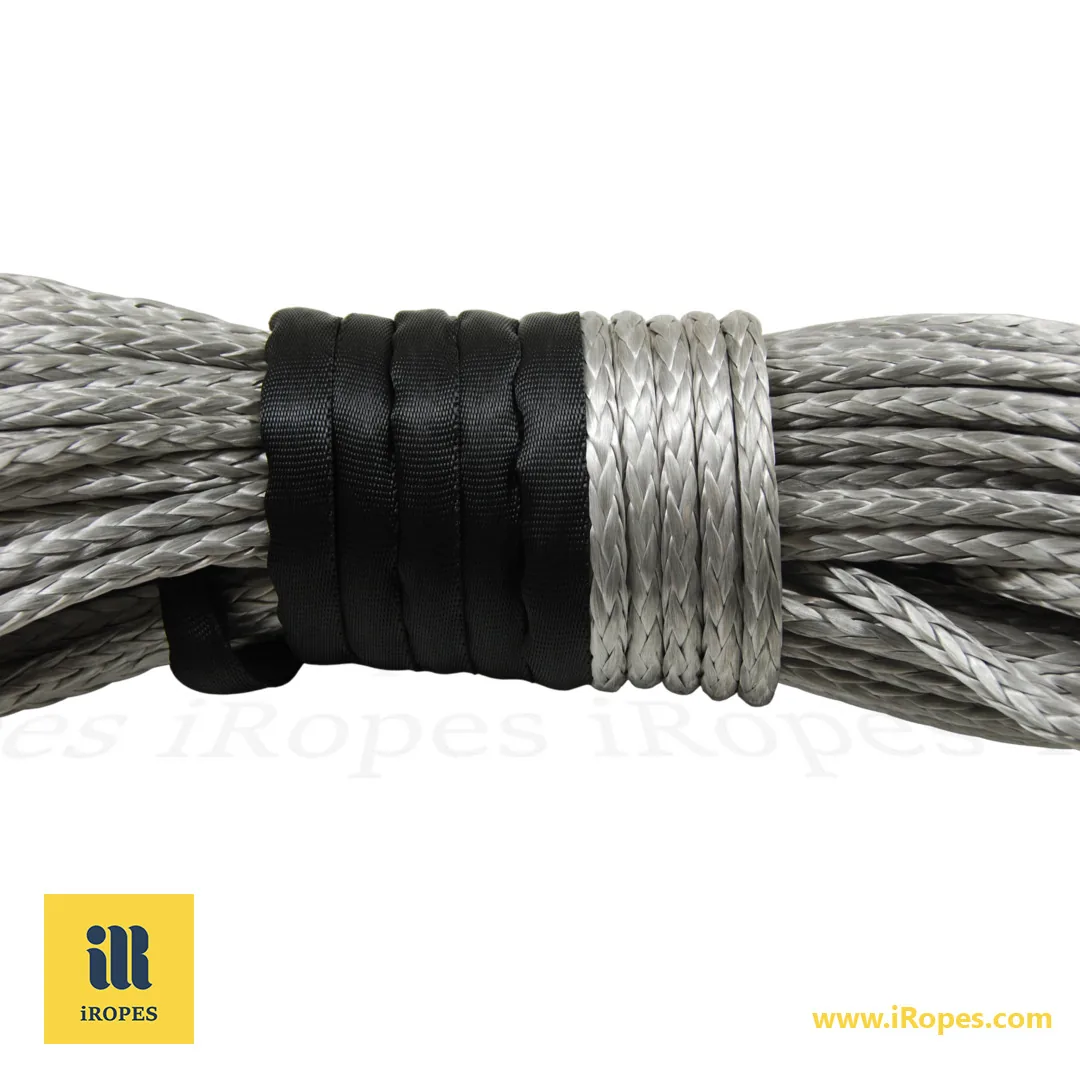
Synthetic rope outperforms steel – up to 3 times lighter and offers a 27% lower total ownership cost for typical industrial use.
Key Takeaways – 2.3 min read
- ✓ 3 times lighter handling can reduce labour time by up to 15%.
- ✓ Corrosion‑free fibres cut coating upkeep by approximately 22% annually.
- ✓ Elastic stretch lowers equipment wear by 18%.
- ✓ Total cost of ownership drops by around 27% compared to steel over five years.
You might assume steel’s raw tensile strength makes it the obvious pick for any heavy load. However, a side‑by‑side analysis often flips the script, revealing synthetic rope as the clear winner when factoring in weight, corrosion resistance, and long‑term cost. In the sections ahead, we’ll unpack the data behind these disadvantages for steel and show how iRopes’ custom solutions transform these challenges into profit‑boosting advantages for your operations.
Buy Rope – Understanding Rope Types and Selection Criteria
A mismatched rope can halt production or compromise safety. Therefore, the next step involves recognising the three broad families of rope dominating industrial and marine markets. Each family brings its own blend of strength, flexibility, and environmental resilience, enabling wholesale buyers to pinpoint the exact product that will perform reliably in their specific use‑case.
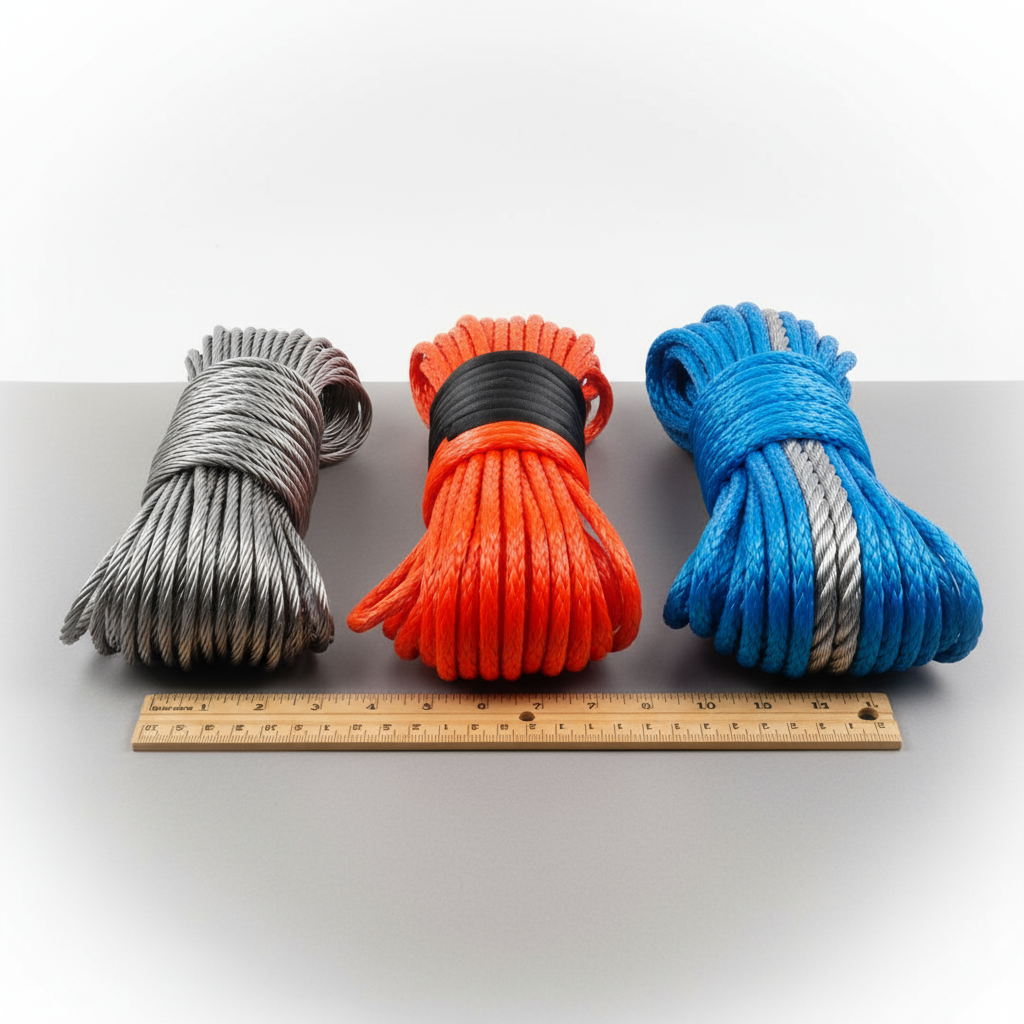
Here is a quick visual guide to the three main categories you will encounter when you buy rope online or through a catalogue:
- Steel wire rope - Composed of twisted metal strands, this rope excels in high‑tensile strength and crush resistance.
- Synthetic fibre rope - Made from nylon, polyester, or HMPE fibres, it offers lightweight flexibility and excellent corrosion resistance.
- Hybrid rope - This option combines a steel core with a synthetic sheath, effectively balancing strength with easier handling.
Key Factors for Wholesale Buyers
When you buy a rope in bulk, three primary variables significantly influence the decision:
- Application – tasks such as lifting, rigging, mooring, or towing each impose distinct stress patterns and performance requirements.
- Load requirements – the Working Load Limit (WLL) must reliably exceed the maximum anticipated force, always with a built‑in safety factor.
- Environmental conditions – exposure to saltwater, chemicals, UV radiation, or extreme temperatures dictates the need for corrosion‑resistant coatings or UV‑stable fibres.
For instance, a coastal construction firm will likely favour stainless‑steel or coated wire rope to withstand salty breezes. Conversely, a logging operation may prioritise the low weight and shock‑absorption capabilities of a polyester fibre rope for its specific needs.
How to Evaluate Product Listings When You Intend to Buy Rope Online
Online catalogues often present a vast array of specifications. To avoid costly mistakes, focus on the following checkpoints:
- Confirm the material – look for descriptions like “galvanised steel,” “AISI 316 stainless,” or “HMPE” to ensure it’s appropriate for your application.
- Identify the construction code – numbers such as 6×19 or 7×7 reveal crucial information about the rope's flexibility and fatigue resistance.
- Check the diameter and length options – ensure the offered sizes precisely match your equipment’s fittings and operational needs.
- Verify the Working Load Limit and any coating details – these factors directly influence both safety and longevity in your specific use case.
- Review supplier certifications – certifications such as ISO 9001 or other relevant industry standards signal robust quality control and reliability.
By cross‑referencing these data points with the operational profile you have mapped, you can confidently decide whether to buy wire rope or opt for a synthetic alternative that better suits your handling requirements and environmental challenges.
“Choosing the right rope isn’t just about price; it’s about matching material, construction, and environment to avoid costly downtime.” – Senior Rigging Engineer
With these rope categories, selection criteria, and evaluation steps in hand, you are now well‑prepared to compare the performance nuances of steel versus synthetic ropes in the next section.
Buy a Rope – Wire Rope Specifications, Constructions, and Performance
Now that you know how to interpret a product listing, the next step involves understanding the technical language that indicates whether a rope will meet your project’s specific demands. Whether you plan to buy rope for a marine rig, a construction hoist, or a custom‑engineered solution, the material, construction, and key specifications will ultimately determine its safety, durability, and cost‑effectiveness.
Material Choices That Matter
Three main steel grades dominate the wire‑rope market:
- Galvanised steel – This carbon‑steel core, coated with zinc, offers good corrosion resistance suitable for general‑purpose outdoor use.
- Stainless steel (AISI 316) – An alloy containing molybdenum, it performs exceptionally well in salty or chemically aggressive environments, making it ideal for offshore or food‑processing applications.
- Bright wire – This untreated steel delivers the highest tensile strength, but it requires a protective finish if exposure to moisture is anticipated to prevent rust.
Choosing the correct alloy represents the first line of defence against premature wear, particularly when you intend to buy wire rope for use in harsh climates.
How Constructions Affect Flexibility and Fatigue Life
Wire‑rope construction is typically expressed as “X × Y,” where X represents the number of strands and Y signifies the number of wires per strand. This pattern significantly influences how the rope bends, how it absorbs shock, and how long it lasts under cyclic loading.
- 1×19 – Features a compact core, providing excellent crush resistance but limited flexibility.
- 6×19 – Offers a balanced combination of flexibility and strength, commonly used in general‑purpose rigging applications.
- 7×7 – Provides maximum flexibility, making it ideal for applications that require frequent bending.
For example, a 7×7 rope bends smoothly around a winch drum, whereas a 1×19 line maintains its shape under heavy loads but feels stiff in tight loops.
Essential Specifications You’ll Evaluate When You Buy a Rope
Every reputable supplier lists four core data points that are critical for your evaluation:
- Diameter – This determines the cross‑sectional area and influences both the rope’s weight and handling characteristics.
- Length – Ropes are offered in standard cuts, custom rolls, or kit bundles, depending on your installation methods and project requirements.
- Working Load Limit (WLL) – This represents the maximum safe load, calculated as a fraction of the Minimum Breaking Load (MBL), and must exceed your peak force with an appropriate safety margin.
- Coating options – Layers of PVC, vinyl, or polyurethane protect against abrasion, UV rays, and chemicals, thereby extending the rope’s overall service life.
When you buy wire rope, always verify that the WLL matches the highest load your equipment will encounter, and confirm that any coating fully complies with the operating environment’s specific conditions.
Key Specs at a Glance
Diameter ranges from 1/16 in. to 1 in.; lengths are customisable by the metre or foot; WLL is calculated per industry‑standard safety factors; coatings such as PVC add weather‑proofing for marine or offshore use.
Understanding these crucial variables empowers you to compare product listings confidently and request precisely the configuration you need. Whether your project calls for a corrosion‑resistant stainless strand, a high‑strength bright‑wire core, or a flexible 7×7 construction, iRopes can tailor the rope to your exact specifications.

With the material, construction, and specifications now clarified, you can confidently weigh the advantages and disadvantages of steel wire rope against synthetic alternatives. This important comparison is the focus of our next section.
Buy Wire Rope – Comparing Disadvantages of Steel Wire Rope and Synthetic Fibre Rope
Having explored the key specifications for when you buy wire rope, it's now time to weigh the practical downsides each material presents within a project. Understanding these crucial differences will help you decide whether a lighter, more flexible synthetic alternative might better protect your budget and streamline your workflow.

First, consider the significant impact of weight. A metre of 6 mm steel wire rope can weigh up to three times more than an equivalently strong synthetic line. This substantial extra mass directly translates into higher labour costs when you have to lift, manoeuvre, or store the cable. In confined shipyard aisles or remote construction sites, this weight difference can easily become the deciding factor between a smooth rig‑up and a cumbersome delay.
Next, corrosion and UV exposure present distinct challenges for each material. Steel rope thrives in dry, indoor environments but begins to rust when saltwater spray or corrosive chemicals penetrate any protective coating. Even galvanised or stainless‑steel variants necessitate regular inspection and occasional re‑coating to maintain their reliability. Synthetic fibres, by contrast, are inherently resistant to rust and many chemicals, though prolonged UV radiation can degrade certain polymers unless they are specially stabilised during manufacturing.
Stretch and shock absorption also diverge sharply between the two rope types. Steel rope offers minimal elongation, which is excellent for applications demanding precise positioning. However, this rigidity means it transmits shock loads directly to equipment, potentially increasing wear. Synthetic ropes, conversely, absorb a portion of sudden forces, effectively reducing the risk of damage to winches or anchoring hardware. The trade‑off, though, is that this same elasticity can introduce unwanted sag in static lifts or precise tensioning applications.
Finally, examine the cost over the product’s entire lifecycle. While a steel rope often carries a lower upfront price, the ongoing expenses of inspection, coating renewal, and earlier replacement due to fatigue can easily outweigh that initial saving. Synthetic ropes typically command a higher purchase price, yet their lighter weight, corrosion‑free nature, and longer service intervals frequently result in a demonstrably lower total ownership cost over time. For a deeper look at why synthetic options often win on cost, see our Advantages of Synthetic Ropes Over Traditional Wire article.
When you buy a rope for projects involving frequent handling or harsh environments, factoring in long‑term maintenance can significantly shift the value balance towards synthetic options.
Weight
Steel rope’s higher density increases handling effort and transportation costs, especially for large‑scale offshore projects.
Corrosion
Even stainless grades require protective measures against saltwater or aggressive chemicals, adding significant inspection overhead.
Stretch
Steel’s low elasticity means shock loads are transferred directly, while synthetics cushion impacts but can introduce sag.
Cost
Initial savings on steel can be eroded by frequent maintenance; synthetic ropes often deliver a lower total cost of ownership.
Recognising these drawbacks doesn’t mean you have to abandon steel rope entirely. In the next part, we’ll explore how iRopes converts each of these challenges into a custom‑fit solution through comprehensive OEM/ODM options, stringent quality certifications, and efficient bulk‑order processes.
iRopes Customisation, Quality Assurance, and Wholesale Purchasing Process
After weighing the disadvantages of both steel and synthetic ropes, the next logical step is to see how iRopes effectively converts those challenges into a competitive edge for wholesale buyers who want to buy rope in bulk quantities.
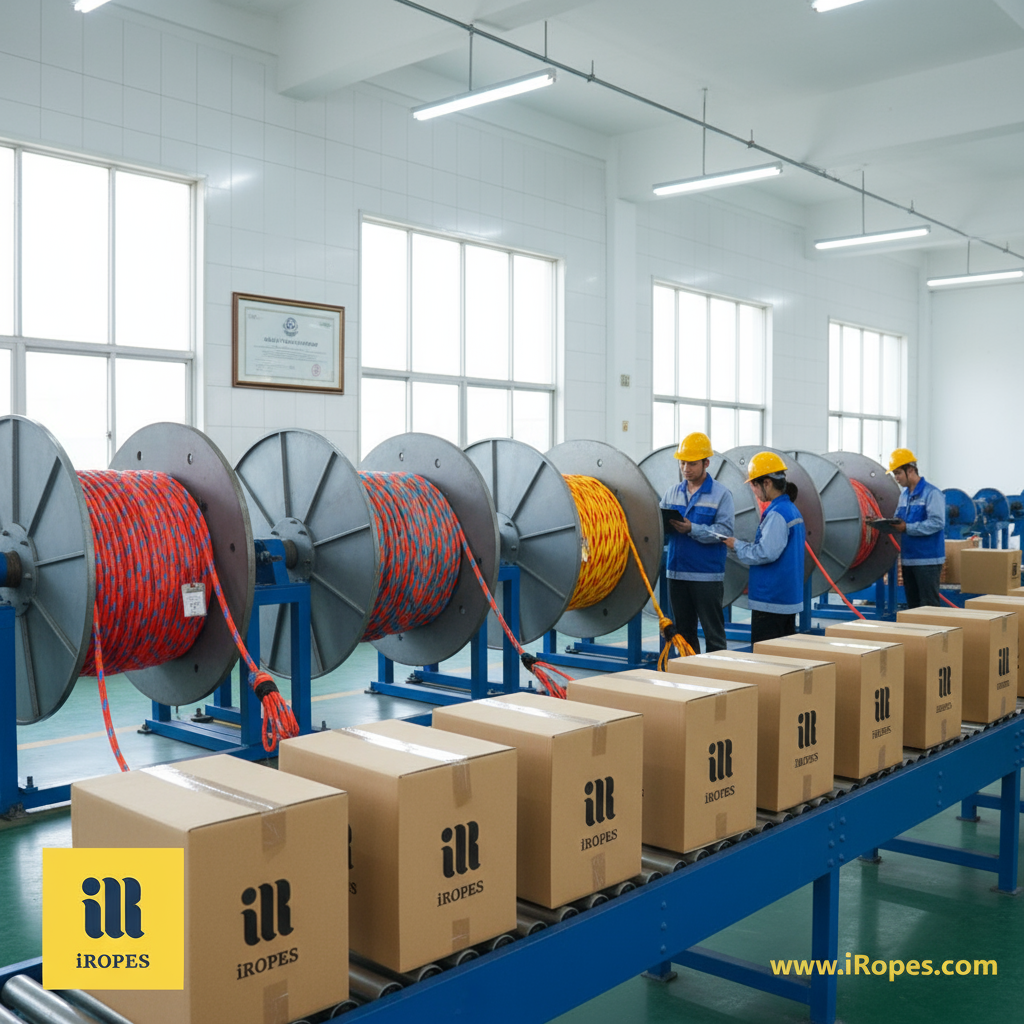
Our OEM/ODM service allows you to buy a rope that perfectly matches your brand’s visual language and exact performance targets. Whether you need a 3 mm stainless‑steel core for offshore rigging, a bright‑red polyester sheath for high‑visibility safety lines, or a specialised swage termination designed for a proprietary winch, our expert engineers will translate your unique brief into a precision‑engineered, production‑ready specification. Colour matching strictly adheres to Pantone standards, while custom diameters are machined to industry‑leading tolerances of tighter than 0.1 mm, ensuring seamless integration with your existing hardware and systems.
Tailored Solutions
From concept to finished rope
Custom Diameters
Exact sizes from 1/16 in. to 1 in. are produced on‑demand, eliminating the need for adapters and ensuring a perfect fit.
Colour & Branding
Match your corporate palette or add logo‑etched tags for instant brand recognition and professional consistency.
Terminations
Choose from a wide range of options — thimbles, swage fittings, or bespoke eye loops — all designed to meet your certification standards.
Assured Quality & Delivery
Reliability for wholesale partners
ISO 9001 QC
Every batch undergoes rigorous tensile testing, visual inspection, and coating verification before release, ensuring consistent quality.
Global Shipping & IP Protection
Consolidated pallets ship efficiently to ports worldwide, and all design data are encrypted under strict Non-Disclosure Agreements (NDAs).
Bulk Order Flexibility
Minimum order quantities start at 100 metres, with attractive price breaks for larger volumes, enabling you to comfortably buy wire rope for long‑term projects.
Our comprehensive quality‑control workflow is firmly anchored by ISO 9001 certification. This means each coil undergoes meticulous measurement for diameter tolerance, stringent testing to ensure it meets your specified Working Load Limit, and thorough visual inspection for coating integrity. These same high standards provide reassurance when you buy rope online, protecting you from hidden defects that could lead to costly downtime or safety concerns.
Ready to Customise?
Contact our engineering team today for a free quote. Whether you need to buy wire rope or a synthetic alternative, we’ll deliver a solution that precisely fits your exact specifications.
By pairing bespoke design with rigorous testing and a seamless global logistics network, iRopes removes much of the guesswork from your procurement process. The next section will recap the key factors to consider when deciding which rope type will best serve your operation’s specific needs.
Need a tailored solution for your next rope procurement?
After reviewing the weight, corrosion resistance, stretch behaviour, and total cost of ownership, you now understand why the choice between steel and synthetic fibres is so critical. Whether you intend to buy rope for heavy‑duty lifting applications or opt to buy a rope that offers lighter handling and superior flexibility, iRopes can customise the construction, material, and coating to perfectly match your exact application. Furthermore, our ISO‑9001 quality checks provide complete confidence when you decide to buy wire rope from us.
For a personalised quote or expert design advice, simply complete the inquiry form above, and our dedicated engineering team will work closely with you to fine‑tune the perfect rope solution for your business.