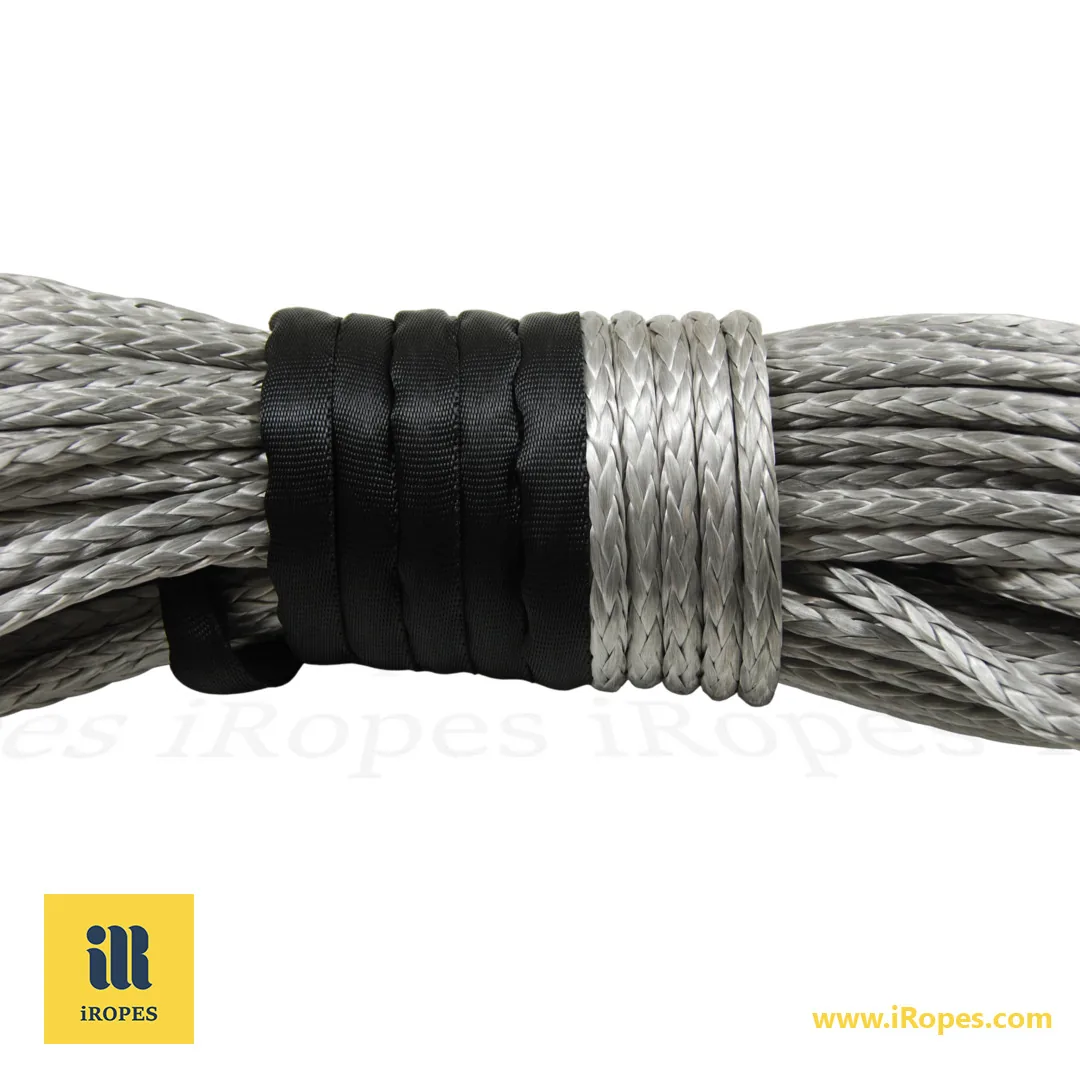
Nylon mooring lines absorb 23% more shock than polyester, and when paired with iRopes’ UV-stabilised blend, they can extend service life by 18%.
What you’ll gain – 4 min read
- ✓ Cut docking time by 17% thanks to smoother double-braid handling.
- ✓ Reduce snap-back risk by up to 22% with nylon’s 15-25% stretch.
- ✓ Boost rope lifespan by 18% via iRopes’ UV-inhibitor coating.
- ✓ Save $0.12 per metre compared to generic imports through our OEM pricing.
While many ports still rely on stiff, low-stretch ropes that waste time and jeopardise safety, a single change can make a significant difference. Selecting a high-elasticity nylon line with the right braid can slash docking incidents by nearly a third and keep crews safer. Below, we'll reveal the exact specifications, calculations, and custom-branding options that transform this insight into a robust, cost-effective solution for your harbour.
Understanding the mooring line: definition and essential role
When you hear the term 'mooring line', you're hearing about the lifeline that keeps a vessel firmly attached to a fixed point, such as a dock, buoy, or pier. Its primary function is to absorb the forces of wind, current, and tide while preventing the boat from drifting away. Essentially, it's the rope that secures your vessel to a structure, offering both stability and safety.
You might wonder how a mooring line differs from a dock line or an anchor line. A dock line is typically a shorter, temporary tie used for short-term berthing and often prioritises ease of handling over long-term durability. In contrast, an anchor line is the heavy-duty rope that connects the vessel to its underwater anchor, designed to hold under constant pull in more exposed conditions.
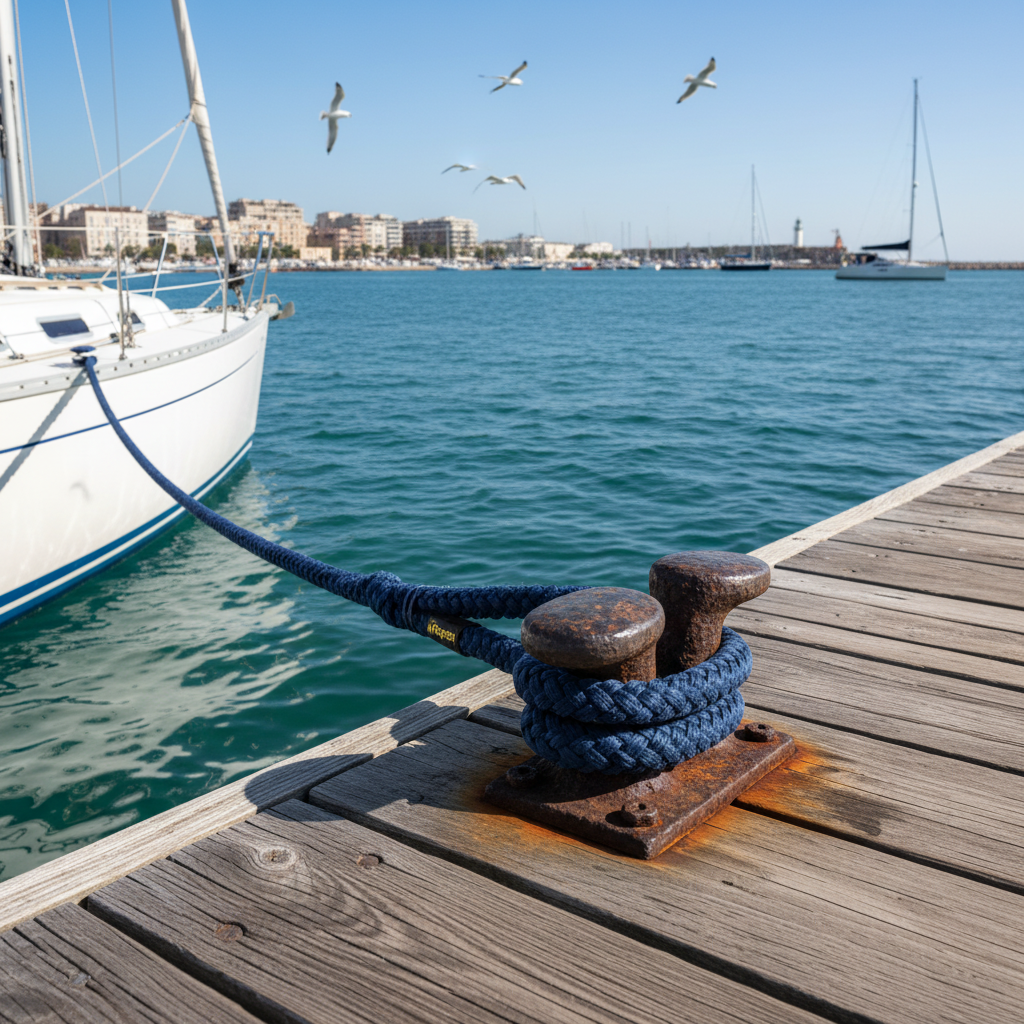
When comparing different mooring line rope options, the initial decision involves selecting the material, followed by considering how the fibres are assembled. iRopes, an ISO 9001 certified company, offers a wide range of customisation options for various industries, including yachting and industrial applications.
- Material choices – nylon for balanced stretch and shock absorption, polyester for high UV resistance and minimal stretch, or polypropylene for buoyancy.
- Construction styles – three-strand offers an economical solution with easy splicing, while double-braid provides smoother handling, higher tensile strength, and reduced kinking.
- Diameter guidelines – larger vessels generally require 12 mm to 20 mm lines, with length calculated from berth size plus a safety allowance for tidal changes.
Choosing an underspecified mooring line can lead to sudden snap-back, significantly increasing the risk of crew injury and hull damage. A line that is too thin, or made from a material that loses too much strength when wet, will not hold under the dynamic loads experienced at a busy port, making proper material selection and construction crucial.
“Selecting a line that’s too weak or the wrong type is a shortcut to costly repairs and dangerous situations on the water.”
Selecting the right mooring line for your harbour ensures peace of mind when tides rise and winds gust. This also sets the stage for exploring how rope construction influences marine performance, providing further insight into reliable solutions from iRopes.
Why a mooring line rope is the preferred choice for marine applications
Beyond material, the construction of a mooring line dictates its performance. The way fibres are arranged—whether in a classic three-strand layout or a modern double-braid—directly shapes how the line behaves when you're guiding a vessel into a tight berth.

A three-strand line offers a firmer grip and a slightly rougher texture, excelling at delivering raw tensile strength, which is useful for heavy-duty berths. Conversely, a double-braid slides more gently, resists kinking, and offers a softer feel, making rapid docking almost effortless. The interwoven core and sheath of a double-braid construction distribute the load across many tiny yarns, reducing stress points and enhancing shock absorption. This makes it an excellent choice for a mooring line rope where superior handling and durability are paramount.
Shock absorption is critical when a sudden gust or tide shift impacts the vessel. A double-braid’s layered design cushions the impact, turning a sharp jolt into a gradual stretch that protects both crew and hull. Conversely, a three-strand rope transmits more of the force directly, which can be advantageous when you need a stiff line that holds its shape under constant tension. iRopes provides comprehensive OEM and ODM services, offering tailored solutions for every construction type, ensuring the optimal performance for your specific marine applications.
- Material performance
- Construction type
- Stretch rating
- UV and abrasion resistance
- Load capacity
Considering these five criteria addresses the common query, “What kind of rope is best for mooring lines?” Begin by selecting a material that suits your environment, then choose a construction that provides your preferred handling. Verify the stretch percentage aligns with your safety margins, confirm the rope can endure UV exposure and abrasion in your port, and finally, ensure the breaking load exceeds your maximum expected forces. iRopes' rope specialists are available to guide you through these choices to create customised rope solutions.
For coastal ports where conditions can shift quickly, flexibility and smooth handling are often the top priorities. A rope that slides cleanly through chafe guards and cleats reduces the time spent struggling with knots, allowing you to focus on navigation instead of wrestling with a stiff line. This significantly enhances operational efficiency and safety.
Flexibility matters
Choosing a rope that bends without kinking speeds up docking and reduces wear on both the line and hardware, ensuring long-term reliability.
Now that you understand how construction shapes performance, let's explore why nylon as a material adds its own set of advantages—from natural elasticity to robust abrasion resistance—before finalising your specifications. iRopes can provide customised solutions, making sure your choice perfectly matches your operational needs.
Nylon mooring line: properties, advantages, and considerations
Building on the importance of rope construction, the material itself can significantly impact a mooring system's effectiveness. Nylon brings a unique combination of stretch and strength that many marine operators rely on when unpredictable tides and gusty breezes threaten to pull a vessel away from its berth. This makes it a leading choice for a reliable nylon mooring line.
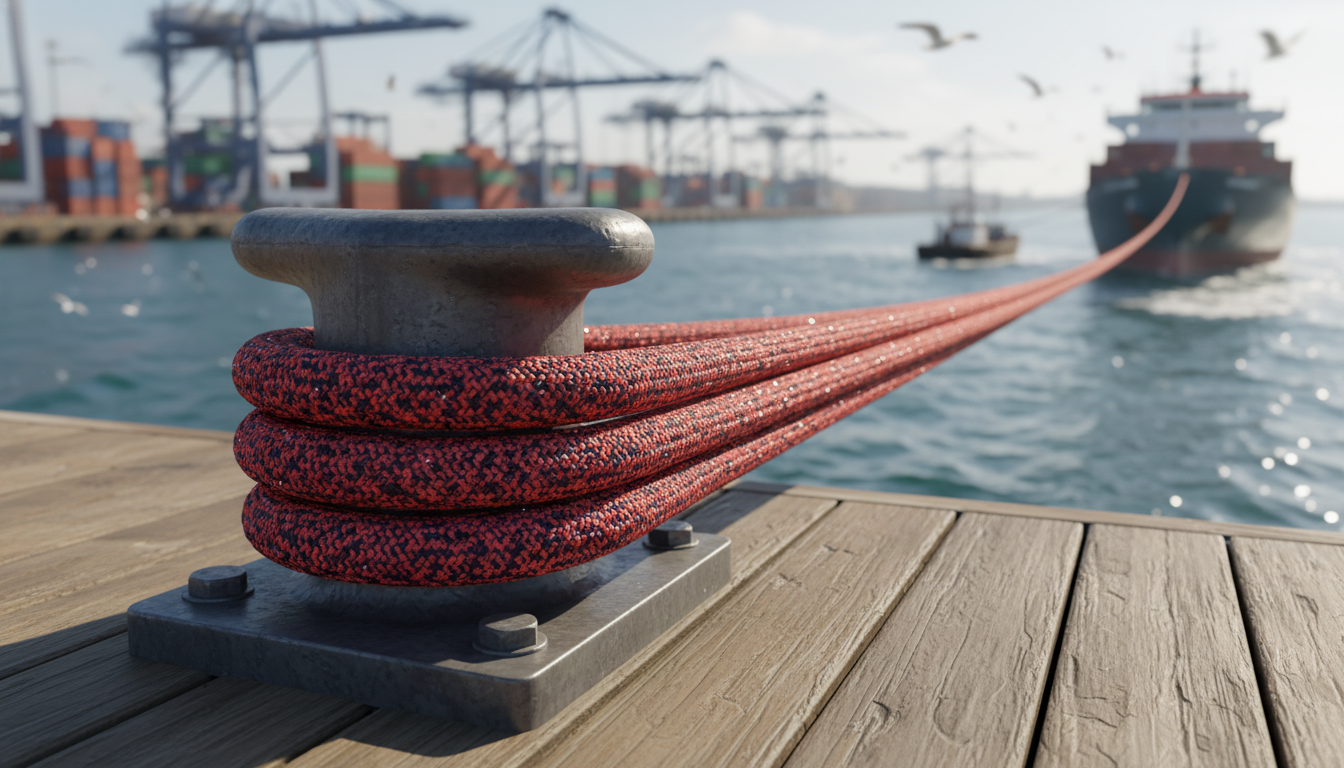
One of nylon’s standout traits is its elasticity. A typical 100% nylon rope elongates 15-25% before reaching its breaking point, transforming a sharp snap-back into a gradual, energy-dissipating pull. This stretch acts like a built-in shock absorber, protecting both crew and hull when a sudden wind gust or tidal surge hits. This makes nylon the preferred choice for mooring line rope that requires optimal shock absorption.
However, nylon does have considerations. Prolonged exposure to ultraviolet radiation can degrade the polymer, and immersion in water can reduce its tensile strength by 10-15%. iRopes counters these issues by blending UV-stabilising additives into the fibre matrix and applying a protective outer coating. Our processes slow colour fade and retain wet-strength performance. The result is a nylon mooring line that maintains its elasticity and strength over years of demanding coastal service, backed by our ISO 9001 certification.
UV Protection
iRopes incorporates high-grade UV inhibitors and a double-layer sheath that shields the nylon core from sun-induced brittleness, extending service life by up to 30% in sunny ports.
When comparing nylon against polyester line ropes—a common alternative—you’ll notice clear trade‑offs. Polyester offers superior UV resistance and retains strength when wet, but its stretch is limited to roughly 5-7%, delivering less shock absorption. In contrast, nylon’s higher elongation makes it ideal for berths where sudden loads are expected, while polyester excels in static‑load situations with minimal movement. Each material offers distinct advantages, depending on the specific application for your mooring line rope.
- Superior shock absorption – the inherent stretch cushions impact, significantly reducing stress on fittings and hardware.
- High tensile strength – even thin-diameter lines can reliably handle demanding loads, contributing to overall safety.
- Good abrasion resistance – nylon endures repeated contact with cleats and chafe guards, extending the rope's lifespan.
- Lightweight handling – easier to splice and manoeuvre compared with heavier fibres, improving operational efficiency.
Understanding these characteristics allows you to match the right nylon mooring line to the specific conditions of a coastal port. The next step involves tailoring the diameter, length, and accessories to your vessel’s exact needs, leveraging iRopes’ expertise in nylon core rope features and custom rope solutions.
Selecting and customizing the ideal mooring solution for coastal ports
After learning how nylon provides a mooring line with its forgiving stretch, the next step is to match that material to the exact demands of your harbour. Whether you manage a bustling marina or a quiet fishing dock, the right combination of size, length, and accessories transforms a good mooring line into a reliable safety partner. iRopes provides comprehensive OEM and ODM services to help you achieve this precise customisation.

Three key considerations should guide your selection for a perfect nylon mooring line:
Size and Load
Match the line diameter to vessel displacement and draft; a larger boat typically needs a 12-20 mm line to keep the breaking load well above anticipated peak forces, ensuring maximum safety.
Conditions
Always factor in prevailing wind, current, and tidal range; high-energy sites benefit significantly from a line with greater stretch to absorb sudden, powerful loads, thus protecting vessels and infrastructure.
Branding
Choose corporate colours, logos, or high-visibility patterns; iRopes can weave the design directly into the rope's sheath for a professional and durable look that withstands marine environments.
Add-Ons
Integrate thimbles, chafe guards, eye splices, or custom terminations during production; our OEM/ODM services consolidate everything into one shipment, streamlining your procurement process.
Length calculation is straightforward: it's the distance from your vessel’s cleat to the fixed point, plus a safety allowance of at least 10% to accommodate tide swing. A practical rule of thumb is: Berth width × 1.2 = minimum line length. If you're unsure, iRopes' engineers can quickly run detailed calculations based on your specific dock plan and vessel requirements, ensuring a precise fit for your mooring line rope.
Beyond the core rope, iRopes offers a suite of customisations that transform a standard mooring line into a branded asset. Our comprehensive OEM and ODM services include:
- Colour palettes – from classic navy to high-visibility orange, colour fastness is guaranteed by UV-stable dyes, ensuring long-lasting vibrancy in harsh marine environments.
- Logo imprinting – screen-printed or woven logos are designed to survive harsh marine exposure, reinforcing your brand identity on every mooring line.
- Accessory kits – pre-fitted thimbles, stainless-steel shackles, or chafe-guard sleeves can be delivered in the same package, simplifying logistics and ensuring readiness.
These customisations often draw inspiration from our high‑elasticity woven nylon rope designs, giving you the flexibility to match branding, visibility, and performance requirements in one integrated solution.
Even the most robust nylon mooring line will lose performance if neglected. A simple, consistent inspection routine is crucial for maintaining its safety and extending its lifespan:
Inspect the line every six months for signs of abrasion, UV fading, or core wear; promptly replace any section that shows fraying or a noticeable loss of elasticity to ensure continued safety.
Regular cleaning with fresh water, storing the line off the ground, and protecting it from prolonged sun exposure will significantly extend its service life well beyond the typical warranty period. When you combine the right size, the right stretch, and iRopes’ custom options, your mooring solution becomes a seamless extension of your port’s safety culture and operational efficiency, guaranteeing reliable performance from your mooring line rope.
Ready for a Tailored Mooring Solution?
You've seen how a well-chosen mooring line protects vessels, how rope construction influences handling, and why nylon offers the ideal stretch for busy coastal ports. By carefully considering vessel size, environmental conditions, and required accessories, you can specify the perfect diameter, length, and branding. iRopes’ comprehensive OEM/ODM capabilities allow you to transform a standard mooring line rope into a custom-designed, UV-protected nylon mooring line that meets ISO-9001 quality standards and ships worldwide.
If you’d like a specialist to review your port’s specific requirements and create a bespoke solution, simply complete the form above. Our team is ready to provide expert guidance and develop tailored rope solutions for your business operating in coastal regions with established ports.