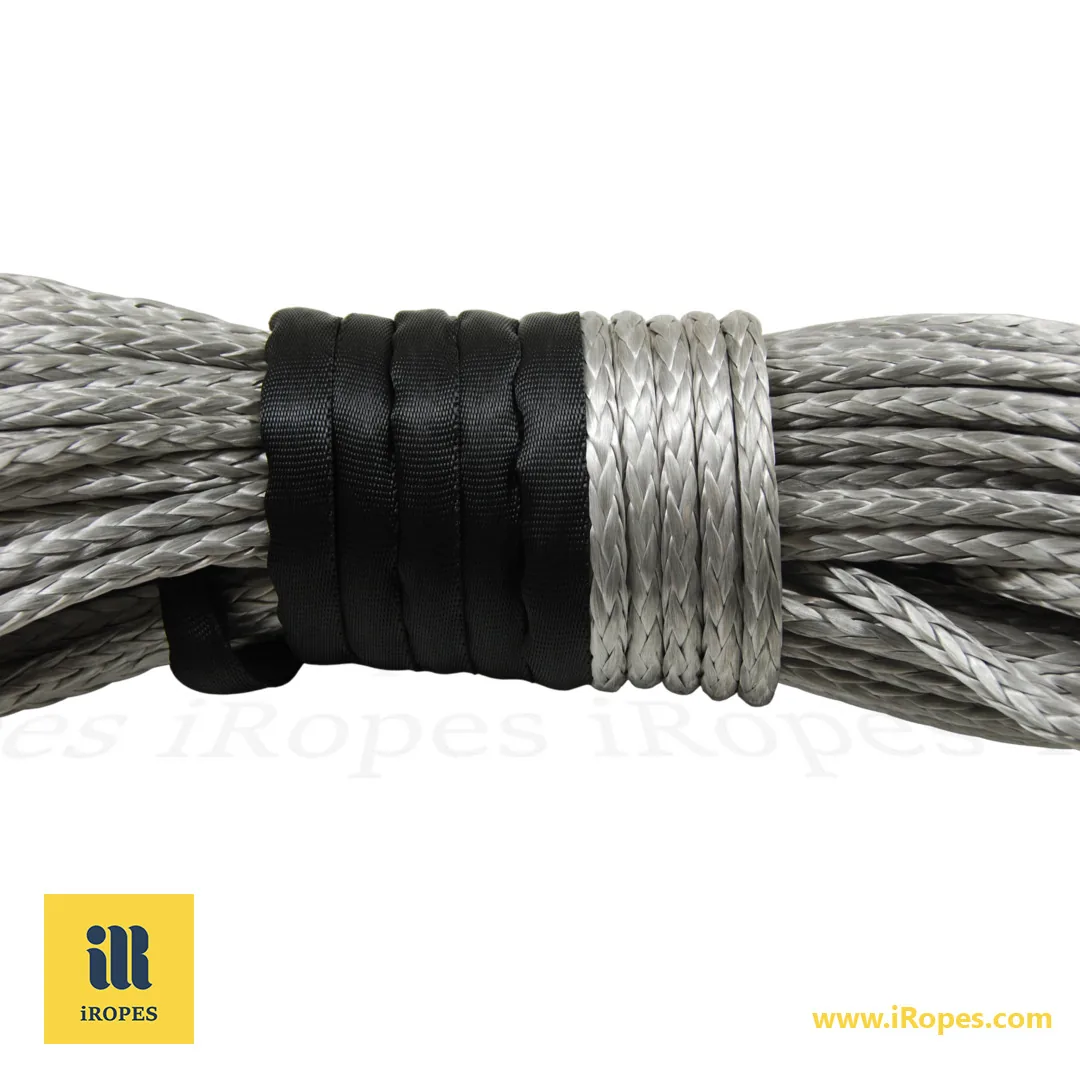
UHMWPE rope delivers up to 15× the strength‑to‑weight of steel while cutting haul weight by as much as 90% — a faster, lighter lift for modern recoveries.
What you’ll gain – 5‑minute read
- ✓ Cut haul weight by up to 90 % for quicker winch pulls.
- ✓ Boost tensile capacity 8‑15× per kilogram versus steel.
- ✓ Reduce maintenance by eliminating corrosion and routine lubrication.
- ✓ Add custom colour or branding via iRopes’ OEM/ODM services.
Most off‑road crews still reach for a steel cable, convinced its heft guarantees strength — yet a 3/8″ UHMWPE line can lift comparable loads while weighing far less and stretching less under tension. In the sections that follow we’ll break down key numbers, share real‑world examples, and reveal the custom‑design options iRopes uses to turn those advantages into safer, faster recoveries for your fleet. iRopes is dedicated to UHMWPE braided rope for off‑road applications — a safer, lighter replacement for traditional wire rope.
UHMWPE rope for sale – Superior Strength, Low Stretch, and Light Weight
Building on the earlier look at rope materials, let’s explore why a high‑modulus synthetic line is rapidly becoming the go‑to choice for off‑road enthusiasts. UHMWPE rope for sale offers a unique blend of tensile power, feather‑light mass, and minimal elongation that steel simply can’t match.

What is UHMWPE rope? It is a rope made from ultra‑high‑molecular‑weight polyethylene fibres — sometimes marketed under brand names like Dyneema or Spectra. The polymer’s density is ≈ 0.98 g/cm³, so it floats, and its molecular alignment delivers extraordinary strength.
- Strength‑to‑weight ratio – up to 15× stronger than steel per kilogram.
- Weight per 100 ft – as little as 0.5 lb for a 1/8″ line, versus 5 lb for an equivalent steel cable.
- Stretch at break – only 0.5 %–5 %, far lower than the 2 %–10 % typical of steel wire.
- UV & chemical resistance – strong chemical resistance; UV durability is moderate, so add a protective jacket for prolonged sun exposure.
When you line up the numbers, the advantage becomes clear. Weight‑for‑weight, UHMWPE is roughly 8–15× stronger than steel, yet it handles easily and floats. That balance is why uhmwpe rope for sale is championed in recovery scenarios: low stretch reduces stored energy and slack during pulls, which lowers recoil compared with high‑stretch lines. Always use a line damper and follow safety guidelines.
Off‑road use cases exploit those properties to the fullest. Winch lines benefit from the low stretch, allowing the drum to maintain tension and finish pulls faster. Recovery lines made from UHMWPE can be positioned quickly, then tensioned without the rope elongating and losing grip. Towing a trailer up a steep grade feels smoother because the rope doesn’t “give” under load, and its buoyancy means you won’t have to fish a sinking cable out of a creek.
“UHMWPE offers a strength‑to‑weight ratio that is fifteen times higher than steel, making it the go‑to material for any application where weight matters.” – Dr. A. Patel, Materials Engineer, University of Michigan
Choosing the right line doesn’t have to be a gamble. When you browse for uhmwpe rope for sale, match the diameter to the required safe working load. For example, a 1/2″ (≈ 12 mm) UHMWPE rope has a breaking strength of ~ 32 000 lb and a safe working load of about 5 200 lb (≈ 1/6 of break). Next, decide on length — iRopes can supply precise custom lengths to minimise excess coil weight. Finally, consider terminations: a correctly executed thimble eye splice typically retains 80 %–100 % of the rope’s strength, whereas a simple knot can cut capacity by up to 50 %.
iRopes’ OEM/ODM service lets you add colour‑coding, reflective elements, or customer branding directly onto the rope, turning a functional tool into a visual extension of your brand. Moreover, our ISO 9001‑certified manufacturing and dedicated IP protection support quality and confidentiality from design to delivery. Whether you need a single 10‑ft recovery line or a bulk order of 1 000 ft for a fleet, the combination of high tensile performance, low stretch, and light handling makes UHMWPE the logical upgrade from heavier steel wire for sale alternatives.
As we move forward, the next discussion will examine where steel still holds an edge and how that niche informs the design of hybrid solutions like the double braided rope for sale that blend strength and protection.
Steel wire for sale – Understanding Limitations and Niche Advantages
Having explored why UHMWPE rope is gaining ground, it’s time to look at the traditional alternative that still appears in many catalogues. Steel wire for sale refers to a bundle of high‑tensile metal strands twisted or laid together to form a flexible cable, and it comes in several common grades.
- Galvanised – zinc‑coated for basic corrosion resistance.
- Stainless – alloyed with chromium for superior rust protection.
- Alloy – blended with manganese or silicon for higher heat tolerance.
All of those variants share drawbacks that matter to anyone weighing a purchase. A steel cable typically weighs five to ten times more than an equivalent‑diameter synthetic line, which means extra effort when coiling, loading, or carrying it on a trail‑ready vehicle. The metal also rusts if the coating is compromised, and it elongates under load — usually between 2 % and 10 % at break — so you’ll notice more “give” during a winch pull. Consequently, regular inspections, lubrication, and occasional re‑coating become part of the maintenance routine.
Despite those shortcomings, steel still holds a niche where its unique properties outshine synthetics. In high‑temperature environments, such as near a diesel engine or a furnace, the metal retains its strength while most polymers soften. For static‑load applications like bridge suspensions and permanent rigging, the predictable creep of steel is an advantage. Finally, many legacy machines are engineered for a specific wire‑rope diameter, so retrofitting with a new material can be costly or even unsafe.

From a cost perspective, buying steel wire for sale is still attractive for many projects: standard diameters run about $0.30 to $0.60 per foot, with volume discounts once you order a thousand feet or more. Availability is high because manufacturers around the world produce it in bulk, and many distributors keep it in stock for immediate shipment.
When the conversation shifts toward a hybrid solution, the next logical step is to examine how a double braided rope for sale blends the protective outer sheath of a braid with a high‑strength core, offering a compromise between the durability of steel and the lightness of UHMWPE.
Double braided rope for sale – Versatile Construction and Performance Benefits
After looking at the situations where steel still has a place, it’s clear that many off‑road and marine operators now prefer a hybrid that blends protection with strength. A double braided rope for sale delivers exactly that balance, offering a sturdy core wrapped in a wear‑resistant sheath.
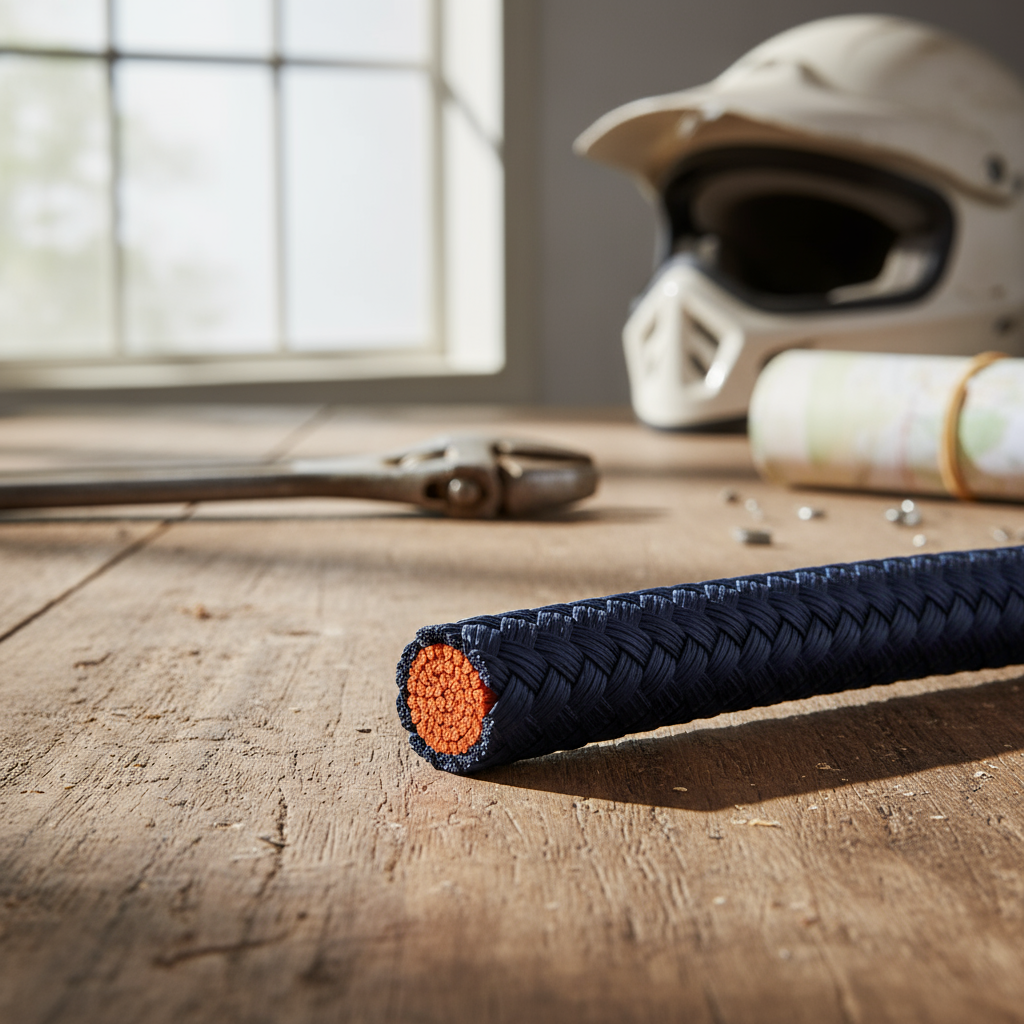
The construction starts with a core that can be HMPE, polyester or nylon, each chosen for a specific strength‑to‑weight goal. Around that core, a tight braid of synthetic fibres forms the outer skin, providing abrasion resistance and UV shielding. Manufacturers vary strand count — typically 12 to 24 strands — to fine‑tune flexibility versus load capacity.
Key Benefits
The outer braid resists cuts, sunlight and salt‑water wear, while the core maintains the tensile strength needed for winch pulls. Because the sheath is flexible, the rope bends around pulleys with less fatigue, and a proper double‑braid splice typically retains 80–90 % of its break strength — far better than most knots.
Typical applications illustrate the rope’s versatility. Arborists rely on the smooth outer braid to glide up trees without damaging bark, while marine crews use the same design for mooring lines that must survive constant UV exposure and occasional abrasion against dock hardware. Decorative installations benefit from the rope’s ability to hold shape yet stay supple, and moderate‑load industrial rigging appreciates the easy‑to‑splice core that reduces downtime on the shop floor.
When selecting a double braided rope for sale, match the diameter to the required safe working load (SWL). Confirm the SWL using an appropriate safety factor (often 5:1 to 7:1), and choose compatible terminations — eye splices for permanent loops or thimbles for quick‑release hooks.
Because the rope’s outer layer can be colour‑coded or fitted with reflective tape, it also serves branding or safety‑visibility needs — a practical advantage on busy job sites. If you compare this to a solid synthetic rope or a steel rope vs UHMWPE, the double‑braid’s combination of abrasion resistance, UV protection and flexible splicing often translates into lower long‑term maintenance.
With those attributes in mind, the next step is to decide which rope family aligns best with your specific load and environment, setting the stage for a customised solution that maximises both safety and efficiency. For those looking for the ultimate lightweight performance, explore our UHMWPE winch rope guide, which details how this material outperforms traditional steel cables.
Need a custom rope solution?
Now that you’ve seen how UHMWPE’s unmatched strength‑to‑weight ratio outperforms traditional steel, and how a double‑braided construction adds durability, you’re ready to choose the optimal line for your off‑road rigs. If you’d like personalised advice on selecting the right synthetic winch rope advantage, configuring steel wire for sale alternatives, or exploring double braided rope for sale options, simply fill out the form above and our specialists will tailor a solution to your exact requirements.
We look forward to helping you elevate safety, performance and branding with a custom‑designed rope from iRopes — backed by ISO 9001 quality assurance, competitive pricing, punctual delivery and worldwide shipping for wholesale orders.