All natural‑fibre ropes covered: Manila delivers ≈ 540 lb (245 kg) breaking strength at ¼ in (6 mm), hemp ≈ 400 lb (180 kg), and you’ll learn a quick load‑calc to size any diameter with confidence.
≈ 7 min read – What you’ll gain
- ✓ Pinpoint the strongest natural fibre (Manila) and how it compares with other natural‑fibre lines.
- ✓ Apply a simple D² × 100 kg rule to size rope quickly, then verify with supplier data.
- ✓ Follow a 5‑step care checklist to extend rope life and reduce replacement frequency.
- ✓ Explore iRopes OEM/ODM options for custom branding, treatments, and reliable global shipping.
Many engineers assume natural‑fibre ropes are too weak for demanding projects, yet Manila offers notable durability among natural options in salt‑water and sun, and can bear ≈ 540 lb (245 kg) on a quarter‑inch line. In this guide we’ll compare natural fiber rope types, share a quick load calculator, and show how iRopes can tailor an eco‑friendly hemp line to your specification.
Understanding the Natural Fibre Line: Definition, History, and Terminology
Having explored why natural‑fibre ropes are back in focus, the next step is to clarify what a natural‑fibre (natural fiber) line actually is. In everyday language the terms “line” and “rope” are often used interchangeably, yet they carry distinct nuances, especially at sea.

In nautical parlance a “line” designates a rope assigned a specific function—halyard, sheet, or mooring line—whereas “rope” simply describes the physical assembly of fibres. Outside maritime contexts the words merge, but the distinction persists in technical manuals and safety charts.
- 3000 BCE – Egyptian reeds – early cordage for river boats, the first documented natural‑fibre line.
- 2000 BCE – Bronze Age hemp – twisted hemp fibres powered farming and early siege engines.
- 500 BCE – Classical linen – linen rigging lines used widely across the Mediterranean.
- 1800s – Manila dominance – Manila (abacá) became the maritime standard for strength and water resistance.
- 2020s – Sustainable resurgence – eco‑friendly hemp rope returns to construction and craft, driven by green‑building standards.
In practice, a “line” is a rope with a defined purpose—think of a halyard that raises a sail—while “rope” refers to the untitled bundle of fibres itself. The distinction matters most in marine safety manuals, where the function dictates load calculations and handling procedures.
With the definition and a five‑millennium timeline clear, we can now examine the full spectrum of natural‑fibre rope types, from hemp to Manila, and see how each construction influences performance.
Exploring Natural Fibre Rope Types: Materials, Construction, and Performance
Having laid out the history and terminology, the next step is to examine the catalogue of natural‑fibre rope types that power countless projects today. Each fibre brings a distinct blend of strength, stretch, and resistance, shaping how the rope behaves under load.
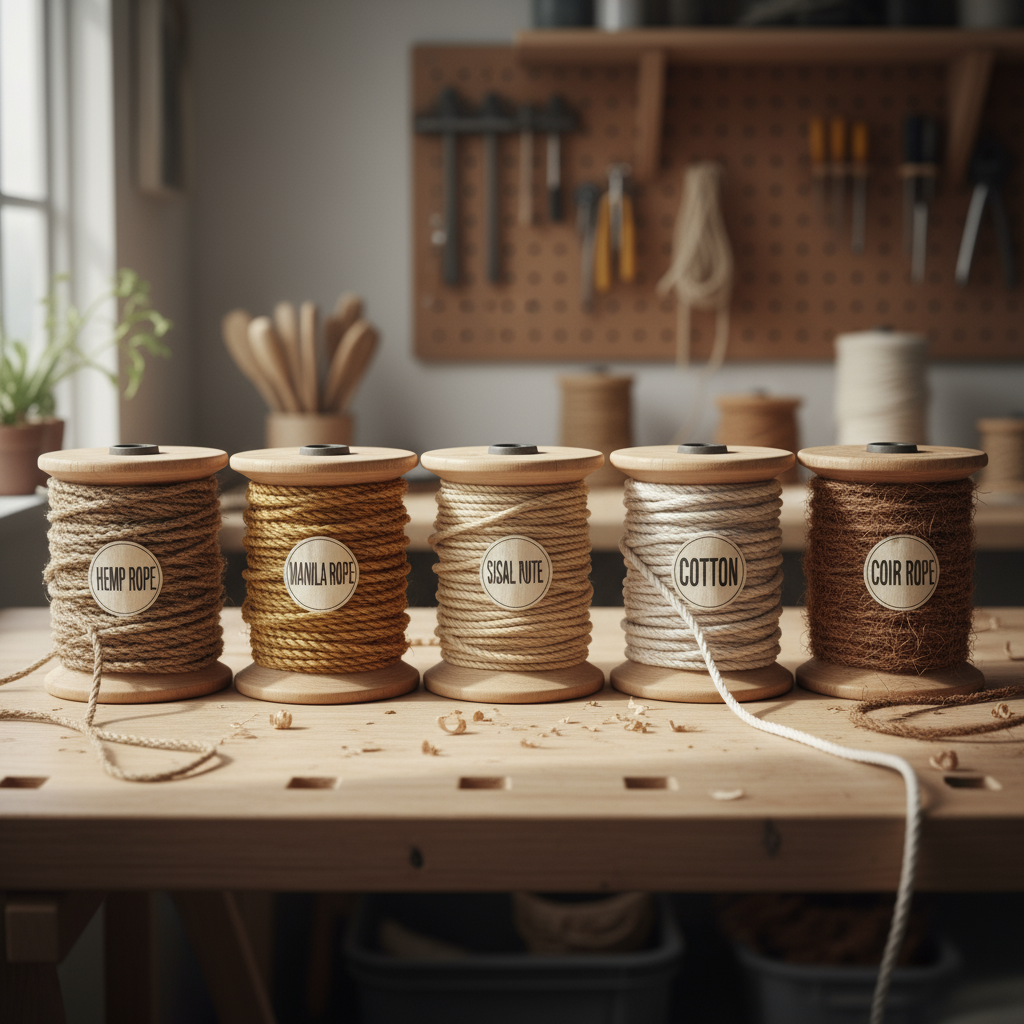
Core Fibres
Strength‑focused
Hemp
High tensile modulus; excellent grip; ideal for marine and other heavy‑duty tasks.
Manila (abacá)
Strongest natural fibre; natural oils aid water resistance; favoured for mooring and dock lines.
Sisal
Cost‑effective; good UV tolerance; widely used for agricultural bindings.
Auxiliary Fibres
Flexible & affordable
Jute
Soft texture; moderate strength; popular for garden twine and decorative crafts.
Cotton
Gentle on delicate loads; easy to dye; suited for macramé and interior décor.
Coir
Resistant to abrasion and saltwater; often used for rope‑guard and marine fender applications.
The performance of any rope also hinges on how its fibres are assembled. Three primary construction methods dominate the market:
- Laid (twisted) – three or more strands are twisted together; economical, easy to splice, and offers predictable stretch.
- Plaited (8‑strand) – pairs of strands are woven without a core; resists kinking and handles well for mooring.
- Braided – hollow‑braid or braid‑on‑braid constructions interlace multiple strands, producing a smooth, flexible rope with consistent elongation.
Among the catalogue, the strongest natural‑fibre rope remains Manila (abacá). A ¼‑inch (6 mm) diameter line can withstand roughly 540 lb (245 kg) before breaking, and its inherent oil content provides solid resistance to seawater and UV exposure compared with other natural fibres.
Strongest Natural‑Fibre Rope
Manila (abacá) delivers the highest breaking strength of any natural fibre—about 540 lb for a ¼‑in line—while maintaining reliable performance in salty or sunny environments.
Understanding both material choices and construction styles equips designers and craftsmen to match the right rope to the task. Armed with this knowledge, the guide now turns to versatile hemp fibre rope and the practical considerations that make it a favourite across marine, agricultural, and creative projects.
Choosing and Maintaining Hemp Fibre Rope for Your Applications
Now that you know the strengths of each natural‑fibre rope, let’s focus on the workhorse of many projects – the hemp fibre rope (often searched as “hemp fiber rope”). Whether you’re rigging a small sailboat, securing a garden trellis, or crafting a decorative macramé piece, the right diameter and proper upkeep make the difference between a reliable line and a premature failure.

Selection guide – Start by matching diameter to the expected load. A quick rule‑of‑thumb for safe working load (SWL) is D² × 100 kg, where D is rope diameter in inches. For example, a ½‑inch (13 mm) hemp rope yields an SWL of about 25 kg (≈ 55 lb). For critical applications, verify with manufacturer data and apply a safety factor of 4–5 when converting breaking strength to SWL.
Next, consider the environment. In salty air or high‑UV locations, choose tarred hemp; the treatment improves water resistance, though it typically retains about 80% of the raw rope’s strength. For indoor décor or garden applications with minimal moisture, untreated hemp offers a natural look and easy dyeability.
Choosing the Right Size
For detailed size recommendations, see our essential Manila rope size guide.
Measure the load, estimate SWL with the D² × 100 kg rule, then confirm against supplier specs. For critical tasks, use a safety factor of 4–5.
Environment‑Specific Picks
Salt water? Opt for tarred hemp. High UV? Choose oil‑treated variants. Indoor or decorative? Plain hemp lets you dye freely.
Care Checklist
1️⃣ Rinse with lukewarm water and mild soap. 2️⃣ Air‑dry in shade. 3️⃣ Coil in a figure‑8 to avoid kinks. 4️⃣ Store off the ground, away from direct sun. 5️⃣ Inspect quarterly for fraying, mildew, or hard spots.
Common Uses
Marine rigging and handrails, agricultural tie‑backs and trellising, macramé and décor, and light‑duty bundling where a biodegradable option is preferred.
Maintaining your hemp rope is straightforward, but skipping a step can shorten its life. A quick routine after each use—rinse, dry, and coil—keeps the fibres supple and helps prevent mildew. For longer storage, place the coil in a breathable cotton bag rather than a sealed plastic sack; this lets residual moisture escape while protecting against dust.
Remember: a ¼‑inch (6 mm) hemp rope typically breaks around 180 kg (≈ 400 lb). Always size up if you anticipate sudden or shock loads.
When you’re ready to purchase, consider price versus treatment and diameter. Bulk hemp typically ranges from about $0.50 to $1.20 per foot. iRopes offers ISO 9001‑certified OEM and ODM capabilities—including custom colours and patterns, accessories (thimbles, terminations), IP protection, and non‑branded or customer‑branded packaging—plus direct pallet shipping worldwide.
With the right diameter, environment‑matched treatment, and a simple maintenance ritual, your hemp fibre rope will stay reliable for years—whether it’s holding a sail, a garden vine, or a handcrafted sculpture. These choices improve longevity and sustainability while keeping whole‑of‑life costs under control.
Ready for a customised rope solution?
We’ve traced the evolution of the natural‑fibre line from ancient reeds to modern sustainable options, compared the main natural fiber rope types, and highlighted why hemp fiber rope remains a versatile, eco‑friendly choice for marine, agricultural, and creative projects. With iRopes’ ISO 9001‑certified OEM and ODM capabilities—covering both natural‑fibre ropes and high‑performance synthetics such as UHMWPE, Technora™, Kevlar™, Vectran™, polyamide, and polyester—you can translate these insights into a rope that fits your exact load, environment, and branding requirements. As a leading China‑based manufacturer, iRopes safeguards your IP, offers flexible packaging, and delivers on time worldwide.
For personalised advice on material selection, custom specifications, or bulk ordering, simply complete the form above and our specialists will help you design the perfect solution.