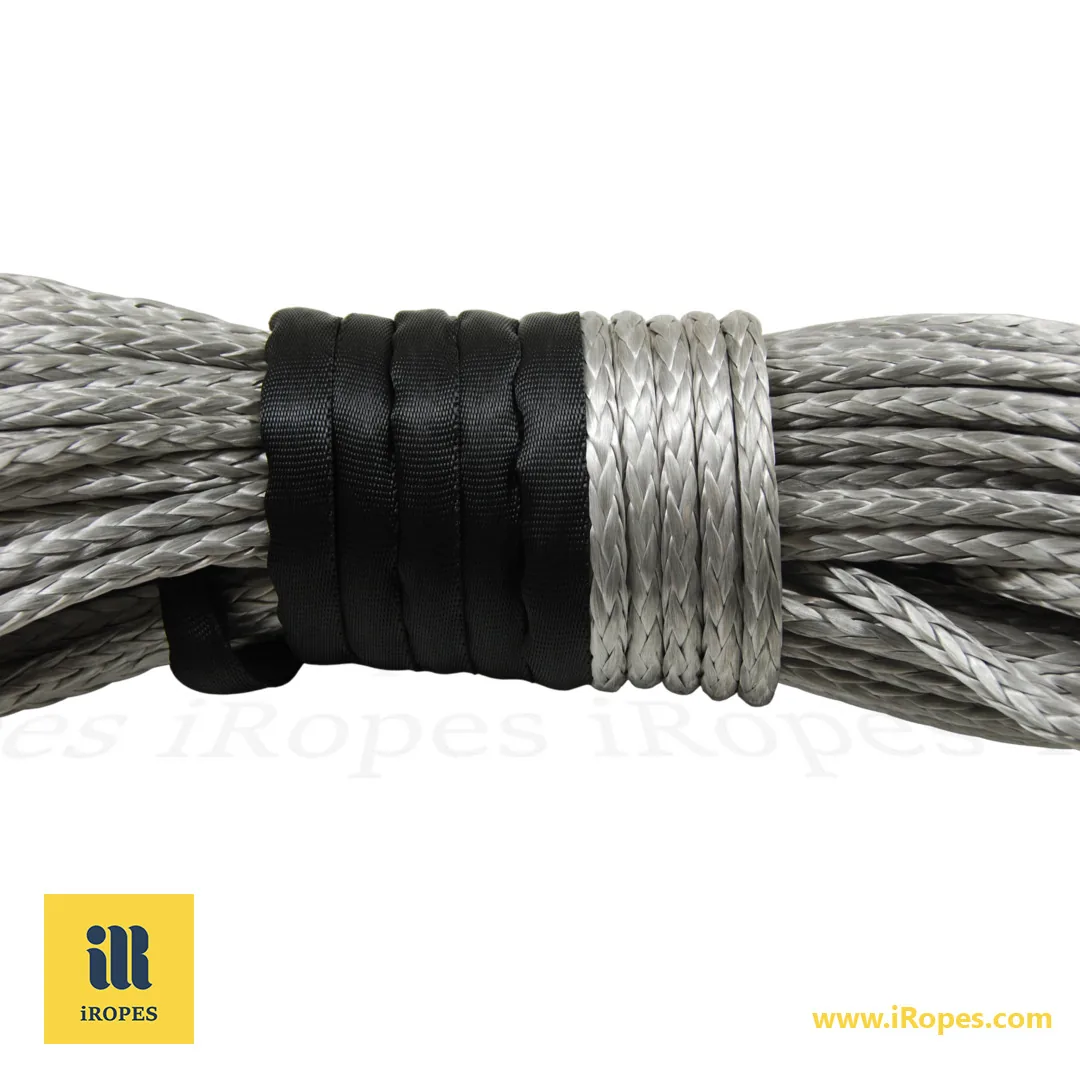
iRopes' 1‑inch (24 mm) nylon tow rope delivers a verified 14‑tonne breaking force – enough to safely pull a 4×4 or secure a medium‑sized vessel.
Key Benefits — 2 min read
- ✓ A 14‑tonne break rating provides a 5:1 safety margin for heavy‑duty towing.
- ✓ Custom lengths, colours, and terminations ensure your brand is visible and compliant.
- ✓ ISO‑9001 certified production guarantees consistent tensile performance.
- ✓ Direct global shipping reduces lead times by up to 30 %.
Many operators assume a 1‑inch nylon tow rope is too bulky to handle, believing that scaling up means sacrificing flexibility. In reality, iRopes' engineers optimise the braid geometry. This ensures the rope stretches just enough to absorb shock yet remains surprisingly supple—even with a 14‑tonne break strength. Keep reading to discover how this counter‑intuitive balance allows you to lift heavier, work faster, and customise every detail to your brand.
Why Choose a 1 inch nylon rope for Heavy‑Duty Applications?
When a load approaches the limits of ordinary rope, you need a strand that can absorb shock without snapping. A 1 inch nylon rope delivers precisely that reliability, offering a proven 14‑tonne breaking force. This capability keeps critical operations safe and efficient.

What does a 14‑tonne rating mean in practice? It represents the Minimum Breaking Strength (MBS)—the point at which the fibres will finally give way. For everyday tasks, you would calculate a Working Load Limit (WLL) at roughly one‑fifth of that value. This provides a safe operational ceiling of approximately 2.8 tonnes. This safety margin is crucial, especially when pulling a stuck 4×4 vehicle or securing a large anchor line.
- High tensile strength – Nylon’s molecular structure enables it to carry massive loads while maintaining flexibility.
- Elastic shock absorption – This rope stretches up to 30 % under sudden impact, protecting both the load and attachment points.
- Abrasion and UV resistance – Blended fibres and protective coatings shield the rope from harsh sand, salt spray, and prolonged sunlight.
These material qualities translate directly into real‑world advantages across various sectors. Below are the most common heavy‑duty scenarios where a 1 inch nylon rope excels:
- Kinetic towing of off‑road vehicles, where the rope must stretch to absorb the surge of a stalled engine.
- Anchor lines for medium‑sized vessels, providing a dependable link between the hull and the seabed.
- Industrial hoisting of machinery components that demand a blend of strength and flexibility.
- Large‑animal control in farming operations, where a gentle give helps prevent injury to the animal.
Choosing a 1 inch nylon rope offers a superb balance of raw power and manageable handling. Should your project's demands increase to a larger diameter, such as a 1.5 inch or 2 inch rope, you will find the same material benefits amplified. However, the 1 inch size often strikes the perfect balance for portability and ease of splicing while still delivering that impressive 14‑tonne break rating.
Applications and Strength of 1.5 inch nylon rope
Building on the versatility of the 1‑inch option, the 1.5 inch nylon rope steps up to the next tier of heavy‑duty performance. It offers a significant jump in capacity while maintaining manageable handling for skilled crews. This makes it an ideal choice for even more demanding applications.

For operators needing a rope that can hold massive loads yet still fit onto standard winches, the 1.5 inch nylon rope excels in three core areas: marine mooring lines that keep vessels steady against surf and tide, heavy‑lifting rigs that move equipment weighing several tonnes, and high‑intensity battle‑rope training where its added mass creates a satisfying, powerful swing.
Our engineers have observed the 1.5 inch nylon rope maintaining over 30 tonnes of break strength while still stretching sufficiently to absorb shock. This balance significantly reduces equipment fatigue on demanding marine and industrial projects.
Typical specifications place the Minimum Breaking Strength (MBS) of a 1.5 inch diameter rope in the 30‑32 tonne range. This translates to a Working Load Limit (WLL) of approximately 6 tonnes when applying a 5:1 safety factor. Such numbers provide a comfortable margin for the toughest lifts or mooring scenarios without sacrificing the rope’s inherent elasticity.
When compared with its 1‑inch counterpart, the larger size delivers roughly double the break rating. It also feels surprisingly supple during splicing. Handling characteristics improve because the thicker braid resists kinking, and the higher safety factor means you can operate closer to the rope’s rated capacity with increased confidence.
Strength Highlights
What the numbers mean
Break Strength
Approximately 30‑32 tonnes, providing ample capacity for large‑scale loads.
Stretch
20‑30 % elongation absorbs kinetic energy, protecting both cargo and equipment.
Durability
UV‑stable coating resists sun and salt‑water degradation for an extended service life.
Handling Benefits
Ease of use on site
Flexibility
A smoother braid reduces kinking, making deployment quick and reliable.
Safety
A Working Load Limit near 6 tonnes provides a comfortable 5:1 safety factor.
Fit
Compatible with standard 1‑inch gear while offering higher capacity.
Performance and Customization Options for 2 inch nylon rope
Having explored the capabilities of 1‑inch and 1.5‑inch ropes, it’s natural to wonder how the next size up tackles the most demanding jobs. The 2 inch (50 mm) nylon rope pushes the envelope of strength, though it also introduces new considerations for weight and manoeuvrability.

When comparing a 2 inch rope, often employed as a large tow rope, to its 1‑inch and 1.5‑inch siblings, the increase in breaking strength is roughly proportional to the cross‑sectional area. While a 1‑inch version offers a 14‑tonne limit and a 1.5‑inch model reaches about 30 tonnes, the 2‑inch variant typically breaks at ≈ 55 tonnes. This extra capacity, however, comes with added mass—roughly double the weight per metre of a 1‑inch strand. Consequently, handling equipment must be appropriately sized, and splicing requires more effort.
Delivers higher tensile strength per millimetre, resists kinking, and provides smoother deployment on winches.
3‑Strand Twisted
An economical choice that is easy to splice and performs well where flexibility and cost are primary concerns.
Load Capacity
Ideal for commercial shipping rigging, salvage operations, and defence‑grade anchoring where tens of tonnes are routine.
Splicing Ease
Twisted construction simplifies eye splices, whereas double braid may necessitate a specialised splicing tool.
Beyond construction, iRopes transforms a standard 2 inch rope into a fully branded solution. Colours can be precisely matched to safety‑code palettes or specific company logos, while reflective strips significantly boost visibility for night‑time operations. Terminations range from robust stainless‑steel thimbles and shackles to custom‑machined eye loops. All are fabricated under ISO‑9001‑certified processes. Our OEM/ODM workflow allows you to specify core types, strand counts, or even embed glow‑in‑the‑dark filaments for specialised rescue scenarios.
Tailored to You
From colour to terminations, iRopes shapes every 2‑inch nylon rope to your exact specifications, ensuring both performance and brand consistency.
Ready for a custom rope solution?
You've now seen how iRopes' 1 inch nylon rope (24 mm) can deliver a 14‑tonne breaking force for kinetic towing. You've also learned how the 1.5 inch nylon rope increases capacity to around 30 tonnes for marine and heavy lifting tasks, and how the 2 inch nylon rope pushes strength beyond 50 tonnes with extensive custom options. Whether you require a standard off‑road tow line or a fully branded solution, iRopes can tailor the material, construction, and accessories to match your precise specifications. This is all backed by ISO‑9001‑certified quality and timely global delivery.
If you'd like personalised advice on selecting the right rope size, construction, or branding, simply fill out the form above. Our specialists will promptly get back to you with expert guidance.