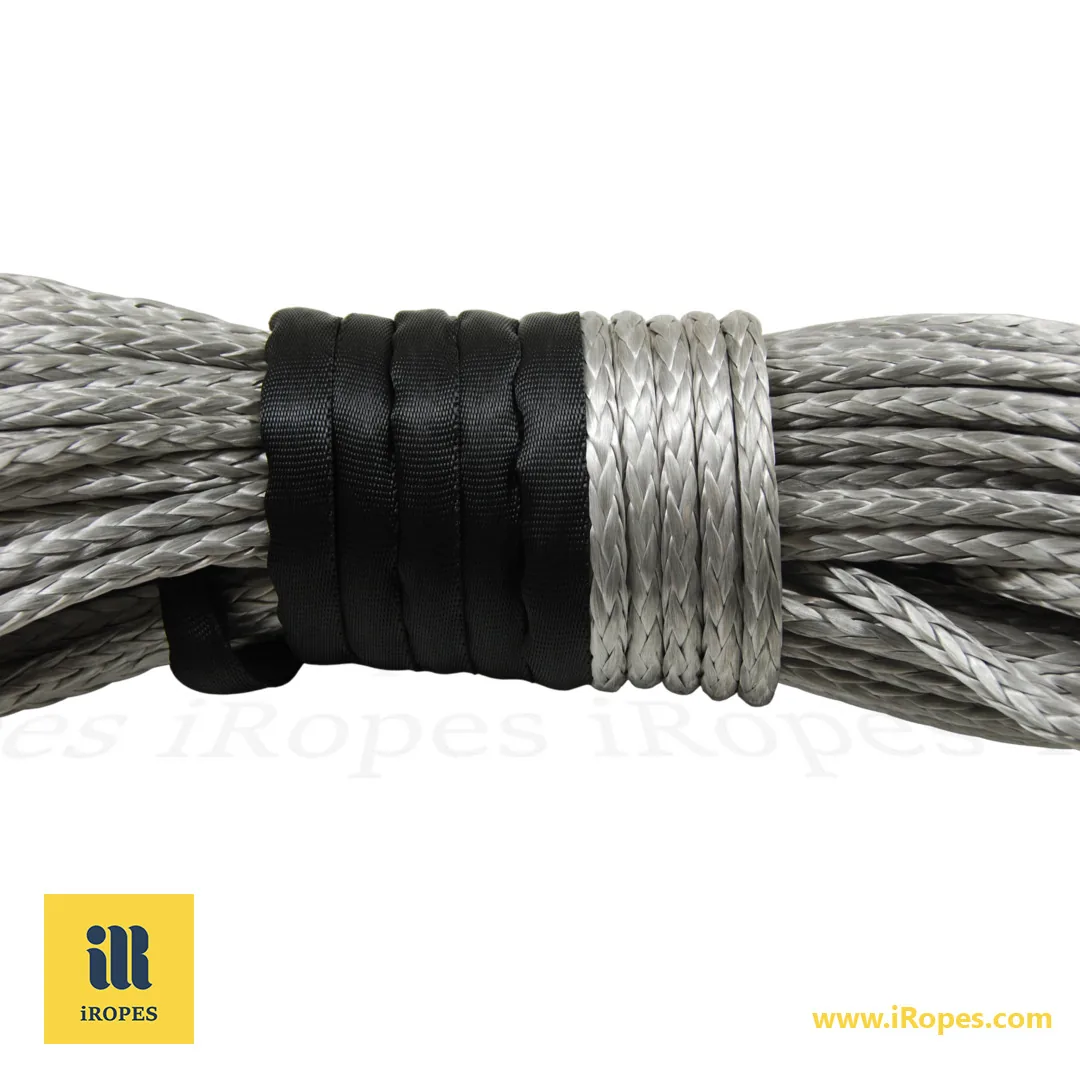
3/8″ steel winch cable typically breaks at ≈ 14,400–17,600 lb; premium synthetic reaches ≈ 17,600–20,000 lb. For a 12,000 lb winch, choose a line with at least 18,000–24,000 lb breaking strength (the 1.5–2× safety‑factor rule).
What you’ll unlock – ≈5 min read
- ✓ Exact breaking‑strength specs for 3/8 & 3/16 cables (steel & synthetic)
- ✓ Step‑by‑step WLL calculation to size any winch safely
- ✓ Access to iRopes’ ISO 9001‑certified test report for guaranteed performance
- ✓ Downloadable winch cable strength chart that lets you match cable to winch in seconds
Most operators rely on generic charts and hope the numbers line up, but that gamble can cost you a snapped line and a stalled recovery. What if you could cut that risk with an ISO‑validated report that matches your exact winch and load profile? In the sections that follow, we’ll unpack the real breaking‑strength data, walk you through precise WLL calculations, and show how iRopes’ custom‑engineered, high‑strength winch ropes turn uncertainty into confidence—complete with test documentation from our ISO 9001‑certified facility.
Understanding 3 8 winch cable strength
Now that you’ve seen why a properly rated winch cable can be the difference between a quick recovery and a dangerous stall, it’s time to examine the numbers that define a 3/8″ line. Knowing the exact strength of the cable you choose helps you match it to your winch and avoid costly mistakes.
- Diameter definition – A 3/8″ winch cable measures 0.375 inches outside diameter, a common size for mid‑range recovery rigs.
- Typical applications – Used on off‑road vehicles, light‑industrial lifts, and marine winches where a balance of strength and flexibility is required.
- Material choices – Available as steel wire rope (e.g., 6×19, 7×19 constructions) or high‑modulus polyethylene (HMPE) synthetic rope.
The short answer to “what is the strength of a 3 8 winch cable?” is that it varies by material. A steel 3/8″ line delivers a breaking strength between 14,400 lb and 17,600 lb, while a premium synthetic version can reach 17,600 lb to 20,000 lb. Those figures represent the ultimate load the rope will sustain before failure.

Safety isn’t just about the raw breaking load. Industry practice applies a 1.5× to 2× safety factor when you calculate the Working Load Limit (WLL). In plain terms, you divide the breaking strength by the chosen factor. For a synthetic 3/8″ line rated at 19,000 lb, a 1.5× factor yields a WLL of roughly 12,600 lb, while a 2× factor drops it to about 9,500 lb. Confirming your winch’s rated pull does not exceed the WLL ensures the rope never operates near its failure point.
“Applying a 1.5‑to‑2× safety factor turns a high‑strength rope into a reliable partner, not a ticking time‑bomb.” – Senior Recovery Engineer, iRopes.
When you need documented proof of those numbers, iRopes supplies ISO 9001‑backed test reports for every batch of 3/8″ cables. The PDF details the exact breaking load, the test methodology, and the certification stamp, giving you a paper trail that satisfies both warranty claims and regulatory audits. You can download the report directly from the product page or request a hard copy when you place a custom order.
Later sections will show you how to translate these figures into an easy‑to‑read winch cable strength chart, and we’ll also compare the specs of a 3 16 winch cable so you can decide which diameter fits your next project.
Interpreting the winch cable strength chart
Now that the breaking‑load numbers are clear, the next step is to turn those figures into a practical reference. The winch cable strength chart is the tool that lets you match a cable’s diameter and material to the winch you plan to use, without having to recalculate each time.
- Locate the diameter column – this tells you the physical size of the rope.
- Read across to the material row – steel or synthetic determines the breaking‑strength range.
- Find the breaking strength value for that combination.
- Apply the 1.5× to 2× safety factor to derive the Working Load Limit.
- Confirm your winch’s rated pull does not exceed the WLL.
When you follow those five steps, the chart instantly tells you whether a 3/8″ synthetic line or a 3/16″ steel line is the safer choice for your equipment.

Example
A 12,000 lb winch requires a cable with a WLL of at least 12,000 lb. Using the chart, a 3/8″ synthetic line (breaking strength ≈ 18,500 lb) divided by a 1.5 safety factor yields a WLL of about 12,300 lb, making it a suitable match.
For teams that prefer offline reference, iRopes offers a downloadable PDF version of the winch cable strength chart. The file includes the same diameter‑material‑strength matrix plus a quick‑lookup guide, so you can verify the correct cable even when you’re away from a screen.
The chart also makes it easy to compare the 3 16 winch cable strength with larger sizes, ensuring you always select the most efficient rope for the job.
Evaluating 3 16 winch cable strength
Earlier we saw how the strength chart lets you match a cable to a winch in seconds. Now let’s dive into the numbers that sit behind the 3/16″ option, so you can decide whether it fits your recovery rig or industrial lift.
The minimum breaking strength (MBS) of a 3/16″ synthetic line is roughly 10,000 lb. Applying a common 2× safety factor yields a Working Load Limit (WLL) of about 5,000 lb, which is the safe pull you should expect in regular use. A 3/16″ steel cable typically breaks at ≈ 7,500 lb, giving a WLL of ≈ 3,750 lb when the same safety factor is used.

How does that stack up against the 3/8″ family? A 3/8″ synthetic line can sustain up to ≈ 20,000 lb breaking load, giving a WLL of about 10,000–13,300 lb depending on whether you apply a 2× or 1.5× factor. By contrast, the 3/16″ synthetic’s ≈ 5,000 lb WLL suits smaller winches around 4,500–6,000 lb. For 9,000–12,000 lb winches, step up to 5/16″ or 3/8″ to maintain the recommended safety margin.
A 3/16 synthetic rope delivers a minimum breaking strength of around 10,000 lb, giving a working load limit of roughly 5,000 lb when a 2× safety factor is applied.
Answering the common People Also Ask query, “How strong is 3/16 synthetic rope?” – it breaks at about 10,000 lb, which translates to a safe pull of ≈ 5,000 lb after applying the industry‑standard safety factor.
iRopes can tailor 3/16 cables in colour, core type, length, and packaging, while providing full ISO 9001 test reports and IP protection for your proprietary design.
When you request a custom batch, the engineering team evaluates your load profile, selects the optimal strand count, and performs tensile testing in our ISO 9001–certified facility to relevant industry standards. The resulting PDF test report includes a detailed breaking‑strength curve, a certified stamp, and a traceable batch number – exactly the documentation you need for warranty claims or regulatory audits.
With those figures in hand, you can map any winch rating to the appropriate 3/16 or 3/8 cable, confident that the Working Load Limit stays comfortably below the breaking point. For a quick decision aid, download the winch cable strength chart or request our test‑report pack.
Ready for a tailor‑made winch rope? Contact us below
After reviewing the exact breaking loads, safety‑factor guidance and the easy‑to‑read winch cable strength chart, you’ll know whether 3 8 winch cable strength or 3 16 winch cable strength best fits your equipment. iRopes can customise high‑strength ropes to your colour, length and core preferences, and every batch ships with an English test report from our ISO 9001‑certified facility.
If you’d like personalised assistance in selecting the right rope, sizing it for your winch, or obtaining a certified test report, simply fill out the form above and our engineers will get back to you promptly.