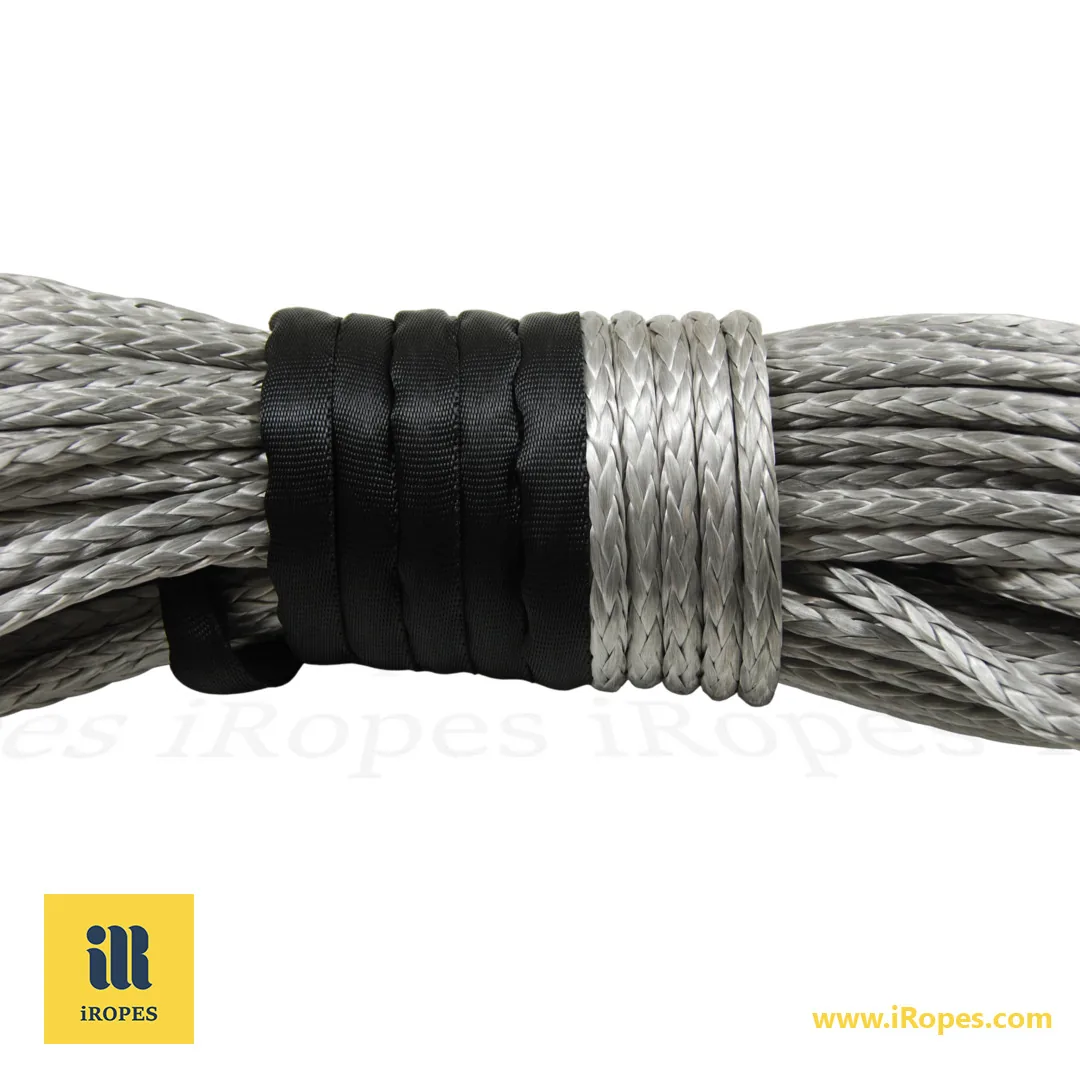
2‑inch polypropylene rope delivers a minimum breaking strength of ≈ 25 000 lb (≈ 11 340 kg) and a safe working load of about 5 000 lb (≈ 2 270 kg) – roughly comparable to the weight of a small car when rigged within working limits.
Quick‑scan: 3 min read
- ✓ Estimate the safe working load – apply the 1/5 rule to approximate a 5 000 lb capacity in seconds.
- ✓ Compare UHMWPE, nylon and aramid side‑by‑side, spotting up to 40 % higher tensile strength where you need it.
- ✓ Reduce project costs with iRopes’ OEM customisation – choose colour, core and terminations that match your brand.
- ✓ Support OSHA 1926.502 practices and ISO 9001 quality control with a concise inspection checklist.
Choosing a rope by label alone can narrow your safety margin and force premature replacement. In the sections ahead, we highlight the variables that matter, share clear numbers for a 2 inch poly rope, and outline practical steps to match rope specs to real‑world jobs without overspending.
Understanding rope specs for various materials
When you compare ropes, the material influences everything from strength and stretch to UV performance and handling. Understanding those differences early helps you avoid failures and unnecessary downtime.

iRopes produces ropes in a variety of material options, including UHMWPE, Technora, Kevlar, Vectran, polyamide (nylon), polyester and polypropylene. Each material carries distinct rope specs and trade‑offs.
- UHMWPE – very high strength‑to‑weight, very low stretch, excellent for long‑haul lifts and winching.
- Kevlar / Technora – superb heat and abrasion resistance; ideal where elevated temperatures or friction are present.
- Vectran – high modulus fibre with low creep and good thermal stability for precision rigging.
- Polyamide (Nylon) – high strength with some stretch; absorbs shock well but sinks in water.
- Polyester – strong, low stretch with excellent UV and abrasion resistance; widely used in marine and industrial settings.
- Polypropylene – lightweight and floats; economical, with lower UV resistance than polyester or nylon.
The way each material appears on a spec sheet follows three core themes.
- Strength – expressed as minimum breaking strength (MBS). High‑modulus fibres like UHMWPE achieve far higher MBS than polypropylene at the same diameter.
- Abrasion resistance – influenced by fibre type and construction (twisted vs braided), critical for off‑road or industrial use.
- UV stability – varies by fibre; polyester generally excels, while polypropylene is more susceptible to UV degradation.
Because rope specs matter, manufacturers such as iRopes operate ISO 9001‑certified quality systems to keep each batch consistent. Documented controls and testing make the numbers on the spec sheet reliable.
Now that material choice is clearer, let’s turn to the specific performance figures for a 2 inch poly rope.
2 inch poly rope – specifications, performance and load capacity
A standard 2 inch polypropylene rope typically delivers a minimum breaking strength close to 25 000 lb (≈ 11 340 kg). The common safety rule of thumb sets the safe working load (SWL) at about one‑fifth of MBS, giving an approximate 5 000 lb (≈ 2 270 kg) working figure for planning.
Knots and splices affect capacity. Depending on the knot, strength retention ranges from roughly 50–80 %. As a practical check, if you assume a conservative 50 % retention, a 5 000 lb SWL is effectively derated to about 2 500 lb when a knot is part of the system. Always account for these losses in your lift plan.
How does this compare with other 2‑inch materials? Nylon of the same size often delivers 30–40 % higher breaking strength than polypropylene, though it sinks and can be heavier. Aramid fibres (e.g., Kevlar) are stronger again and cope well with heat, yet they are stiffer and higher in cost. Polypropylene remains the go‑to when floatation, easy handling and cost‑effectiveness matter more than maximum tensile strength.

Those numbers matter because they answer a common question: how much weight can poly rope hold? By using the 1/5 rule and remembering the knot penalty, you can quickly judge whether a 2 inch poly rope meets your project’s demands without poring over a long data sheet. For broader context on 2‑inch applications, see our Top Uses for 3‑Inch and 2‑Inch Nautical Rope guide.
When I first used a 2‑inch poly rope on a marine lift, the gap between the rated safe working load and the actual load was reassuring – the rope behaved exactly as expected.
Below is a quick visual comparison that highlights why you might pick one material over another. The choice also guides the rope used in specific sectors – float‑rated polypropylene shines in offshore and rescue work, while higher‑strength nylon or aramid suits heavy‑duty rigging.
Polypropylene
Lightweight & Float
Floatation
Density lower than water allows the rope to stay afloat, ideal for marine lifts.
Cost‑effective
Lower material cost makes it attractive for large‑scale projects.
Easy handling
Flexible construction reduces fatigue during splicing or knotting.
Nylon
Higher Strength
Greater tensile strength
Provides up to 40 % higher breaking load than polypropylene.
Better UV resistance
Maintains more of its strength after prolonged sun exposure.
Higher abrasion rating
Durable under harsh, abrasive environments like off‑road terrain.
In summary, the 2 inch poly rope’s rope specs give you a solid baseline: ≈ 25 000 lb breaking strength and an SWL of around 5 000 lb before any knots or hardware. If you need a rope that stays on the surface and won’t break the budget, polypropylene is a strong candidate. When the job demands higher tensile strength or superior UV endurance, nylon or aramid is often the rope used in tougher scenarios.
Common applications: rope used in off‑road, marine, arborist and fitness
After reviewing the numbers for the 2 inch poly rope, the next question is where that capacity is most useful. Below is a quick look at the industries that rely on this size and why the rope fits each job.

Here’s an at‑a‑glance matrix that matches the rope used to the environment it excels in.
Off‑Road
Rugged, abrasion‑resistant rope handles rocky trails and controlled pulls.
Marine
Float‑rated polypropylene stays on the surface, ideal for boat lifts and dock work.
Arborist
High‑visibility colour and low stretch support safer canopy lifts and lowers.
Fitness
Durable, flexible rope endures repeated battle‑rope slams and swings.
Industrial
Cost‑effective strength supports hoists and rigging where budget matters.
Real‑world projects show why professionals choose this rope. In an off‑road recovery, a 2 inch poly line provided controlled pulls with predictable stretch. At a coastal marina, the same rope’s floatation prevented lost lines and simplified retrieval. An arborist team highlighted how a bright, high‑visibility colour improved communication and safety during canopy work.
Case Study – Fitness Battle‑Rope
A cross‑fit gym installed two 200‑foot coils of 2 inch polypropylene for daily battle‑rope sessions. After six months of high‑intensity use, the ropes showed minimal wear and a consistent feel, making them a reliable choice for continuous training.
iRopes’ OEM/ODM service lets you fine‑tune colour, core type, and termination accessories, ensuring the rope you choose matches the exact demands of your off‑road, marine, arborist or fitness application. You can also browse our selection on the iRopes Alibaba shop for convenient ordering.
When you match the rope to the right sector, you reduce wear, extend service life, and stay aligned with OSHA 1926.502 guidance where applicable. Next, we’ll walk through a quick checklist to help you select the ideal rope and keep it performing for longer.
Choosing the right rope and maintenance best practices
Now that you’ve seen where a 2 inch poly rope shines, the next step is to match the right product to your job and maintain it. As with a good pair of boots, the correct fit and regular care make all the difference.

Use this shortlist to guide your choice and setup. These four decisions separate a reliable lift from a risky gamble.
- Material match – choose polypropylene for floatation, nylon for added strength or shock absorption, aramid for high‑heat environments, and polyester for UV‑exposed jobs.
- Load rating – verify that the rope’s minimum breaking strength is at least five times the maximum load you intend to handle.
- Environmental exposure – consider UV intensity, chemicals, and temperature extremes that will contact the rope.
- Regulatory compliance – confirm the rope supports applicable OSHA 1926.502 requirements and relevant ISO standards before sign‑off.
Safety standards aren’t just box‑ticking; they shape how you handle, inspect and document use. Here’s a simple sequence that supports OSHA inspection practices while keeping the language crew‑friendly.
- Visual inspection before each lift – look for cuts, abrasion, glazing or discolouration.
- Record the date, load and any defects in a logbook to support ISO 9001‑style traceability.
- Retire the rope if wear exceeds 10 % of its original diameter, heat/chemical damage is evident, or capacity no longer meets the required SWL.
Maintenance is the quiet hero behind a rope that never lets you down. A few habits can stretch service life by months, if not years:
- Rinse the rope with fresh water after any marine exposure; salt crystals act like sand on the fibres.
- Store the coil in a shaded, dry rack – UV rays can reduce strength by up to 30 % after two years of direct sunlight.
- Apply a UV‑resistant spray if the rope will sit outdoors for prolonged periods.
- Rotate splices or terminations every 12 months to avoid stress concentration at a single point.
When choosing between synthetic ropes and traditional steel cables, synthetic options often provide superior weight‑to‑strength ratios. Learn why many professionals prefer synthetic rope over steel cable in our article Why Choose Synthetic Rope Over Marine Steel Cable.
Follow the checklist, respect the safety steps, and keep a regular maintenance rhythm, and your rope will deliver dependable service. Ready to tailor these choices to your project? Our team can help you build a straightforward, compliant workflow and select the best configuration for your needs.
Ready for a Tailored Rope Solution?
You now understand how rope specs vary with UHMWPE, Kevlar, Technora, Vectran, polyamide (nylon), polyester and other fibres, and why the 2 inch poly rope delivers an approximate 5 000 lb safe load while staying afloat. The case studies showed how rope used in off‑road, marine, arborist and fitness settings can be optimised through iRopes’ OEM/ODM capabilities, from colour and core type to termination accessories. If you’d like a design that matches your exact load, environment and branding, our specialists are ready to help. Our ISO 9001‑backed production, competitive pricing, IP protection and punctual delivery support your project from concept to shipment worldwide.
For personalised assistance, simply fill out the enquiry form above and our team will collaborate with you to create the perfect rope for your project.