Kevlar rope delivers up to 5× the tensile strength of standard nylon at just 30 % of the weight. A 3 mm line breaks at ≈ 2,200 lb while stretching less than 3 %.
Why You’ll Choose Kevlar – A 4‑Minute Read
- ✓ Up to 5× stronger than steel by weight, cutting load capacity by half for lighter kits.
- ✓ Retains integrity up to 170 °C, so high temperatures won’t compromise your line.
- ✓ Elongation stays under 3 % under load, delivering precision rigging every time.
- ✓ Custom OEM/ODM options (colour, diameter, coatings) with ISO 9001 certification protect your brand and ensure quality.
Most installers assume any rope will stretch a few centimetres under load, and they design their systems with that sag in mind. However, Kevlar cordage keeps elongation under 3 % even at 2,000 lb, meaning your rig stays dead-flat and your safety margin significantly increases. In the following sections, we’ll reveal how iRopes tailors this ultra-low-stretch fibre to your exact specifications, transforming a common compromise into a genuine competitive advantage for your business.
Kevlar Cord – Material Benefits and Core Applications
Kevlar cord is a high‑performance line made from aramid fibres, belonging to the same family of polymers that give legendary body armour its resistance to impact. These fibres are woven into a tight braid, delivering an exceptional strength‑to‑weight ratio. This means the cord feels remarkably light in the hand yet can bear loads that would snap ordinary nylon ropes. Because the material does not melt, it retains its integrity—even when exposed to flames or high‑heat environments—making it a reliable choice for the most demanding jobs.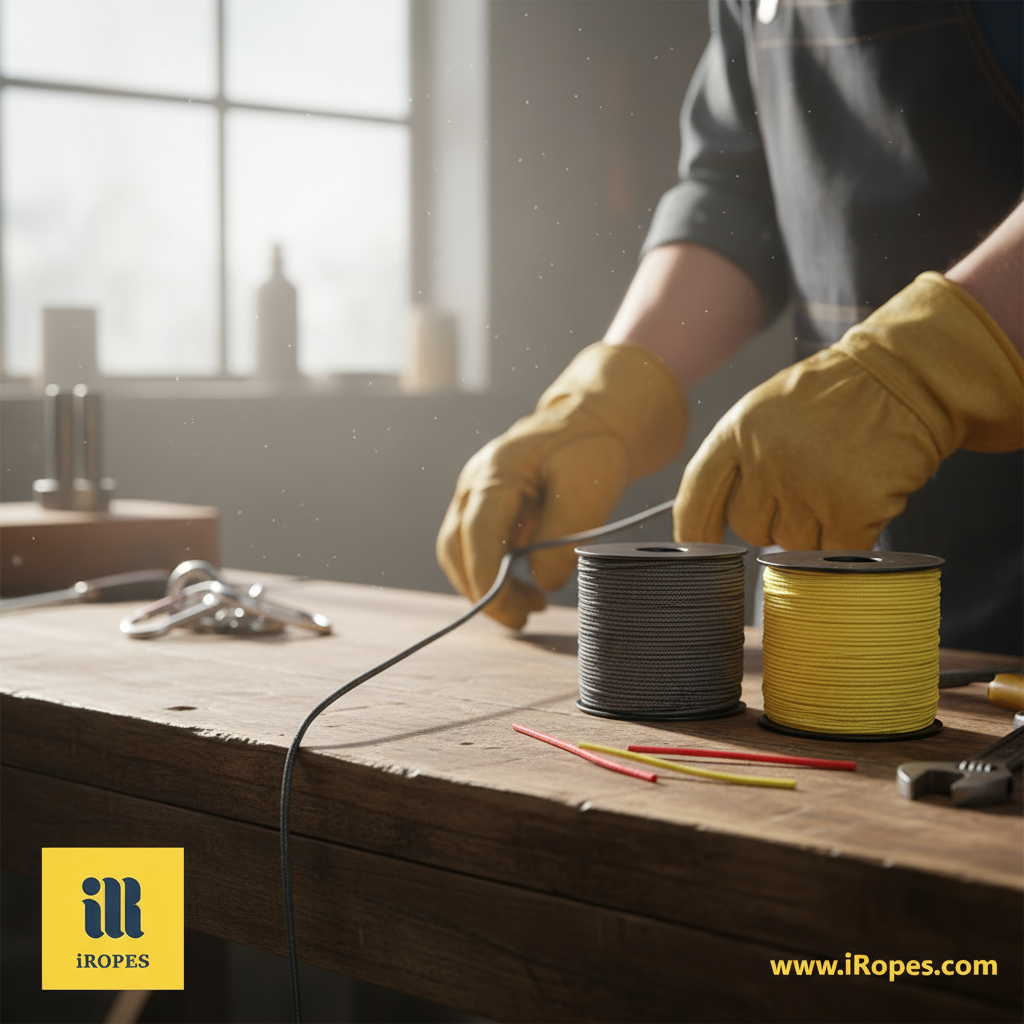
- Survival kits: Employed as compact, high-load lines for shelter construction and rescue operations.
- Marine rescue: Valued for its water-resistant and low-stretch properties in hoisting and towing.
- Arboriculture: Used as cut-resistant rigging, ensuring safety in demanding tree work applications.
“When a line must hold under critical conditions, Kevlar’s aramid strength delivers confidence that nothing else can match.”
Kevlar Rope – Unrivalled Performance Attributes
Building on the material benefits we just explored, let’s take a closer look at why the same fibre excels when fashioned into a heavy‑duty rope. The combination of almost no stretch and high‑temperature tolerance makes Kevlar rope the preferred choice for precision rigging on offshore vessels, critical aerospace hoists, and any demanding job where a sagging line could lead to significant consequences or even failure.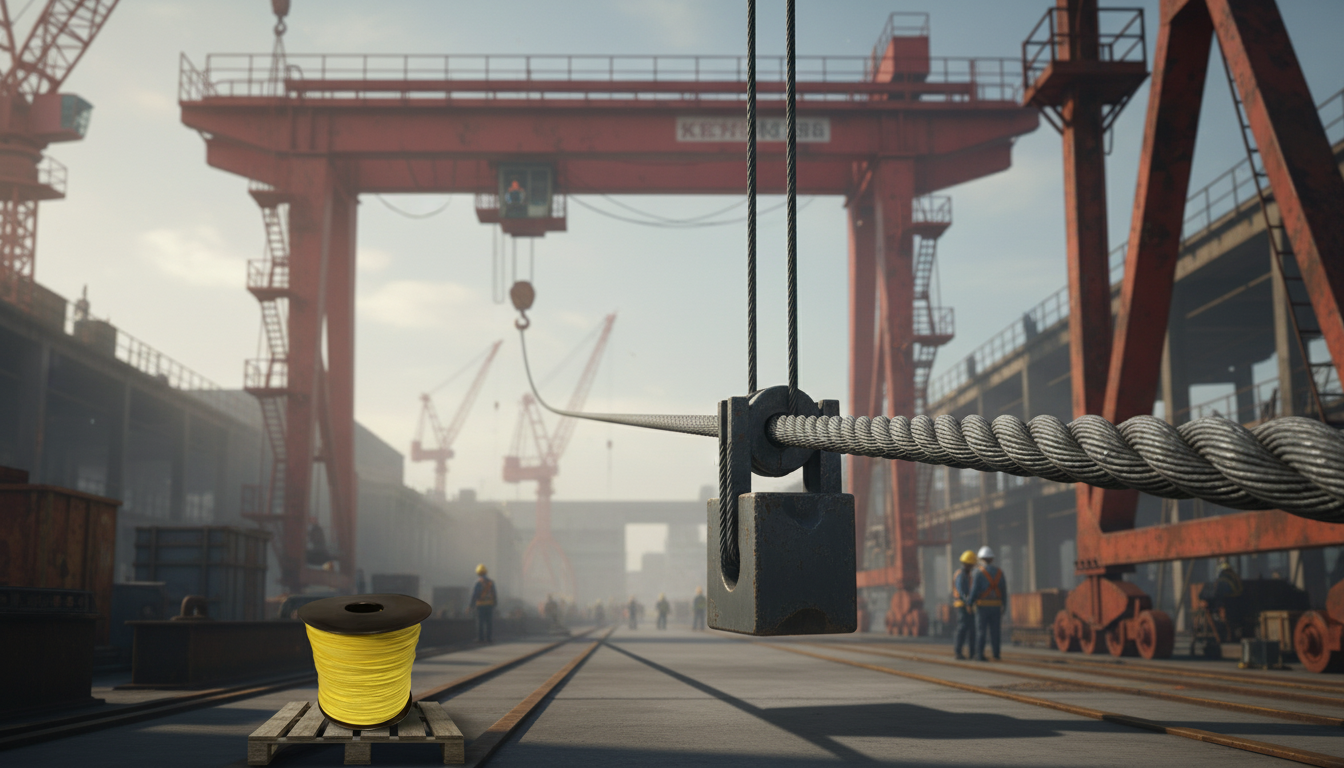
- **Low Elongation**: Less than 3 % stretch under maximum load, ensuring lines remain consistently taut and precise.
- **Heat Resistance**: Stays stable at temperatures that would cause ordinary nylon to quickly melt or degrade.
- **Abrasion & Cut Toughness**: Its robust fibres effectively resist sharp edges that would easily fray and compromise typical ropes.
FAQ
Is Kevlar cord stronger than paracord? Yes. A comparable Kevlar line delivers significantly higher tensile strength than standard 550‑lb paracord and remains intact at temperatures that would cause nylon to melt.
Kevlar Wire – Specialised Forms and Industrial Uses
Building upon the performance insights you just read, let’s examine the specialised forms that **Kevlar wire** takes and why these variations are crucial for demanding industrial tasks.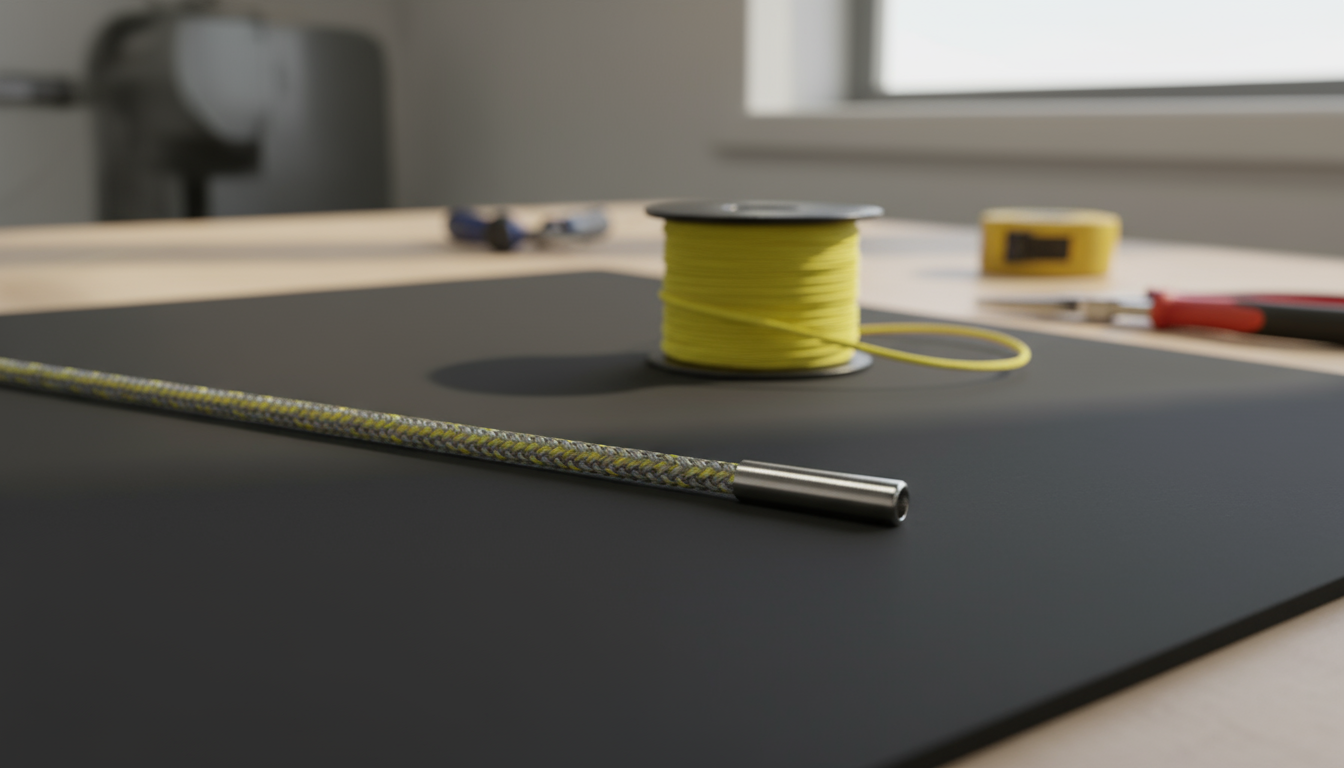
Braided
Single or double braid constructions deliver consistent load distribution and superior tensile capacity.
Twisted
Twist‑lay construction offers enhanced flexibility, ideal for routing around tight equipment and complex configurations.
Pull-cable
Ideal for machine‑tool positioning, precise crane load‑shifting, and automotive winches where minimal stretch is absolutely critical.
Reinforcement
Embedded in advanced composite panels or used as tension members in structural frames for significantly added rigidity and strength.
Understanding these diverse construction choices and proper handling techniques allows you to match the exact form of Kevlar wire to your specific project requirements. Whether you need a lightweight pull‑cable that won't elongate under significant load or a reinforcement strand to add critical stiffness to a composite frame, iRopes has a tailor‑made solution. The next step is to explore how iRopes customises these solutions specifically for our wholesale partners.
Selecting and Customising Kevlar Solutions for Your Business
Having explored the specialised forms of Kevlar wire, the next logical step is to determine how those forms can be precisely shaped to your exact business requirements. iRopes’ comprehensive OEM (Original Equipment Manufacturer) and ODM (Original Design Manufacturer) services allow you to dictate everything from the specific fibre blend to the final branding elements. This ensures that the line you receive behaves exactly as your application demands, providing you with a truly bespoke solution. For projects that demand ultra‑low stretch, our article on mastering low‑stretch rope provides deeper insights.
Tailored OEM/ODM
Your specifications, our expertise
Material
We can blend Kevlar with other compatible fibres to meet precise strength or flexibility targets, optimising performance for your unique application.
Design
Specify exact diameter, length and braid style – whether that's braided, twisted, or a specific core‑type construction to suit your functional requirements.
Finish
Add custom colours, enhance durability with UV‑resistant coatings, or incorporate reflective strips for improved visibility, boosting both branding and safety.
Quality & IP Protection
Assurance you can trust
ISO 9001 Certification
Rigorous process controls and adherence to ISO 9001 standards guarantee consistent tensile performance and product reliability across all batches.
IP Safeguards
We provide full intellectual property protection throughout the entire design and production process, safeguarding your proprietary ideas and innovations.
Worldwide Delivery
Punctual shipment of pallets to your global warehouses keeps your supply chain smooth, efficient, and reliable, wherever you are.
When you request a custom **Kevlar cord**, **Kevlar rope**, or even specialized **Kevlar wire**, the same stringent quality framework consistently applies. Our ISO‑certified production line meticulously records every batch, and our robust IP safeguards ensure that your proprietary design never leaves the factory without your explicit consent, providing you with complete peace of mind.
Downsides of Kevlar—prolonged UV exposure can degrade strength over time. The fibres absorb up to 5-7 % moisture, which adds weight. Additionally, the material commands a premium price due to its advanced properties, and it offers limited compressive strength compared with traditional steel.
From rugged survival kits to high‑temperature offshore rigging, **Kevlar cord** delivers an unmatched strength‑to‑weight ratio, impressively low elongation, and inherent flame resistance. The same aramid fibres, expertly crafted into **Kevlar rope**, provide precision‑rigging lines that maintain tautness even under intense heat and abrasion. Meanwhile, **Kevlar wire** offers ultra‑light pull‑cable and robust reinforcement strands for the most demanding industrial tasks.
iRopes’ ISO 9001 certified OEM/ODM service empowers wholesale partners to tailor diameter, colour, coatings, and branding, all backed by full IP protection and efficient worldwide delivery. Leverage these significant advantages with iRopes to boost performance, enhance safety, and secure a competitive edge for your applications.
Need a Bespoke Kevlar Solution? Get Personal Advice Below
If you’d like a customised specification or require expert assistance in selecting the perfect **Kevlar cord**, rope, or wire for your business, simply complete and submit the enquiry form above. Our dedicated specialists will promptly get back to you with tailored advice and solutions.
