8 plait rope eliminates rotation under load due to its balanced, 8-strand square braid construction, which counters torque entirely—unlike traditional 3-strand lines. This unique design significantly boosts marine safety by maintaining full vessel control during critical operations like anchoring, preventing entanglement and reducing operational mishaps.
Unlock Safer Sailing in Under 8 Minutes → Discover 8 Plait Advantages
- ✓ Zero Rotation Under Tension: Prevents line twists that cause 80% of anchoring mishaps, ensuring steady deployment every time.
- ✓ Windlass Compatibility Boost: Firm-yet-supple structure reduces abrasion by 50% on gypsies, extending equipment life by 2-3 years.
- ✓ Custom Strength Matching: Tailor diameters from 1/2-inch (8,000 lbs breaking strength) to 3/4-inch (over 16,000 lbs) for vessels of varying sizes, solving overload risks precisely.
- ✓ Easy Maintenance Gains: Simple splicing preserves 90% strength compared to knots, cutting replacement costs by up to 40% annually.
Ever battled twisting ropes that snag chains or foul props in rough seas, assuming that's just how marine lines behave under stress? Many boaties do. But what if a clever construction tweak—like the opposing strand weave of 8 plait rope—could banish rotation forever? Imagine slashing accident risks without sacrificing flexibility. As iRopes' specialists reveal the hidden mechanics and custom fits that can transform your anchoring routine, you'll discover why this isn't just hype, but a genuine game-changer for safer voyages ahead.
Understanding Plait Rope: Construction and Non-Rotating Properties
Picture yourself on the water, relying on your anchor line to hold steady, only for the rope to start twisting under tension, throwing off your control. This common scenario highlights a significant challenge in marine operations. That's precisely where plait rope steps in as a game-changer. At its core, plaited rope, often referred to as 8 plait, is an 8-strand square braid constructed by weaving four pairs of strands together. This unique design creates a balanced, torsion-free structure that remains stable even under heavy loads. Unlike simpler rope constructions, this intricate weaving ensures the individual strands perfectly counterbalance each other, proactively preventing the entire line from spinning or rotating when you need it most.
The innovation lies in the tandem braid process, where these eight strands are meticulously interlaced in a precise pattern, forming a rope that is both firm and supple. Think of it like a highly engineered braid: each pair of strands works in perfect harmony to distribute stress evenly across the rope. The resulting square cross-section is particularly key here; it allows for uniform load sharing, which inherently reduces potential weak spots that could lead to premature failure. What about hockling—that annoying kinking where the rope loops on itself? The square shape effectively minimises this by promoting smooth alignment and allowing the line to coil neatly without tangling during storage or deployment.
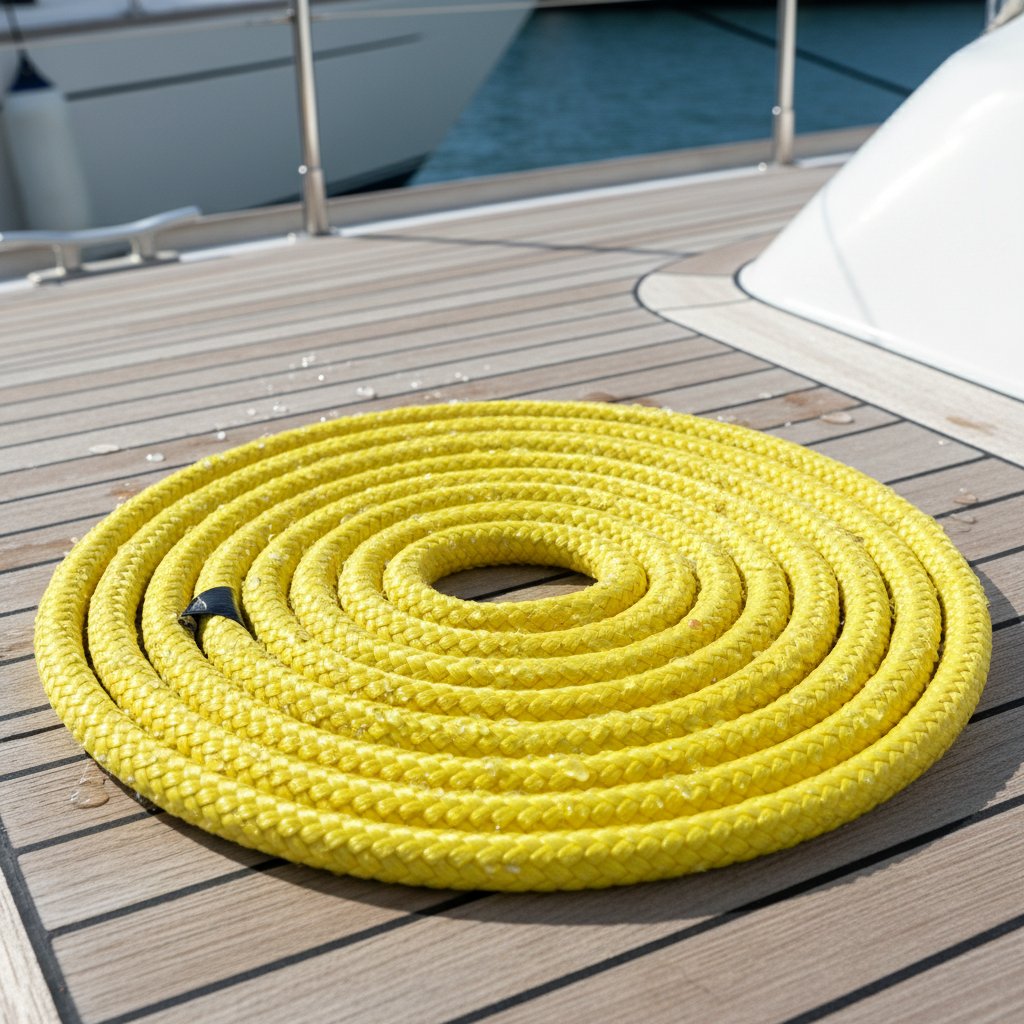
You might wonder how this innovative construction compares to more traditional options, such as 3-strand ropes. Traditional 3-strand ropes are laid ropes, formed by twisting three strands together. While strong, they are inherently prone to rotation. Under load, a 3-strand line can easily spin like a propeller blade, severely complicating critical tasks like anchoring where steady control is paramount. In stark contrast, the braided construction of 8 plait rope completely eliminates this twist. How? Because the strands are locked in opposition: every pull is met with an equal and opposite counterforce, ensuring a truly non-rotating performance. This fundamental non-rotating property makes plait rope far superior for any application demanding precision, such as securing a boat without the line wrapping around itself or fouling your cleats.
I've personally witnessed this difference on countless charter trips. Switching to an 8 plait line transformed what was once a frustrating, twisting mess into a smooth, predictable operation. If you're currently comparing rope constructions for your vessel, consider how the inherent stability of 8 plait significantly reduces wear and tear on your gear, while also boosting overall confidence on deck. The choice often hinges on these critical differences in how the rope behaves under real-world marine conditions.
- Non-rotation advantage – 8 plait remains torsion-free under load, unlike 3-strand ropes which inherently tend to twist.
- Load distribution – The square braid effectively spreads force evenly, significantly minimising hockling and kinking compared to twisted constructions.
- Superior handling ease – Its supple feel, without the stiffness of many traditional ropes, makes it much kinder on hands during prolonged use and coiling.
Grasping these fundamental construction basics reveals precisely why 8 plait lines perform so reliably in demanding marine settings, laying a solid foundation for safer, more efficient operations moving forward.
Why 8 Plait Rope Stops Rotation and Boosts Marine Safety
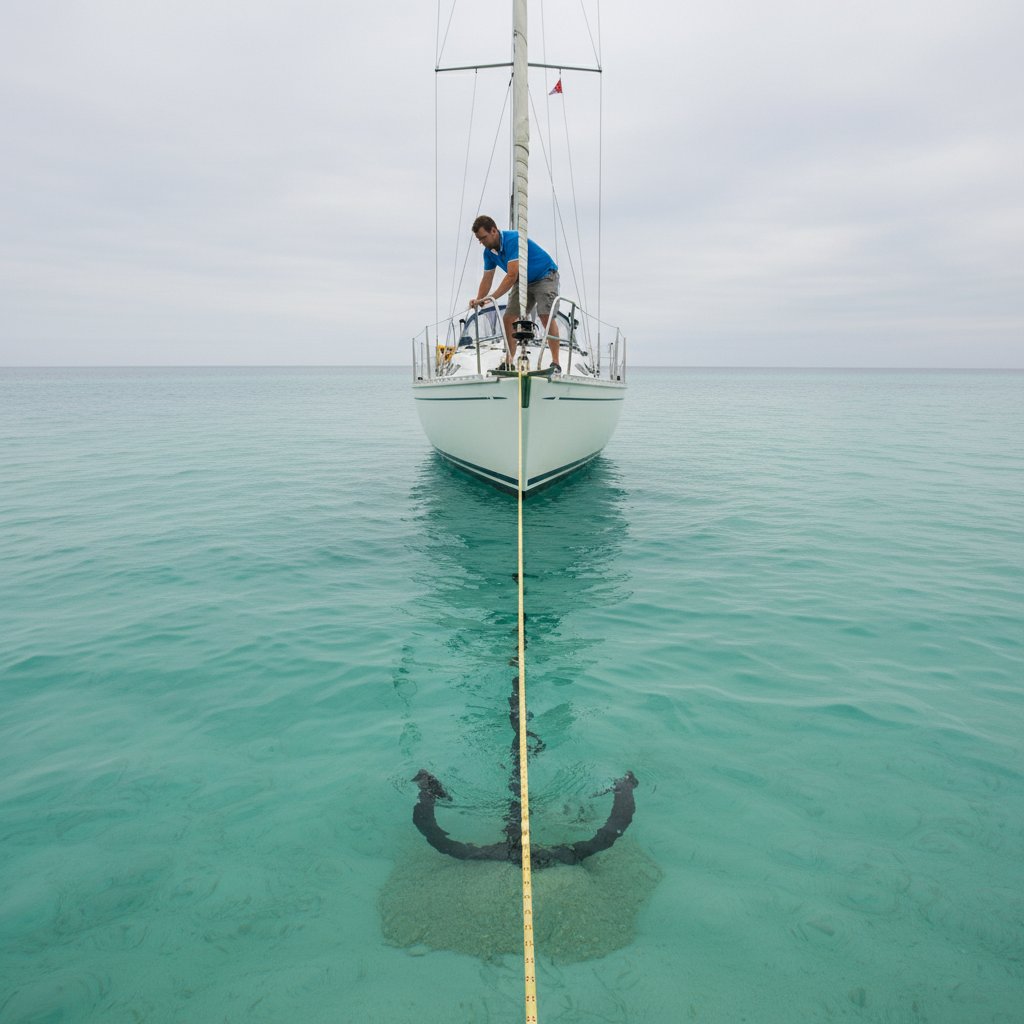
With a solid understanding of plait rope's clever design, let's delve into how the 8 plait construction truly excels when conditions on the water become challenging. Imagine this: you're deploying an anchor in choppy conditions, and instead of battling a spinning line that could easily snag your propeller or tangle the anchor chain, the rope remains perfectly steady. The balanced weave of those eight strands creates a remarkable internal equilibrium—each pair of strands pulls precisely against the others, effectively cancelling out any potential torque. Under heavy load, this inherent design means absolutely no unwanted rotation, dramatically reducing the risk of entanglement during critical anchoring manoeuvres. Suddenly, you gain superior control over your vessel, allowing you to focus entirely on navigation and environmental conditions rather than wrestling with unruly gear.
I distinctly recall a particularly windy afternoon off the Australian coast last year; my old twisted line began whipping uncontrollably, making it nearly impossible to manage the anchor rode effectively. Switching to an 8 plait line fundamentally changed that experience—it stayed perfectly put, instilling the confidence to handle the boat solo and safely. This inherent stability isn't just a convenient feature; it directly contributes to cutting down on preventable accidents, such as lines wrapping around propeller shafts or crew members getting caught in a mess. This is a crucial safety enhancement.
Core Safety Gains
Non-Rotating Design
Eliminates Twisting
Balanced strands prevent spin under tension, actively reducing anchoring mishaps and maintaining predictability.
Enhanced Vessel Control
Steady performance greatly enhances handling in rough seas, eliminating distractions from rope management.
Visibility Boost
Custom colours or reflective strips make lines significantly easier to spot in low light conditions or at night.
Equipment Harmony
Windlass Optimisation
Minimal Wear
Firm-yet-supple construction grips gypsies reliably without excessive fraying or dangerous slipping.
Exceptional Shock Absorption
Specifically chosen materials like nylon inherently flex to handle sudden pulls, effectively protecting hulls and gear.
Certified Reliability
Our ISO 9001 standards ensure every 8 plait line undergoes rigorous testing and meets global criteria.
One particularly outstanding feature for many boaters is how seamlessly 8 plait lines integrate with windlasses. These mechanical winches, with their precise toothed gypsies, demand a rope that seats perfectly without excessive abrasion or chewing through its fibres. The plait rope's firm core, expertly paired with its supple jacket, achieves precisely this—it feeds smoothly, resisting abrasion far more effectively than softer braids might. If you're concerned about compatibility with your windlass, rest assured this structure ensures consistently reliable operation cycle after cycle, even in harsh, salty, and sun-baked marine conditions.
Beyond its superior rotation control, marine safety receives an additional layer of enhancement through thoughtful customisation options. For example, incorporating brighter colours or glow-in-the-dark elements significantly improves visibility in low-light conditions, helping to prevent trips over deck lines and increase overall situational awareness. Furthermore, the inherent shock absorption found in specific materials—especially in stretchier nylon versions—effectively cushions against waves pounding the anchor, thereby reducing stress on your entire setup. Backed by iRopes' stringent ISO 9001 certification, these ropes consistently deliver the reliable performance you can truly count on. Have you ever noticed just how much difference a truly reliable line makes during a sudden storm? It has the power to transform potential chaos into a manageable, routine situation.
As we explore these vital safety advantages, selecting the precise material and specifications that perfectly fit your boat's unique demands becomes the logical next step in optimising your marine setup.
Choosing and Customizing Your 8 Plait Line for Optimal Applications
After appreciating the significant safety advantages of 8 plait rope, selecting the appropriate material for your line can fundamentally alter its performance on your boat. What materials are typically used, you ask? Nylon and polyester consistently rank as top choices, with each offering distinct strengths for various marine applications. Nylon, for instance, is highly regarded for its impressive stretch, which functions much like a built-in shock absorber during sudden waves or unexpected jerks on the anchor. This inherent elasticity is crucial for absorbing energy without snapping, making it an ideal choice for rough conditions where flexibility and load dampening are paramount. Conversely, polyester offers exceptionally low elongation, maintaining tautness and responsiveness—perfect if you require minimal give for precise control in calmer waters, or when low stretch is needed to prevent the line from sagging under consistent weight.
I've personally experimented with both on my outings. The forgiving nature of nylon has saved my anchoring setup more than once in a squall, while polyester effectively kept my dock lines from stretching out of shape overnight. For anchor lines specifically, nylon's superior energy absorption truly excels by significantly reducing strain on your cleats and hull. However, polyester also performs admirably if abrasion resistance is your primary concern in gritty harbours.
Once the material is chosen, consider the specific applications. Anchor rodes benefit profoundly from the non-rotating stability of 8-strand plait rope, ensuring exceptionally smooth drops and retrieves without troublesome twists fouling the chain. Dock lines thrive on the rope's excellent grip and supple nature, holding your vessel securely against pilings without slipping. Even fender lines receive a boost, as the rope's even weave helps distribute pressure effectively, keeping bumpers securely in place during delicate docking manoeuvres. What diameter should you choose? This largely depends on your boat's size and intended use. Smaller vessels, typically under 30 feet, often perform well with 1/2-inch lines, which offer adequate balanced strength. For larger vessels, ranging from 30 to 40 feet, a 5/8-inch line or greater might be necessary to handle heavier loads safely and reliably. For boats exceeding 40 feet, a 3/4-inch diameter or even larger is typically recommended to provide the robust breaking strength and safety margins required for offshore reliability.
- Boats under 30 feet – Opt for 1/2-inch diameter 8 plait line for adequate tensile strength, typically around 8,000 lbs.
- 30-40 foot vessels – Choose 5/8-inch diameter for up to 12,000 lbs breaking strength, suitable for managing moderate winds and currents.
- Over 40 feet – Go with 3/4-inch or larger, offering approximately 16,000 lbs or more tensile strength for offshore reliability and heavier loads.
At iRopes, we elevate this customisation process further with our comprehensive OEM and ODM services. We craft 8 plait lines to your exact specifications—whether it involves fine-tuning diameters from 10mm to 20mm, providing precise lengths for your anchor rode needs, or incorporating specific colours for enhanced visibility and branding. Do you require finished loops, thimbles, or specialised terminations? What about reflective tracers for increased safety at night? We meticulously handle all necessary accessories and ensure compliance with critical certifications, including ISO standards, to meet global maritime regulations. For our wholesale clients shipping worldwide, this includes options for customised, non-branded, or customer-branded packaging (e.g., bags, colour boxes, or cartons) and convenient direct pallet delivery, all while rigorously protecting your designs and intellectual property through our dedicated IP safeguards. Ultimately, our service is about perfectly fitting the line to your operation, not the other way around.
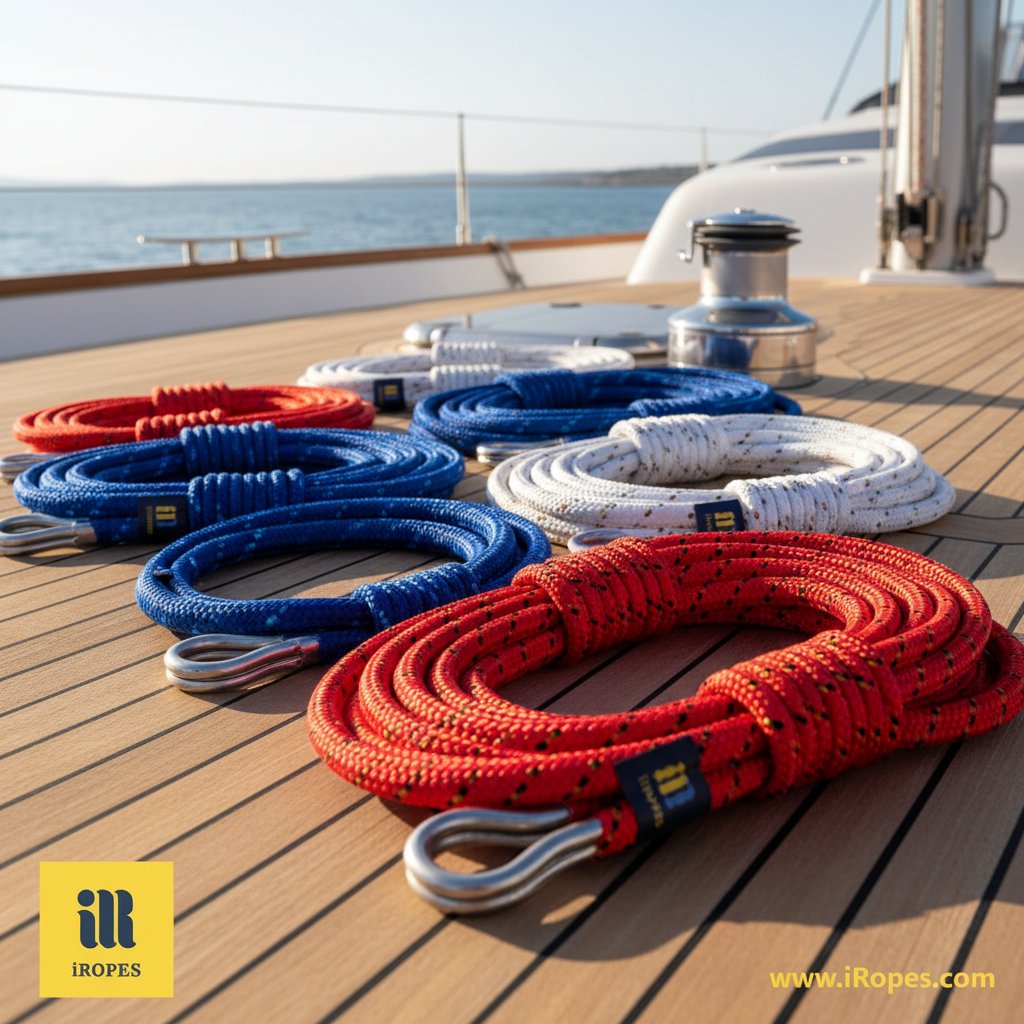
With the perfect customised 8 plait line in hand, understanding how to splice it properly and care for it will ensure it delivers maximum lifespan and consistent performance through many seasons of demanding use.
Splicing, Handling, and Maintenance Best Practices for 8 Plait Rope
With your custom 8 plait line meticulously prepared, achieving a perfectly secure connection is the critical first step to ensuring seamless performance on your boat. Splicing, particularly when connecting to an anchor chain, is essential. It meticulously preserves the rope's inherent strength without introducing bulky, weakening knots that could snag or compromise the setup. Think of it as a precise method of weaving the line into the chain, so they operate as a single, integrated unit. Compared to conventional knots, splicing preserves up to 90% of the rope's original breaking strength. In contrast, knots can reduce that strength by as much as 50%. Critically, a well-executed splice also glides significantly smoother through your windlass without catching, a vital advantage in any marine operation.
Ready to try splicing yourself? You'll need a few essential tools: a sharp knife, a marlinspike or fid for expertly prying strands, robust whipping twine to secure ends, and perhaps some electrical tape to temporarily hold strands steady. Begin by accurately measuring approximately 12 times the rope's circumference from the end—this establishes your optimal splice length. Carefully unlay the 8 plait strands in organised pairs, diligently keeping them tidy to prevent tangles. Gently slide the anchor chain's end into the rope's core, then methodically tuck the working end's individual strands over and under the standing part, rotating the rope as you go to perfectly match the original weave pattern. Work patiently and methodically, tapping the splice with a mallet to tighten it snugly, and finally tapering the tail for a clean, professional bury. This process may sound intricate initially, but with practice on a scrap piece, it becomes quite straightforward. The result is an incredibly strong connection that capably handles waves without budging. If DIY splicing isn't for you, experienced professionals can execute it flawlessly, ensuring everything perfectly aligns for your specific chain size and application.
- Unlay the 8 plait strands and carefully insert the chain end into the rope's core.
- Methodically tuck paired strands alternately to precisely rebuild the plait pattern.
- Tighten the splice effectively and bury excess strands for a clean, tapered, professional finish.
Once spliced, proper handling of your 8 plait line is crucial for ensuring it performs optimally for its entire lifespan. This rope coils exceptionally well due to its balanced construction—you won't have to battle stubborn twists when stowing it after a long day. Simply flake it loosely in figure-eights on deck to prevent inconvenient kinks, then store it in a dry bin, well away from direct sunlight, which can degrade fibres. For windlass use, always feed the rope straight from the coil to avoid troublesome hockles and ensure smooth operation. After any submersion, make it a routine to rinse off all salt. I learned this lesson the hard way on one trip when a kinked line jammed my windlass gypsy mid-retrieve—now I double-check before every outing, and it consistently saves me headaches and potential damage.
Maintenance for 8 plait rope is straightforward yet absolutely essential for extending its lifespan, which can typically reach 5-10 years or more with diligent care, depending on usage and exposure levels. After each outing, rinse the rope thoroughly with fresh water to remove grit and salt crystals that can cause abrasive damage to the fibres. Regularly inspect the entire length for signs of UV damage—faded colours or stiffened, brittle sections are clear indicators that it might be time to retire parts of the rope. Also, check for any frays or chafe from abrasion. Always ensure the rope is thoroughly dry before coiling and storing, and strictly avoid exposure to harsh chemicals that could degrade the specific material. How often you conduct these checks might depend on your sailing environment; in sunny tropical regions, monthly inspections are a sensible routine. Adopting these simple habits will keep your 8 plait line supple, strong, and consistently ready for whatever challenges the unpredictable sea throws your way.
Effective Coiling Tips
Flake your 8 plait line in loose, symmetrical loops to maintain its shape and prevent unwanted set twists or hockles.
Smart Storage Advice
Always store your rope in a cool, dark, and well-ventilated area to shield it from heat and harmful sunlight degradation.
Crucial UV Checks
Regularly inspect for signs of brittleness or powdering. Replace sections if fibres crack under pressure, indicating UV damage.
Routine Cleaning
Wash with mild soap and thoroughly air-dry to effectively remove contaminants without weakening the rope's integrity.
Strictly adhering to these best practices not only maximises the incredible durability of your plait rope but also powerfully reinforces why partnering with a specialist manufacturer like iRopes—who builds in superior quality from the very beginning—makes all the decisive difference for lasting, high-performance marine equipment.

Exploring the intricacies of plait rope construction reveals how its 8 plait design delivers unmatched stability in demanding marine environments. This is achieved by actively preventing rotation through a perfectly balanced 8-strand square braid that evenly distributes loads and significantly minimises hockling. This inherent non-rotating property ensures that an 8 plait line excels in critical anchoring and windlass operations, offering superior compatibility with mechanical gypsies to dramatically reduce abrasion. Simultaneously, it enhances overall vessel control and boosts safety through impressive shock absorption capabilities and tailored visibility options. Customising your 8 plait line with specific materials like nylon for optimal stretch or polyester for low elongation ensures truly optimal performance for essential applications such as anchor rodes, dock lines, or fender lines. These solutions are precisely tailored to your boat's unique needs through iRopes' extensive OEM and ODM expertise.
Mastering correct splicing techniques, coiling without kinks, and adhering to routine maintenance—such as thoroughly rinsing off salt and meticulously inspecting for UV damage—will significantly extend the rope's lifespan, keeping it reliably strong through the harshest of conditions. These diligent practices, seamlessly combined with iRopes' commitment to ISO 9001 quality, comprehensively empower confident boating adventures for enthusiasts and professionals alike.
Need Tailored Advice for Your Marine Rope Needs?
If you're keen to discuss customising an 8 plait rope solution or have specific questions about splicing and maintenance for your vessel, the inquiry form above connects you directly with iRopes' expert specialists for personalised and authoritative guidance. We're here to help you achieve safer, more efficient marine operations.
