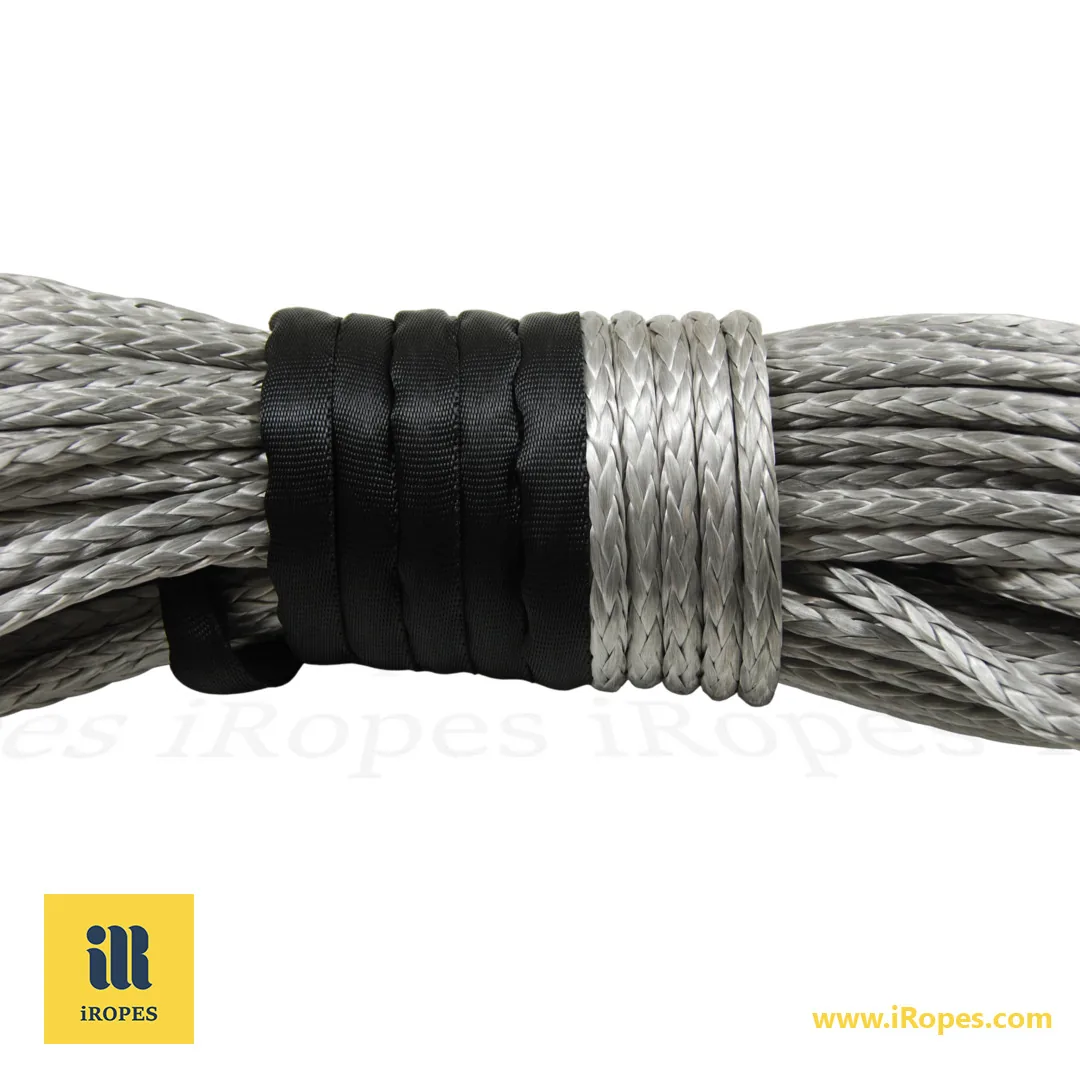
Bigger isn't necessarily better for anchor ropes. Oversized lines fail to absorb shocks, leading to inefficient anchoring. Use the precise 1/8-inch diameter per 9 feet of boat length rule for optimal strength that holds under dynamic loads up to 3,000 pounds WLL. ⚠️
Unlock Anchoring Mastery in 8 Minutes: ✓
- ✓ Debunk the "bigger is better" myth with exact sizing formulas, potentially saving you from efficiency loss in rough conditions.
- ✓ Calculate optimal 7:1 scope for any depth, ensuring secure holds that minimise dragging.
- ✓ Master Working Load Limit (WLL) vs. Mean Breaking Load (MBL) secrets, selecting ropes that meet 5x safety margins without unnecessary bulk.
- ✓ Tailor custom iRopes rope solutions, boosting your system's reliability with ISO 9001-certified standards.
You've probably heard that thicker anchor ropes guarantee unbreakable holds. However, what if that extra bulk is silently sabotaging your safety by transmitting shocks straight to your hull? In these pages, discover the counterintuitive truth: optimal anchor rope sizing, achieved through boat-specific rules, can deliver better shock absorption than oversized alternatives. Yet, many boaties often overlook the crucial chain integration that ties the entire system together. Ready to transform vague guesses into a bulletproof anchoring system that allows you to confidently anchor, no matter the swell?
Anchor Rope Size Fundamentals: Debunking the Bigger is Better Myth
Imagine you're on the water, the wind picking up, and your anchor starts dragging. The thick rope you trusted is actually working against you. This scenario describes a common trap: believing bigger ropes automatically mean more strength. However, in anchoring, oversizing can lead to stiffness that reduces shock absorption or creates extra weight that's difficult to handle. Let's break this down step by step, focusing first on getting the rope diameter right for your vessel.
A reliable guideline for anchor line size is the simple rule of thumb: use 1/8 inch of rope diameter for every 9 feet of your boat's length overall (LOA). For instance, a 27-foot sailboat would typically require a 3/8-inch rope. This guideline helps maintain balance, preventing the rope from being too bulky or too weak. Why 9 feet? This ratio accounts for typical loads without overcomplicating things for most recreational boats. Have you ever struggled with an unnecessarily heavy rope on deck? It's inefficient and challenging to manage, and this rule helps avoid such issues while ensuring reliability.

Several factors can influence this starting point, tailoring it to your specific setup. Vessel displacement (the boat's weight) plays a significant role; heavier cruisers might need a slight increase in diameter for enhanced stability. Windage, or the amount of surface area exposed to wind, adds load during gusts. Therefore, high-profile boats like catamarans or vessels with extensive canvas might need to adjust their anchor line size accordingly. Additionally, ensuring your rope matches your anchor's weight is crucial, as an inadequately light line paired with a heavy anchor can create an imbalance within the system.
- Vessel displacement – Heavier boats require thicker lines to handle increased tension without excessive strain.
- Windage – Boats with tall profiles or large superstructures experience more force from wind, so opt for slightly larger diameters in windy conditions.
- Anchor weight matching – Utilise manufacturer charts to pair rope size with anchor mass, ensuring the entire system functions harmoniously.
So, what size rope for an anchor line should you choose? For boats between 20 and 40 feet, aim for a diameter of 5/16 to 1/2 inch. Consider a 25-foot vessel: a 5/16-inch nylon rope works effectively for calm bays, providing a steady hold under moderate pulls. For a 35-foot powerboat in coastal waters, where currents might test the system, increasing to a 3/8-inch line is often appropriate. These recommendations are based on practical applications and testing, ensuring your security without unnecessary bulk.
Environmental conditions also matter significantly. In rough seas, instead of simply going bigger, consider derating your rope for safety. Factors like saltwater and UV exposure weaken ropes over time, so factoring in a 20% buffer for harsh environments is a sensible approach. Oversized lines, ironically, can hockle or chafe faster, potentially leading to premature failures. The key is to choose the right fit and inspect your rope regularly. Thinking about how water depth influences the total length? That's where scope comes in next, directly linking rope size to real-world anchoring performance.
I recall assisting a friend on his 30-foot ketch during choppy conditions. He had opted for an oversized rope, believing it would provide superior strength, but it tangled frequently and didn't stretch correctly, severely limiting its effectiveness. Switching to the properly sized rope made an immediate difference: smooth deployment and a consistently secure hold. Such nuanced adjustments often distinguish a challenging anchoring experience from a peaceful night at sea.
Optimizing Anchor Line Size: The Scope Principle Explained
With the correct anchor rope diameter established, the next crucial step is determining the optimal amount of rode—the combined rope and chain—to deploy. It's not just about having enough length; it's about creating the ideal angle for your anchor to properly set and hold. This is where the scope principle becomes invaluable, transforming a simple drop into a secure hold that withstands waves and wind. Let's explore how to get this right, beginning with the classic guideline that simplifies the process.
The 7:1 anchor rule is an essential guideline for secure anchoring. This rule dictates deploying seven feet of rode for every one foot of water depth, plus the height from the water to your bow roller, known as freeboard. Why seven? This ratio ensures the pull on the anchor remains low and horizontal, which helps the anchor's flukes bite deeply into the seabed rather than lifting out. For optimal safety in most conditions, aim for a 7:1 to 10:1 ratio, increasing it in deeper water or rougher environments. For example, if you're anchoring in 20 feet of water with two feet of freeboard, that's a total of 22 feet. Multiplying 22 by seven gives you 154 feet of rode needed. In 30 feet of water, the required rode length jumps to approximately 224 feet at a 7:1 ratio. This simple calculation can significantly enhance your safety at sea. Have you ever observed boats swinging erratically in a crowded bay? Proper scope helps prevent such chaos by ensuring stability for all vessels.

However, conditions are not always ideal, so adjusting your scope to match your surroundings is crucial. Strong winds or currents demand more rode length—perhaps an 8:1 to 10:1 ratio—to absorb the increased force without dragging. Soft mud bottoms might require even more length to allow the anchor to penetrate deeply, while rocky ground could necessitate less to avoid snagging. The objective is to prevent failures; I once witnessed a yacht drag in a sudden squall because they deployed insufficient scope. A quick adjustment to an 8:1 ratio would likely have secured the vessel. Consider the typical bottom types in your local cruising areas.
- Calm conditions – A 5:1 ratio can suffice for short stops, providing basic hold without excessive swing.
- Windy or current-heavy conditions – Increase to an 8:1 to 10:1 ratio to distribute loads effectively across the rode.
- Soft bottoms – Extend to 10:1 or more for a deeper set, which helps reduce the risk of the anchor resetting.
To accurately determine your anchor size needs, integrate the rope length with your anchor's weight for a balanced system. A lighter anchor used with a long scope can work well in sandy bottoms, provided the rode length is sufficient to match the vessel's pull. For a 30-foot boat, a 15-pound anchor might be suitable for calm inlets, but scaling up to 20 pounds is advisable for open water, always ensuring the line robustly supports the dynamic loads without overwhelming the overall system.
For quick reference, here's a practical match-up of anchor line size to water depths and vessel types. Remember, smaller boats in shallow areas require less rode, while larger vessels in deeper waters demand greater precision in calculations.
Small
Vessels (20-30 ft)
Shallow to Moderate Depths
10 ft Depth
70-100 ft rode; 3/8-inch line for secure hold.
20 ft Depth
140-200 ft rode; adjust to vessel swing needs.
30 ft Depth
210-300 ft rode; adjust for light displacement.
Larger
Vessels (30-40 ft)
Deeper Waters
10 ft Depth
70-100 ft rode; 1/2-inch for heavier loads.
20 ft Depth
140-200 ft rode; integrate chain for balance.
30 ft Depth
210-300 ft rode; ensure WLL matches dynamics.
Getting the length correctly calculated establishes a robust foundation for your entire anchoring system. However, true reliability ultimately comes down to how effectively the rope manages those intense, real-world forces without failing structurally.
Anchor Rope Strength Secrets: Breaking vs. Working Load Limits
Once you've sorted the length required for dynamic pulls from waves and wind, the critical test is whether your anchor rope can withstand the punishment without snapping. Consider this: raw power sounds impressive, but in the unpredictable marine environment, it's controlled capacity that ensures your safety. We're discussing the crucial distinction between a rope's maximum breaking strength—known as MBL, or Mean Breaking Load—and its Working Load Limit (WLL). MBL represents the point at which the rope fails under extreme tension, but this is not the metric you should rely on for day-to-day operations. WLL, typically about one-fifth to one-seventh of the MBL, is the practical safety metric for which you design, ensuring the line handles everyday stresses with a substantial safety margin.
Why is this distinction vital for anchor rope strength? Because marine loads are rarely static; they are jerky due to swells and gusts, which can multiply forces rapidly. A 5:1 safety factor means your rope's WLL should be at least five times the expected maximum load on your anchoring setup. For instance, if calculations indicate your boat might experience 600 pounds of pull in strong winds, you should select a line with a WLL of at least 3,000 pounds. This buffer helps prevent material fatigue over time. Ever wondered what rope can safely hold 300 pounds under such dynamic conditions? A basic 3/8-inch nylon rope often has an MBL of around 2,400 pounds, providing a WLL far above that 300-pound threshold. However, always verify the specific product's specifications for your exact application; the dynamic WLL is what genuinely counts, not just static lift capacity.
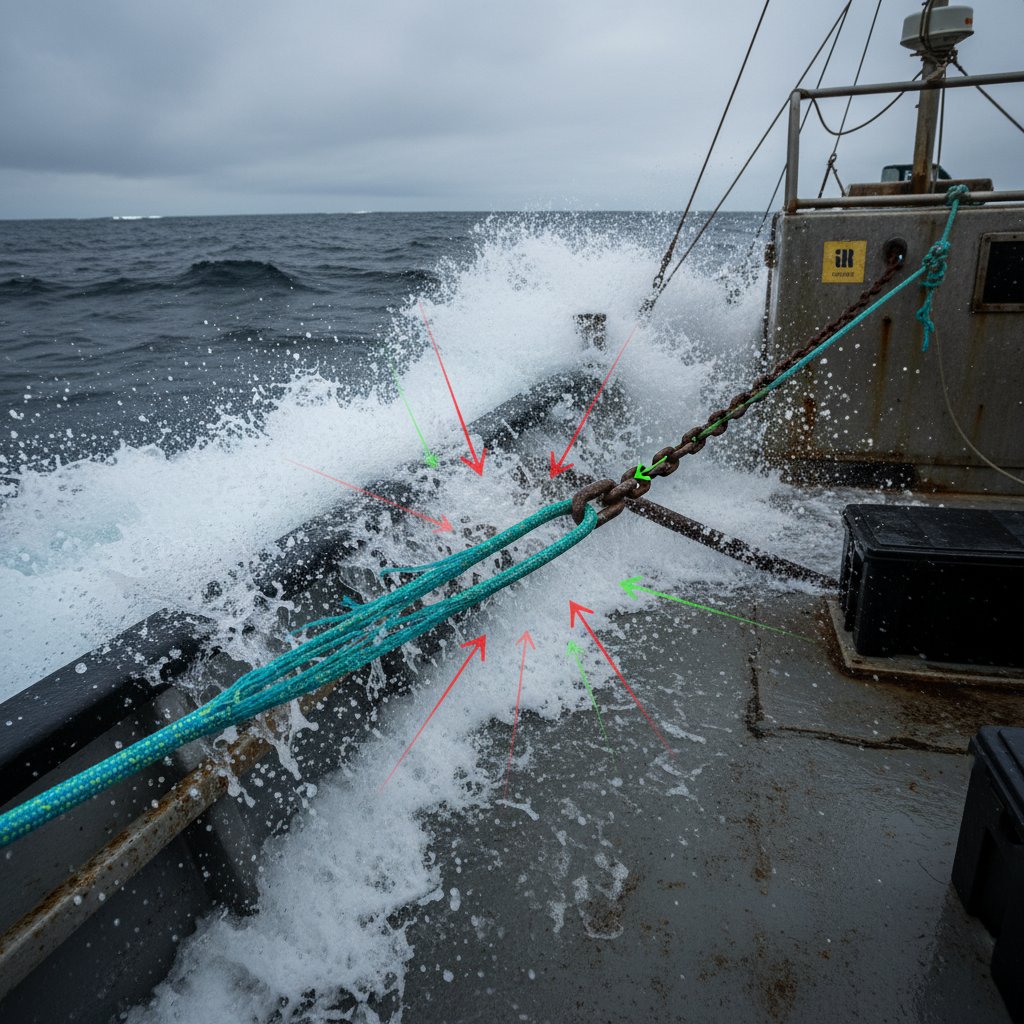
The choice of material profoundly impacts the anchor rope's strength profile. Nylon is notable for its elasticity, stretching up to 30% under load to cushion impacts—acting much like a built-in shock absorber that significantly reduces peak forces on your gear. However, this elasticity means it stores energy, which can generate heat and accelerate wear if the rope is continuously overworked. Polyester offers less stretch, typically around 15% elongation, making it more stable under consistent pulls but less forgiving during sudden jerks. Then there's Dyneema, a high-modulus fibre with minimal stretch; its strength-to-weight ratio is exceptional for lightweight holding, yet its lack of give transfers every jolt directly to connections, necessitating an absolutely flawless setup.
Nylon Pros
Excellent shock absorption due to high stretch, ideal for rough seas where loads can spike unexpectedly.
Nylon Cons
Repeated stretching can generate heat, degrading fibres faster in prolonged or severe use.
Polyester/Dyneema Pros
Minimal stretch provides precise control and high durability, particularly in steady conditions.
Polyester/Dyneema Cons
Little elasticity means full force is transferred directly to hardware, increasing failure risk in choppy water.
Rope construction also significantly shapes performance characteristics. Three-strand twisted ropes are budget-friendly and easy to splice, offering good initial strength, but they are prone to kinking if not handled carefully, which can diminish hold strength over time. Braided options, such as double-braid, deliver higher overall strength and run more smoothly through pulleys, resisting kinks for reliable deployment—though they are generally trickier to splice yourself.
I distinctly remember rigging a friend's 35-footer with braided polyester rope after his twisted line fouled during a storm; the improvement in smooth operation and overall confidence was remarkable. How does your current setup balance these essential elements for the waters you typically sail?
These informed rope strength choices establish a robust foundation, but integrating them effectively with chain ensures the entire rode functions cohesively, providing optimal protection against wear where it matters most.
Building a Fail-Proof System: Chain Integration and iRopes Customisation
Pairing your rope with the appropriate chain transforms a functional anchor setup into a nearly unbreakable system. This combination effectively handles the abrasive realities of the seabed without a hitch. Chain typically sits at the bottom of the rode, positioning it immediately adjacent to the anchor. This placement maintains a low, horizontal pull, enabling the anchor's flukes to dig deeply into the seabed rather than merely skating across the bottom. The chain acts as a tough outer layer, shielding the softer rope from rocks, sand, and constant abrasion that could otherwise quickly chafe through your line. I learned this lesson firsthand on a trip up the Chesapeake: without sufficient chain, my rode frayed against a barnacle-covered ledge during a gusty night, turning what should have been a calm cove into a significant headache. For deeper insights into why nylon anchor rope trumps chain in stormy seas, explore how its shock-absorbing properties enhance overall system reliability.
What's the optimal length for your chain? Ideally, aim for one foot of chain for every foot of your boat's length overall; this provides the best horizontal angle without placing undue strain on the windlass system. For a 30-footer, this means approximately 30 feet of chain. However, even a minimum of 10 to 15 feet of chain can be effective in shallower spots by preventing direct contact between the rope and the seabed. Opt for galvanised Grade 40 chain as a strong baseline; it's 25% stronger than standard chain and offers superior corrosion resistance in saltwater. If you frequently encounter heavier weather or operate a larger vessel, upgrading to Grade 70 chain provides even greater strength. Crucially, ensure your chain is calibrated to fit your windlass's gypsy smoothly; mismatched links can cause painful jams when swift retrieval is essential.
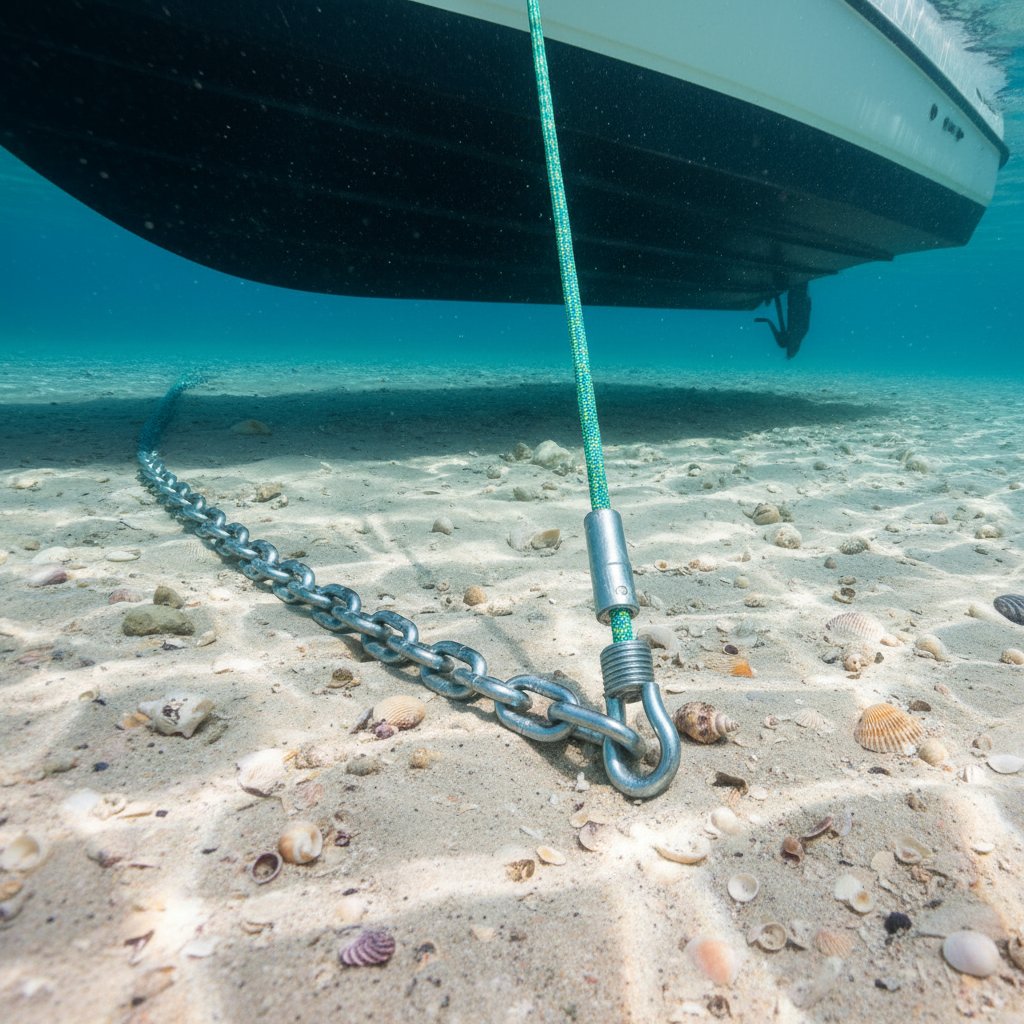
Remember the weakest link principle: your entire anchoring system is only as strong as its weakest component. This means the Working Load Limit (WLL) must be consistently matched across all elements: the rope, the chain, connectors like shackles or thimbles, and even the splices that join them. If your chain's WLL is 4,000 pounds but a shackle is rated at only 2,500 pounds, guess which part will fail first in a sudden squall? Ensuring uniform strength throughout avoids such unpleasant surprises. It's prudent to test every piece to confirm it aligns with your boat's expected dynamic loads, perhaps consulting a load chart specific to your setup.
This is precisely where iRopes excels with our OEM and ODM services. We specialise in crafting anchor lines tailored to your exact needs, from precise diameter and length specifications to selecting premium materials like UV-resistant nylon or low-stretch Dyneema. We also integrate essential accessories, such as pre-spliced eyes or protective chafe guards. All our processes adhere to ISO 9001 certification, ensuring your custom rope meets rigorous international marine standards. We even offer branding options for your fleet. This isn't an off-the-shelf solution; it's a meticulously engineered system built specifically for your vessel's displacement and cruising grounds, much like our specialized yachting ropes designed for demanding marine environments.
Tailored iRopes Solutions
From selecting the optimal core construction for improved flexibility to adding reflective strips for enhanced night visibility, our experts ensure every detail boosts your anchor rope strength and reliability.
To ensure your anchoring system remains robust over multiple seasons, implement a simple maintenance routine. Rinse off saltwater after every use to prevent corrosion and inspect your rode for frays, damage, or excessive stiffness monthly. Pay particular attention to the critical point where the rope meets the chain. Use snubbers to ease tension and prevent chafe on the bow roller. Additionally, it's wise to derate your loads by 20% in areas with extreme UV exposure or consistently rough conditions to account for gradual wear. How frequently do you inspect your own setup? Regular care significantly extends the lifespan of your gear and prevents unexpected issues, much like performing routine maintenance on an engine before a long voyage.
- Visual inspections – Regularly check for cuts, UV fading, or excessive stiffness every time you use your boat.
- Chafe guards – Apply protective tubing to vulnerable spots, especially around the bow roller, to prevent rubbing.
- Load derating – Reduce maximum planned pulls in harsh conditions to maintain an ample safety margin over time.
By diligently assembling these components, your anchoring becomes not only safe but also predictable, allowing you to focus on the horizon rather than harbouring worries about dragging.
Understanding anchor rope strength extends beyond merely considering raw power. It involves balancing Mean Breaking Load (MBL) with Working Load Limits (WLL) and conscientiously applying a 5:1 safety factor to manage dynamic marine loads securely. As we've explored, the misconception that "bigger is better" quickly dissipates when anchor line size isn't precisely matched to your vessel's displacement, windage, and environmental factors like UV radiation and saltwater exposure. Achieving the correct anchor rope size, calculated using the 1/8-inch per 9 feet rule and adhering to the 7:1 scope principle, ensures reliable holds. Furthermore, integrating quality chain and selecting materials like elastic nylon significantly helps prevent failures in rough conditions. These insights, complemented by practical tables for anchor weight matching, empower you to construct an anchoring system that effectively absorbs shocks without unnecessary bulk or increased risk.
With iRopes' OEM expertise, you can customise your anchoring setup for optimal performance—from precise diameter adjustments to acquiring necessary certifications. This partnership transforms these fundamental principles into tangible, tailored reliability on the water.
Customise Your Anchor System with Expert Guidance
If you're ready to apply these strength and sizing secrets to your boat and require personalised recommendations, please complete the inquiry form above to connect with iRopes specialists for bespoke rope solutions.