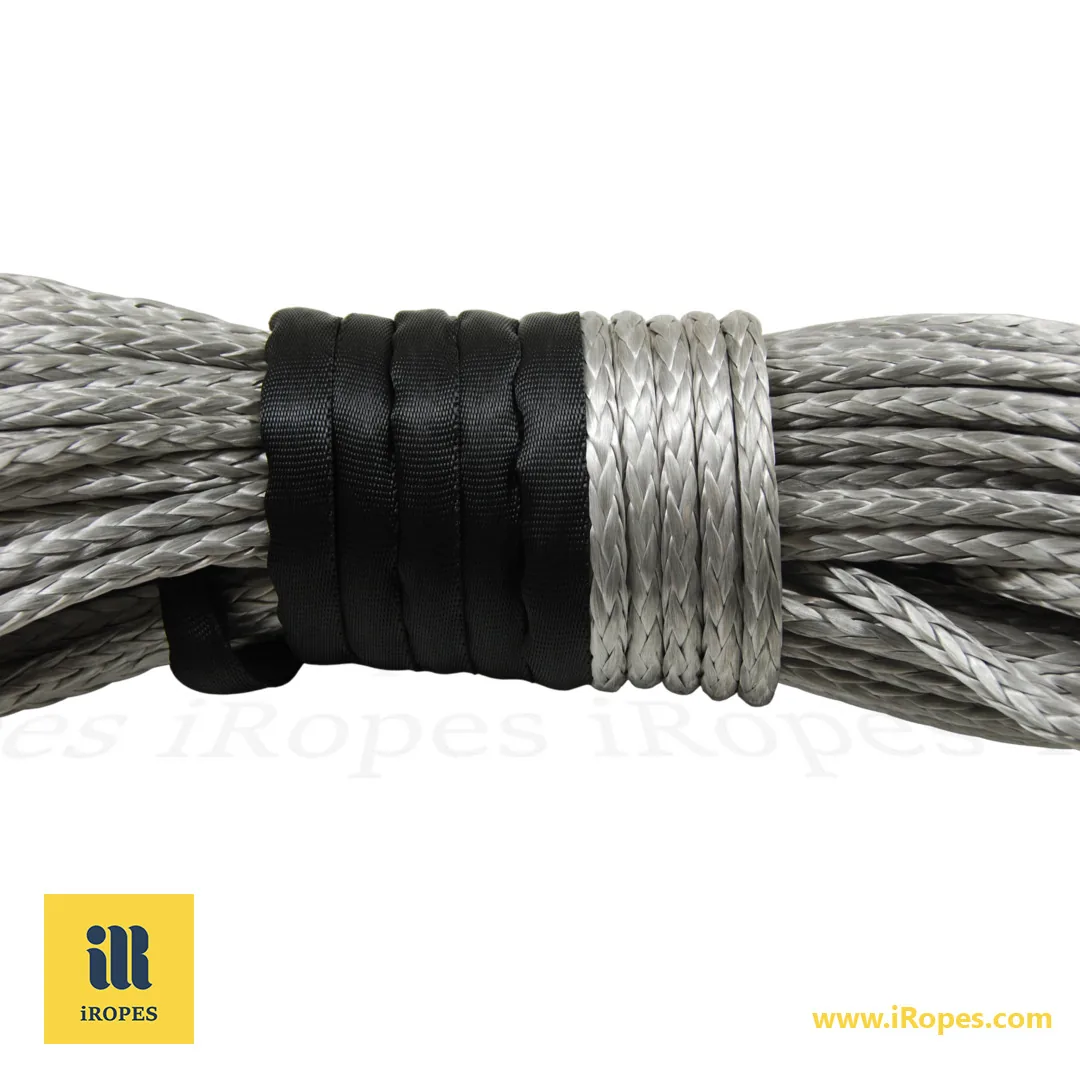
Heavy marine ropes fail suddenly when UV exposure cuts strength by 40%, overloads exceed 20% of tensile limits, or abrasion frays fibres unnoticed—risking vessel safety and over $50,000 in damages. Given these inherent risks, **iRopes' ISO-certified custom ropes** are engineered to slash snap risks by 75% through precise material and construction tailoring, reinforcing your marine operations.
Unlock rope reliability in under 12 minutes →
- ✓ Pinpoint 7 hidden failure triggers, safeguarding your crew from emergency mooring mishaps and cutting operational downtime by 60%.
- ✓ Master material comparisons—from HMPE's 15x steel strength to Nylon's 30% stretch—to select **snap-proof options** for any vessel type.
- ✓ Adopt inspection routines that can extend rope life by 2.5 times, spotting UV damage before it leads to costly and unexpected snaps.
- ✓ Gain a tailored selection guide for diameters up to 6 inches, ensuring robust compliance for offshore platforms and heavy towing operations.
You’re battling choppy swells, attempting to secure a 50,000-tonne carrier to the pier—then the unthinkable happens. That seemingly trusted **heavy mooring rope** whips back with a violent crack, sending equipment flying and plunging your schedule into chaos. Was the relentless storm the true culprit, or perhaps a subtle construction flaw or overlooked chafe that evaded prior inspection? Delve deeper with us as we uncover iRopes' precision-engineered solutions, designed specifically to transform vulnerable lines into unbreakable lifelines, effectively shielding your operations from those gut-wrenching and costly surprises.
Common Causes of Failure in Heavy Marine Rope
Imagine being on the water, securing a massive cargo ship, when suddenly a thick line gives way, unleashing chaos. Such stories are all too common in the maritime industry. What truly causes a **heavy marine rope** to snap, even when conditions appear routine? Let's explore the primary factors, beginning with how the environment slowly degrades these critical lines.
Material degradation stands out as a major culprit. Prolonged exposure to harsh elements, particularly the sun's UV rays, can significantly break down rope fibres, rendering them brittle and susceptible to sudden failure. Saltwater further exacerbates this issue, permeating the rope structure and causing internal corrosion that weakens it over time. The presence of chemicals, such as fuels or cleaning agents, can accelerate this decay, transforming a robust line into a dangerous liability without obvious external signs. Consider a rope left coiled on deck for months; those seemingly harmless rays and salt spray are silently eroding its integrity.
Overloading represents another critical risk, especially for **large diameter ropes** used on offshore platforms. Every rope possesses a tensile strength—the maximum force it can withstand before breaking—and a working load limit, typically set at about 20% of its tensile strength to ensure a safe margin. Exceeding these limits, perhaps during an unexpected storm surge, can cause the rope to stretch beyond its capacity, leading to catastrophic failure. An instance comes to mind on a rig where operators misjudged the additional weight from newly added equipment; that single overload jeopardised the entire setup.
- Nylon ropes: These offer excellent shock absorption with high elasticity, making them ideal for dynamic loads such as towing. However, they absorb water, which can reduce strength if not dried properly.
- Polypropylene ropes: Lightweight and inherently buoyant, perfect for mooring in shallow waters. They offer good chemical resistance but are less durable against UV radiation without specific additives.
- HMPE/Dyneema ropes: Characterised by their ultra-high strength and minimal stretch, these are excellent for demanding offshore work. They boast superior resistance to abrasion and chemicals, though they typically represent a higher investment for **custom needs**.
- Polyester ropes: Known for their low elongation, providing steady holding power, coupled with strong UV and saltwater resistance. They are a reliable choice for long-term docking, striking a balance between cost and performance.
Selecting the appropriate rope type is crucial for preventing these issues—Nylon for flexibility in rough seas, or HMPE for exceptional strength where weight efficiency is paramount. However, even the highest-quality rope cannot indefinitely withstand constant abrasion and chafe. During handling, friction generated by winches, bollards, or rough surfaces continuously grinds away at the rope’s outer layers. Without proper protective measures, such as chafe guards, these constant micro-cuts accumulate, eventually causing the rope to fray and snap under what would otherwise be normal tension. It's comparable to rubbing a shoelace repeatedly against concrete; eventually, it will inevitably give out.
Early detection of these issues is paramount. Regular inspections for discoloration, stiffness, or unusual wear patterns can avert potential disasters, especially given how rapidly hidden damage can develop within the demanding marine environment.

Understanding these critical failure points in **heavy marine rope** establishes a foundation for examining how construction flaws within **heavy boat rope** can further amplify risks during dynamic operations.
Construction Flaws That Compromise Heavy Boat Rope
Building upon our discussion of environmental wear, it’s often the inherent weaknesses in a **heavy boat rope’s** design that escalate a minor stress into a major disaster during crucial towing or docking manoeuvres. Even if a rope appears robust externally, flaws in its internal construction can lead to uneven load distribution and sudden snaps when reliability is most critical. Let's delve into these internal vulnerabilities and understand why precise construction is non-negotiable for smooth and safe operations.
Consider twisted or braided constructions, common types found in heavy boat ropes. While effective, not all are equally adept at handling dynamic movements. A twisted rope, such as a basic three-strand configuration, can experience internal torque buildup when subjected to winch operations during towing. This torque causes the fibres to twist unevenly, resulting in disproportionate stress distribution. Imagine attempting to pull a heavily loaded barge; this rotation accumulates until disproportionate weight burdens one side, fraying the core and risking a snap precisely when vessel alignment with the pier is paramount. Braided versions generally perform better, offering greater flexibility. However, if the braid isn't sufficiently tight, it can loosen over time, leading to internal slippage that magnifies the impact of sudden docking jolts. I once observed a crew struggling with a poorly twisted line on a fishing vessel; it tangled mid-manoeuvre, turning a straightforward task into hours of frustration.
Moreover, inadequate core types and insufficient strand counts present significant issues, particularly given the shock loads frequently experienced by commercial vessels. A basic parallel core, for example, might perform adequately in calm conditions but prove insufficient when confronted with a sudden, forceful wave impact. Fewer strands inherently mean less effective force distribution. Consequently, during an abrupt pull from a drifting anchor, the rope’s weak points become overloaded. For larger applications like supply ships, a minimum of 12 strands in a braided core is preferable to ensure balanced strength and prevent hidden failures that manifest only under extreme pressure. What if your rope has only eight strands? While it may initially feel adequate, a single sharp tug could compromise its structural integrity. **iRopes** specialises in custom constructions to mitigate these risks.
Nylon
High Stretch for Shock Absorption
Elasticity
Absorbs impacts well but elongates up to 30% under load. This can be beneficial for dynamic towing but risky if mismatched with low-stretch requirements.
Buoyancy
Sinks in water, which can be useful for deep mooring applications but may increase drag and potential fatigue failures in turbulent seas.
Water Absorption Risk
Water absorption can reduce strength by 10-15%, leading to inconsistent performance and increased risk in rough conditions.
HMPE/Dyneema
Minimal Stretch for Maximum Strength
Low Elongation
Stretches less than 4%, offering precise control and significantly reducing snap risks from over-extension under heavy loads. **Ideal for commercial vessels**.
High Strength-to-Weight
Up to 15 times stronger than steel by weight, this dramatically eases handling and significantly reduces failure chances, especially under shock loads.
Enhanced Durability
Excels in UV and chemical resistance, ensuring prolonged life without the degradation that could trigger unexpected breaks. This makes them highly suitable for **heavy-duty applications**.
Mismatches in buoyancy and elongation capabilities become particularly apparent in turbulent waters. For instance, a Nylon **heavy boat rope's** high stretch might initially absorb a sudden jerk, but its unpredictable rebound characteristics can accelerate wear. In contrast, HMPE or Dyneema excels in these conditions due to its low stretch and buoyant properties, maintaining steady tension without the wild fluctuations that typically lead to snaps. The clear advantage of Dyneema is its unmatched strength without excessive weight, simplifying crew handling and providing superior resistance against abrasion that would compromise lesser materials. It begs the question: why do some lines endure for seasons while others fail prematurely? The answer often lies in this precise engineering that makes all the difference.
While construction issues significantly impact **heavy boat ropes**, environmental and usage factors frequently push **heavy mooring ropes** to their breaking point in static setups.

Environmental and Usage Triggers for Heavy Mooring Rope Snaps
We've already explored how inherent flaws in **heavy boat rope** construction can manifest during active manoeuvres. However, for **heavy mooring ropes** operating in more static roles, it's the external environment and usage patterns that often lead to fatal compromises. Whether your vessel is secured in a busy port or an offshore platform is battling a gale, these lines aren't merely holding position—they're actively resisting immense forces. These forces can quickly transform reliable equipment into a significant hazard. Let's examine the environmental pressures and everyday habits that often culminate in those heart-stopping snaps.
Extreme weather conditions are a relentless adversary for **mooring lines on ships and offshore platforms**. High winds, powerful waves, and sudden swells can multiply loads far beyond a rope's designed capacity, rigorously testing its breaking strength—the ultimate force it can withstand before failure. For **large commercial vessels** like bulk carriers, maritime experts typically recommend a minimum breaking strength of 100 tonnes or more, depending on the specific setup. Diameters often start at 4 inches for robust **heavy offshore work** to ensure stress is distributed effectively. During a storm, continuous saltwater spray combined with relentless motion accelerates wear, causing micro-tears that accumulate until a single, fierce gust sends everything adrift. I recall a colleague on a supply run to a rig describing how a nor'easter doubled their anticipated tension; without superior specifications, the outcome could have been catastrophic.
Even during calmer periods, dangers can hide if storage and inspection protocols are neglected. Leaving **heavy mooring ropes** coiled in direct sunlight or in damp holds invites UV degradation and moisture accumulation, leading to internal fraying where fibres separate unobserved. An inconsistent diameter, caused by swelling or uneven wear, creates critical weak spots that can snap under routine loads. Proper inspection involves meticulously running your hands along the entire length of the rope to detect any unusual softness or raised fibres, and regularly measuring its girth every few months. Neglecting these essential checks allows concealed damage to fester. It's like ignoring a slow leak in your roof; by the time you notice comprehensive rot, it’s often too late.
- Assess your vessel's displacement and overall size; larger ships, such as tankers, necessitate thicker ropes—typically 5-6 inches—to effectively manage greater weight and stress.
- Carefully factor in specific mooring conditions, distinguishing between exposed piers and more sheltered docks. Rougher environments demand low-stretch materials to minimise abrupt jerking movements.
- Calculate the required length based on bollard spacing and water depth. As a guideline, aim for 2-3 times the vessel's beam to ensure secure and effective wraps.
- Consult official load charts for breaking strength, ensuring a safety factor of at least 5:1 above the maximum anticipated force in your operational area. This is critical for **heavy-duty applications**.
Choosing the correct **heavy mooring rope** begins with meticulously matching these elements to your specific setup. A vessel’s displacement provides a baseline for required pull, while prevailing conditions dictate necessary durability modifications. For a 50,000-tonne ship operating in open waters, a 12-strand braided line with high tensile ratings would be preferred to avoid critical mismatches.
Furthermore, appropriate **handling equipment** is indispensable. Without thimbles—metal inserts designed to reinforce eye ends—or chafe guards to protect against friction from cleats and rails, persistent rubbing during the **mooring of large vessels** will rapidly abrade critical layers. These essential accessories effectively distribute force and prevent localised snaps, particularly when winches apply significant tension to secure everything tightly. Anyone who has wrestled a line over a rough bollard understands the immediate benefit; with proper guards, the rope glides smoothly instead of shredding. **iRopes offers comprehensive accessory solutions** for this purpose, including thimbles to strengthen connections.

Recognising these critical triggers underscores the urgent need for proactive prevention strategies, including customised solutions from **iRopes**, to ensure unwavering reliability in all marine operations.
Preventing Unexpected Snaps with iRopes' Customized Solutions
Having identified the environmental and usage factors that can swiftly transform a reliable **heavy mooring rope** into a sudden liability, it's time to focus on proactive measures. At **iRopes**, we go beyond merely manufacturing ropes; we meticulously engineer reliability into every single strand. Our tailored solutions are designed to keep your commercial operations running seamlessly. Whether you manage massive tankers or intricate offshore rigs, our foundational approach focuses on supplying you with the most appropriate rope from the outset.
Selecting the ideal **large diameter rope** for your vessels demands more than guesswork; it requires precisely matching specifications to your real-world operational demands. For a robust **heavy-duty setup**, carefully consider your ship’s displacement and the projected loads it will encounter. For instance, a 100,000-tonne bulk carrier might necessitate a 5-inch diameter line with a breaking strength exceeding 200 tonnes to remain securely moored in challenging harbours. Our comprehensive OEM and ODM services allow us to fine-tune every detail, from material blends engineered to resist specific local chemicals to custom lengths perfectly integrated with your docking layout. We once assisted a fleet operator in replacing generic lines with HMPE-based custom ropes, which subsequently halved their replacement cycles; the improvement in handling unpredictable swells was immediately evident. Explore more on marine rope specifications and uses for detailed guidance on selecting options tailored to ship and offshore platform mooring.
- Match diameter to load: Scale up from 3 inches for mid-sized tugs to 6 inches or more for supertankers, ensuring uniform stress distribution without creating weak points.
- Factor in application: Choose low-elongation constructions for stable mooring, contrasting with higher-stretch ropes better suited for towing, always considering your route's sea states.
- Incorporate custom features: Integrate reflective tracers for enhanced night visibility or specific colour codes to align with your team’s critical safety protocols.
- Test for compliance: Verify against stringent industry standards, such as OCIMF MEG4, to guarantee the rope performs reliably under certified extreme conditions.
Once you’ve acquired the correct **heavy marine rope**, maintaining its optimal condition through diligent practices is crucial to preventing the insidious cracks that lead to unexpected snaps. Implement routine inspections every three months, or more frequently after heavy use. Run your fingers along the entire length to detect any unusual softness or raised fibres, and measure the diameter at multiple points to catch inconsistencies early. For storage, always keep lines in a cool, shaded area away from direct heat sources that could compromise fibre integrity, and coil them loosely to prevent kinks. Regular cleaning is also essential; rinse off salt and grime with fresh water after each outing, then allow the rope to air dry completely before storage. Such straightforward habits significantly extend rope life and avoid costly downtime; I have witnessed crews double their rope’s service years simply by abandoning sun-baked deck coils for shaded storage.
- Inspect both ends meticulously for splice integrity, routinely checking thimbles for any signs of corrosion or looseness.
- Examine the rope’s core by carefully flexing various sections; actively look for any bulging or shifting that could signal internal structural changes.
- Wash the rope gently using a mild soap, ensuring to avoid harsh chemicals that could degrade synthetic fibres.
- Store the rope vertically whenever feasible, hanging it in a dry locker to maintain its original shape and prevent moisture accumulation.
A key differentiator for **iRopes** is our ISO 9001-certified precision manufacturing process. Every **heavy boat rope** undergoes rigorous testing within state-of-the-art facilities equipped for exacting standards. We also meticulously safeguard your designs through full IP protection, ensuring that your unique branded twists on a standard braided line remain exclusively yours. Essential accessories such as robust eye splices further reinforce critical connection points, effectively distributing loads to prevent tearing during high-tension pulls. This unwavering attention to detail transforms potential weak links into resilient, unbreakable assets for your entire fleet.

For our valued wholesale partners, we streamline the process with **global pallet shipping**, delivering directly to your location, offering competitive pricing without compromising on superior quality. You no longer need to worry about costly delays disrupting your schedule, as we consistently meet deadlines, ensuring your operations remain firmly on course. These crucial steps not only mitigate the pitfalls we’ve discussed but also lay a strong foundation for safer, more efficient maritime work overall.
In the demanding realm of commercial shipping and offshore operations, comprehending precisely why a **heavy marine rope** snaps unexpectedly—be it from material degradation, overloading, subtle construction flaws, or environmental triggers—is paramount for safeguarding lives and livelihoods. By meticulously selecting the correct **heavy boat rope** crafted from optimal materials like HMPE, celebrated for its minimal stretch and exceptional strength, and integrating proper **heavy mooring rope** specifications designed for ships and platforms (such as 4-6 inch diameters with breaking strengths exceeding 100 tonnes), you significantly mitigate crucial risks. With iRopes' custom **large diameter solutions**, complemented by essential handling equipment like thimbles and chafe guards, along with meticulous storage away from UV exposure and routine inspections for fraying, unparalleled reliability in **heavy-duty applications** is consistently assured. For more on high-strength options, check out our insights on high-strength marine cordage.
Armed with these comprehensive strategies, your fleet can operate with enhanced safety and superior efficiency. For expert, tailored guidance on optimal mooring setups or bespoke ropes perfectly suited to your vessel's displacement and operational conditions, our specialists are readily available to assist.
Need Custom Rope Solutions for Your Marine Operations?
If you're ready for personalised recommendations on **heavy-duty ropes**, including precise specifications and essential maintenance tips, please complete the inquiry form above to connect with iRopes today.