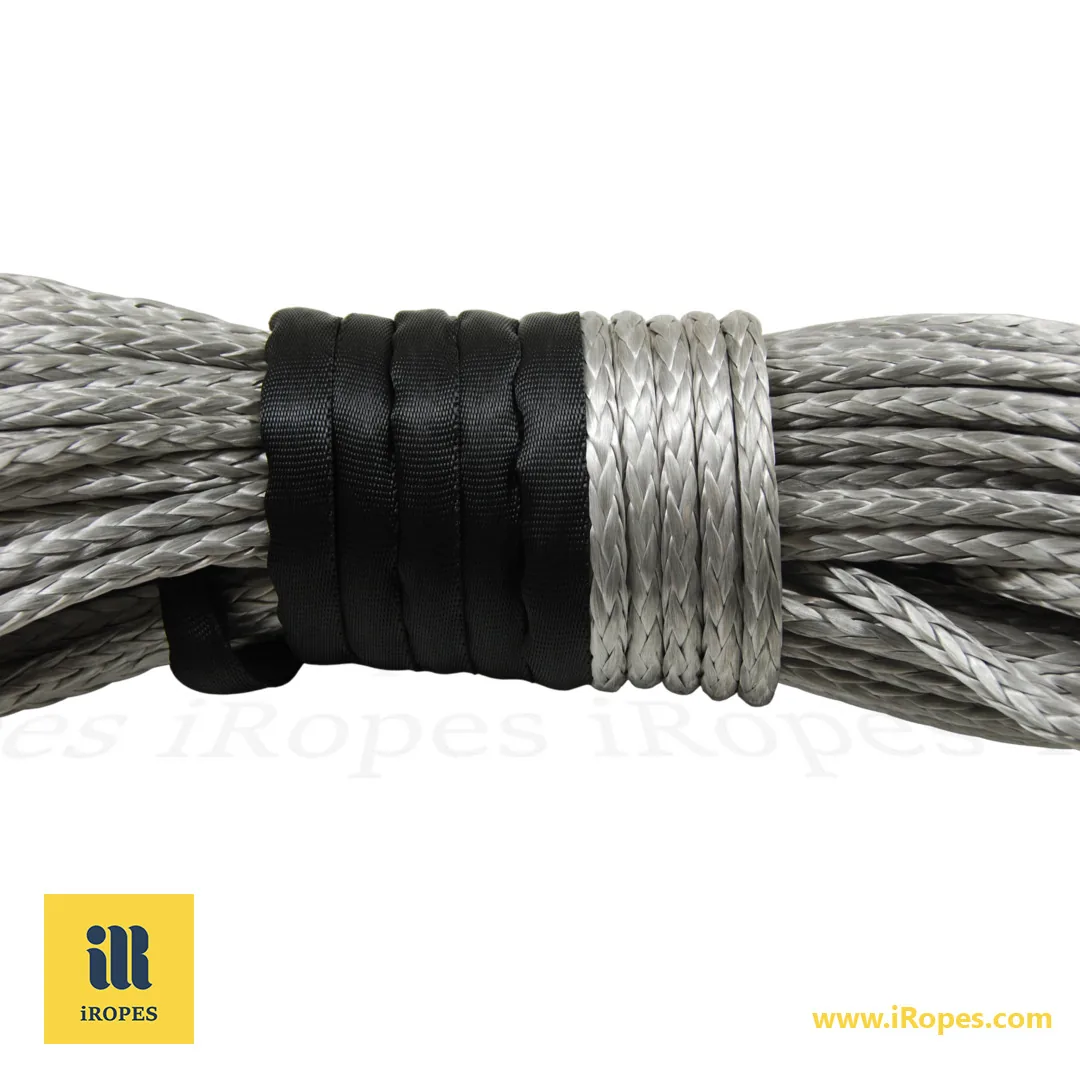
iRopes can produce rope diameters from 0.4 mm up to 60 mm across multiple materials and constructions, including nylon, polyester, steel wire and HMPE (Dyneema) braids — a full‑spectrum solution from a single supplier.
What you’ll gain – ~5‑minute read
- ✓ Pinpoint the right diameter for your load (0.4 mm–60 mm) to avoid over‑ or under‑specifying.
- ✓ Use material‑specific guidance (nylon, polyester, steel, Dyneema) to speed up selection and purchasing.
- ✓ Order custom colours, constructions and branding through iRopes’ OEM/ODM services.
- ✓ Rely on ISO 9001‑certified quality processes that support compliance with ASME B30.9 and OSHA 1910.184.
Choosing the correct rope size protects people, equipment and budgets. This wire rope sling size chart, winch cable size chart and seine twine size chart gives you a clear, fast reference so you can make a safe decision with confidence. If you want one partner that can supply steel wire, HMPE (Dyneema), polyester and nylon from 0.4 mm to 60 mm — including custom braids and branding — iRopes is ready to help.
Wire Rope Sling Size Chart
Slings must be matched to the load and the lift configuration. iRopes manufactures ropes across 0.4 mm–60 mm; sling assemblies typically use larger diameters, while smaller sizes suit lanyards, tag lines or control cords. Material choice (steel wire or synthetic such as Dyneema or polyester) affects strength, stretch and abrasion resistance, so use the chart below as an initial guide before confirming the exact working load limit (WLL).

| Diameter (mm) | Material Options | Typical SWL (kN) |
|---|---|---|
| 0.4 – 3 | Nylon, Polyester | 0.5 – 2 |
| 4 – 12 | Steel, Dyneema | 5 – 30 |
| 13 – 60 | Heavy‑duty Steel, Parallel‑core Dyneema | 35 – 250 |
Values are indicative and vary by construction, splice/termination, sling type and D/d (bend) ratio. Always confirm the manufacturer’s WLL for your exact configuration.
- Vertical sling – load is inline with the sling; capacity is based on WLL and the design factor.
- Choker sling – wrap reduces capacity (often ≈ 20% lower than a single vertical of the same sling).
- Basket sling – can provide higher capacity when rigged correctly; angles reduce capacity significantly.
The safe working load (SWL) is calculated with SWL = Breaking Strength ÷ Design Factor. For example, if a sling has a breaking strength of 100 kN and you apply a design factor of 5, the SWL is 20 kN (≈ 2 t). Selecting the correct factor — commonly 5 for general lifting per ASME B30.9 and OSHA 1910.184 — supports compliance.
FAQ: What size wire rope sling for a 5 t load? Five tonnes ≈ 49 kN SWL. With a design factor of 5 you need ≥ 245 kN breaking strength. Depending on construction, this often equates to ~14–16 mm steel wire rope; always confirm with a WLL chart.
Never select a sling by diameter alone; verify material, construction, terminations and D/d ratio, then apply the correct design factor for your lift.
With sling sizing principles in hand, you can apply the same load‑versus‑strength approach to winch cables, adding drum‑fit considerations to complete the picture.
Winch Cable Size Chart
Winch performance depends on two variables: strength and drum capacity. Diameter drives both. Choose a cable that meets the required strength after applying a suitable safety factor and still fits the drum with the intended length, as explained in our guide on choosing the best crane winch cable.
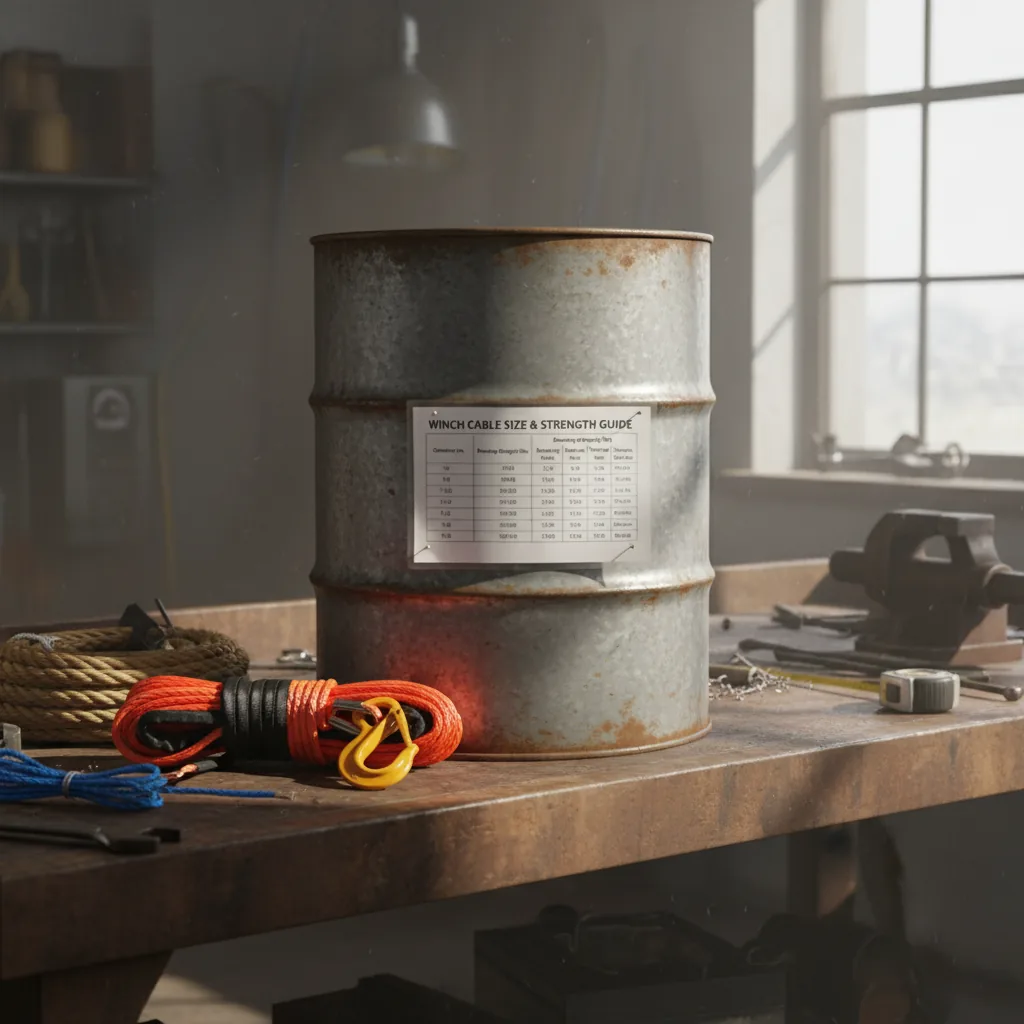
Below is a quick‑read winch cable size chart pairing standard diameters with approximate breaking strengths. Use it to verify that your chosen cable covers the required load once your application’s safety factor is applied.
| Diameter (in) | Breaking Strength (lb) |
|---|---|
| 5/16 | 13,000 lb |
| 3/8 | 20,000 lb |
| 1/2 | 40,000 lb |
| 5/8 | 62,000 lb |
- Determine the load and select a suitable safety factor (lifting commonly uses 5; follow OEM guidance for recovery).
- Find the first breaking‑strength value in the chart that meets or exceeds that result.
- Confirm the drum‑length rule – each size jump typically reduces maximum drum length by about 15 ft.
Each increase in cable diameter usually trims allowable drum length by roughly 15 ft; plan your drum and housing accordingly.
Material choice matters. Steel cable offers high tensile strength and excellent heat tolerance but adds weight and requires corrosion control. Synthetic options — typically HMPE (Dyneema) or polyester — are lighter and easier to handle, and they float, but like all fibres they demand protection from abrasion and heat sources. Match the material to your duty cycle, environment and handling needs.
If you’ve reviewed the wire rope sling size chart or the seine twine size chart, the method is familiar: relate required load to breaking strength, apply the safety factor, then verify fit and installation limits.
With winch cables covered, the final chart focuses on smaller but equally important selections: seine twine for nets, lashing and tarp work.
Seine Twine Size Chart
Whether you’re rigging a net or securing a tarp, twine size and material influence performance. The seine twine size chart below explains the common size notation and provides indicative diameters and strengths to get you started.
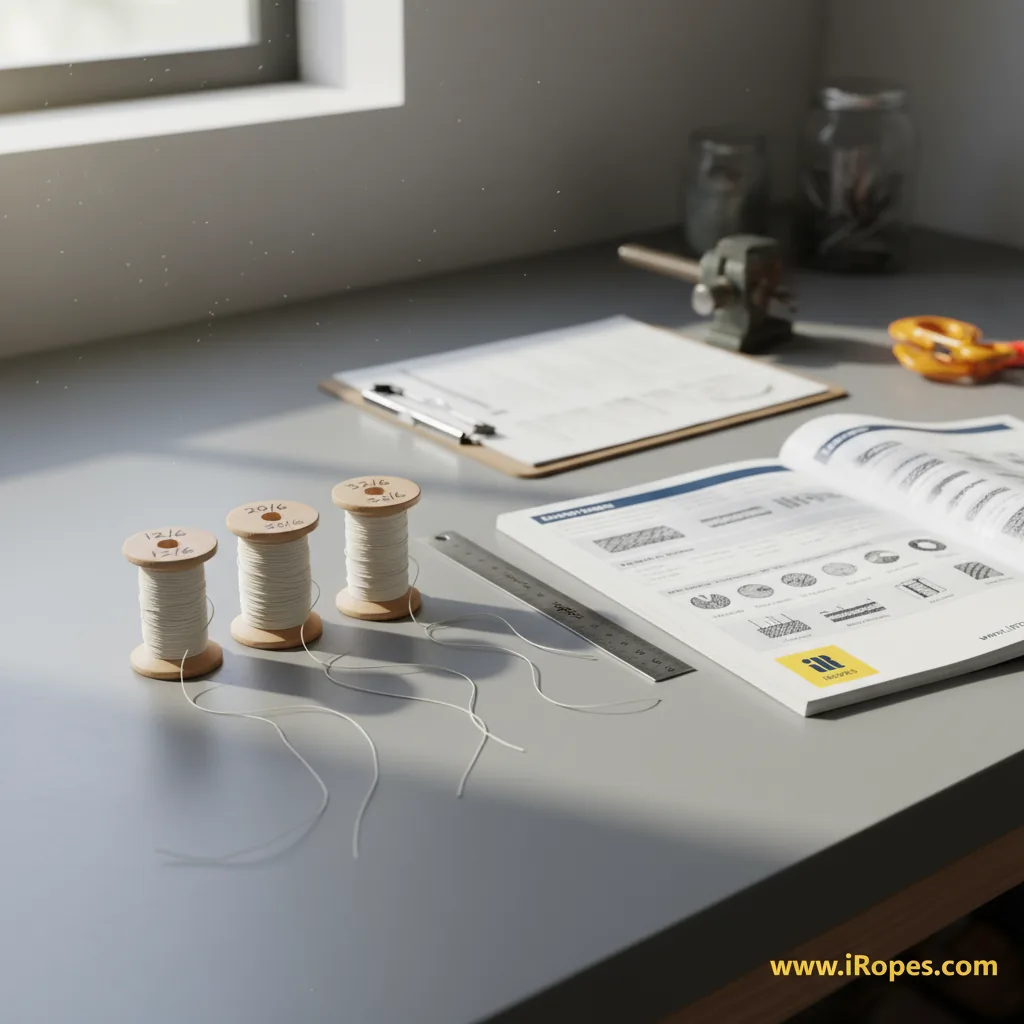
Twine labels commonly use the format “number/plies”. For example, 12/6 means six plies of size‑12 yarn; 20/6 means six plies of size‑20 yarn. Diameters and strengths vary by maker, but the indicative values below are widely used.
| Size Notation | Diameter (mm) | Typical Tensile Strength |
|---|---|---|
| 12/6 | ≈ 0.5 mm | ≈ 120 lb |
| 20/6 | ≈ 1.0 mm | ≈ 200 lb |
| 32/6 | ≈ 1.4 mm | ≈ 350 lb |
Material Choice
Cotton twine handles well but degrades faster in wet, salty or high‑UV conditions. Nylon offers higher tensile strength for a given diameter and better long‑term durability in marine use.
Load Guidance
As a starting point, light nets can use 12/6 or 20/6 nylon; heavier tarp lashings may step up to 32/6. Always confirm with your application’s load and safety factor.
When you spot a label like “12/6”, it tells you the yarn size and the number of plies — a quick way to gauge whether the twine suits the expected duty. If you’re asking, “What does 12/6 mean on a seine twine label?” that’s the definition you need.
The same safety‑factor logic used in the wire rope sling size chart applies here. To find a safe working load, divide the twine’s breaking strength by your chosen design factor. Fishing and general rigging often use conservative factors; choose one appropriate to your risk and environment.
With twine sizing clear, the final step is applying a consistent process so you always land on the right diameter and material for the job.
How to Read & Apply the Size Charts
Turn the tables into action with a simple workflow that applies equally to the wire rope sling size chart, the winch cable size chart and the seine twine size chart.

Follow these four steps each time you need to pick a rope:
- Identify the required load – note the maximum force during operation, including dynamic effects.
- Select a design factor – align with ISO/OSHA guidance and your risk profile.
- Match the load to the chart – choose the first diameter whose breaking strength exceeds load × factor.
- Confirm installation limits – check drum capacity for winches and bend‑radius/D/d recommendations for slings.
Choosing an appropriate design factor is the fastest way to improve safety without unnecessary oversizing. Higher‑risk lifts or harsh conditions call for a larger factor and more cautious rigging.
Choosing the correct design factor is often the single most effective way to guarantee safety without over‑engineering your rope system.
If you prefer a ready‑made reference, ask our team for a printable PDF that mirrors these tables. We can also help you run the calculations and shortlist diameters for your specific application.
The safe working load is the maximum load allowed after applying the required safety factor, as defined by relevant standards. Knowing how to derive it from each chart keeps your operations compliant and your teams protected.
Armed with this process, you’re ready to explore iRopes’ custom diameters and materials, confident that every selection starts from a solid, data‑driven foundation.
With the quick‑reference wire rope sling size chart, winch cable size chart and seine twine size chart now at your fingertips, you’ve seen how matching load, design factor and material supports safety and compliance. iRopes can produce diameters from 0.4 mm to 60 mm across steel wire, Dyneema, polyester and nylon, delivering the exact rope or sling solution for your application.
Apply the step‑by‑step workflow to any of the three tables, and you’ll select the right diameter without guesswork. For a tailored solution — specific colours, branding, performance features and packaging — our OEM/ODM specialists are ready to help, with ISO 9001‑certified quality, IP protection and on‑time global shipping.
Request a Personalised Rope Consultation
If you’d like expert guidance on the ideal rope size, material or custom packaging, simply complete the enquiry form above and our team will contact you with a customised recommendation.