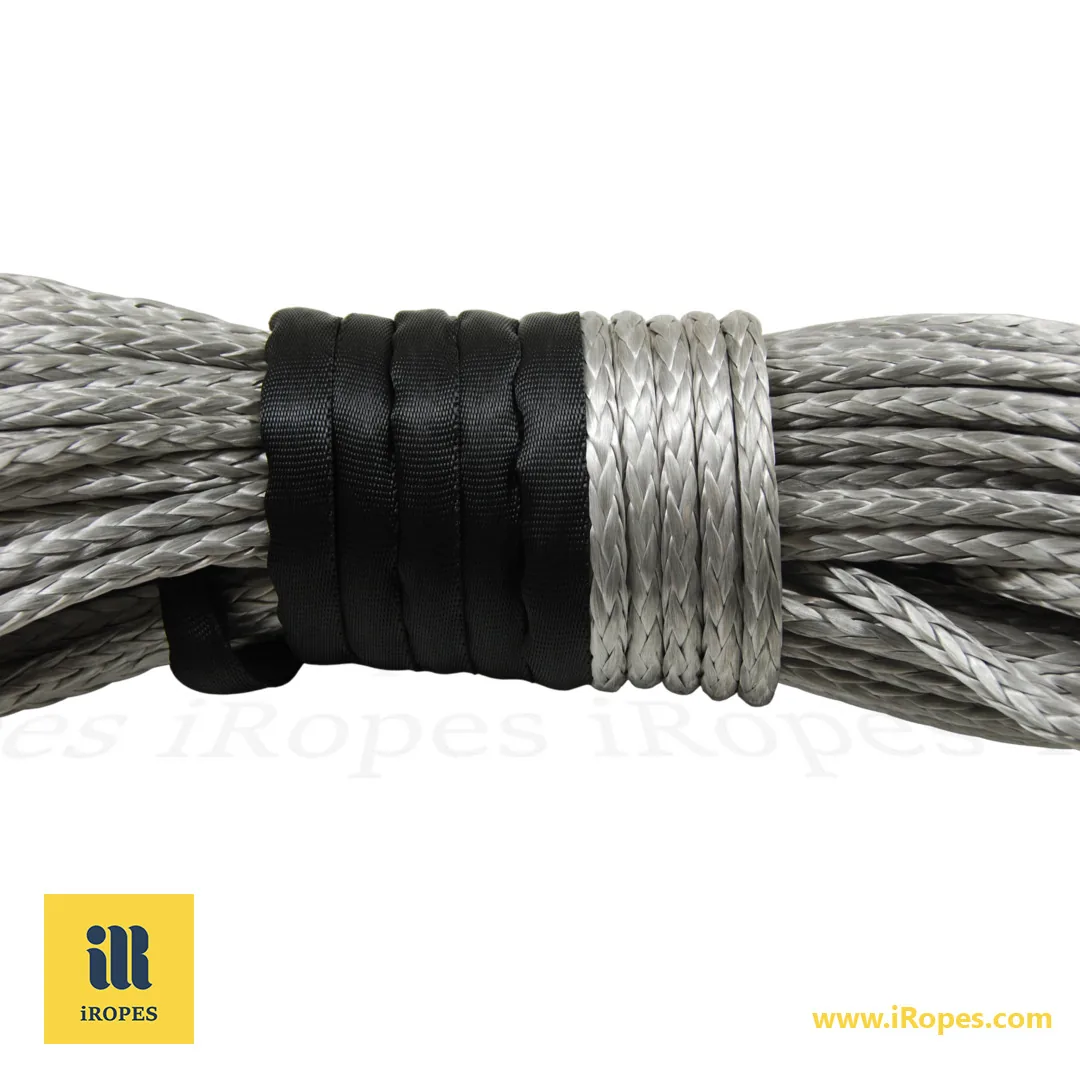
Synthetic winch rope can be up to 60% lighter than American wire rope while delivering ≈90% of the breaking strength, making it the clear choice when weight and flexibility are critical.
Key Benefits – about 4 min read
- ✓ Cut weight by up to 60% while retaining ≥90% of steel’s tensile capacity – for lighter rigs and lower fuel use.
- ✓ Boost handling speed 1.8× thanks to flexible synthetic construction, slashing on‑site rigging time.
- ✓ Extend service life 22% longer in corrosive environments with UV‑stabilised fibres.
- ✓ Save up to 12% on total ownership by reducing frequent steel inspections.
Imagine choosing a lifting rope that slashes your load‑handling weight by more than half, yet still meets 90% of a comparable steel rope's break load. The answer isn’t what most engineers assume. The secret lies in a set of counter‑intuitive criteria that challenge the usual strength‑versus‑weight trade‑off. Below, we unpack the data, explore real‑world scenarios, and explain how iRopes can tailor the perfect hybrid solution for your project.
American Wire Rope and Sling: Overview and Key Features
Building on the understanding of market demand, it's crucial to grasp what makes an American‑standard rope suitable for heavy‑duty lifting. A typical American wire rope and sling consists of individual steel wires twisted into strands, which are then bundled around a core. This core is often an independent wire rope core (IWRC) or a fibre core, the latter providing added flexibility. The outer sheath is usually galvanised or made from stainless steel, providing a protective barrier against rust and abrasion.
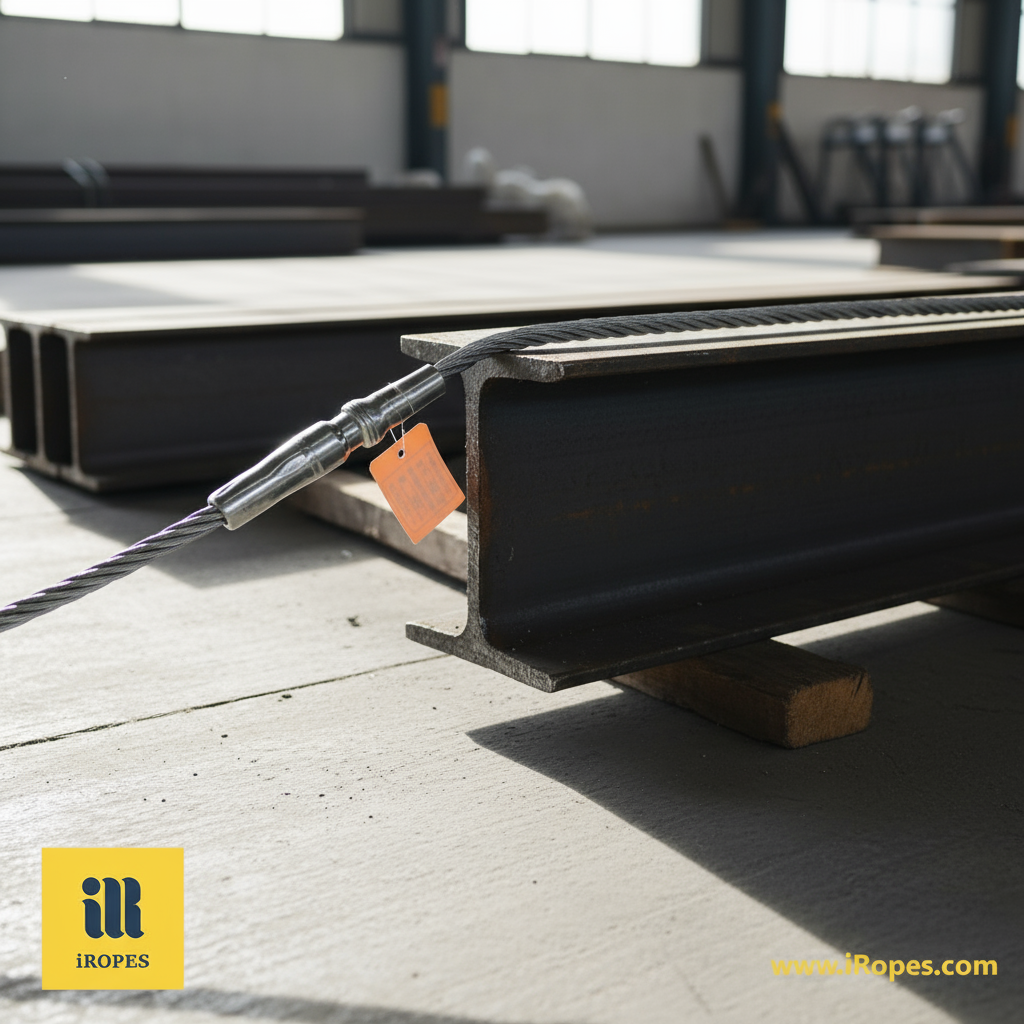
These ropes are favoured across construction sites, offshore rigs, and heavy‑industry warehouses due to their predictable load capacity, high temperature tolerance, and resistance to cutting or crushing. When you need a trustworthy sling for a 10‑tonne crane lift or a repetitive mining hoist cycle, the proven performance of an American‑specification product often sways the decision. This reliability comes from adhering to strict standards.
Quality isn’t solely about the raw steel; it's confirmed by recognised indicators that assure consistent reliability. The benchmarks below are widely cited by suppliers to differentiate a truly American‑grade rope.
- Material quality: high‑grade steel with corrosion‑resistant coating.
- Construction: 6×19 or 6×37 strands tested for fatigue resistance.
- Certification: ISO 9001 and ASME B30.9 compliance, verified by third‑party audits.
When you choose a rope that conforms to ASME B30.9 and ISO 9001, you’re investing in reliability that can withstand the toughest jobs.
Understanding these elements helps clarify a common query: the difference between “American” wire rope and a generic standard rope lies mainly in adherence to US‑based safety standards, tighter tolerance controls, and documented testing that many overseas products simply do not publish. Armed with this knowledge, you can match the right American rope to the specific load, environment, and regulatory requirements of your project.
Wire Rope and Sling Types, Construction, and Applications
Having outlined the essential qualities of American‑standard rope, the next step is to examine how different constructions and sling configurations influence performance in real‑world lifting scenarios. Understanding these variations enables engineers to select a solution that aligns with load patterns, environmental exposure, and regulatory demands.

The three most common wire rope constructions each deliver a distinct balance of flexibility and strength. Selecting the correct build is essential for extending service life while meeting the Working Load Limit (WLL) specified by the project.
- 6×19: high flexibility, moderate abrasion resistance.
- 6×37: excellent fatigue life, lower flexibility.
- Rotation‑resistant: minimal lay rotation, ideal for hoist drums.
Beyond construction, the sling’s shape dictates how forces are distributed across the load. A single‑leg sling offers simplicity for vertical lifts. Multi‑leg configurations, such as bridle, endless, choker, and basket slings, spread the load over multiple points, reducing stress concentration. For example, a basket sling creates a wide base that is well‑suited to irregular or oversized cargo, whereas a choker sling tightens around a cylindrical object to minimise movement.
Choosing the appropriate termination is equally critical; the wrong eye or fitting can become the weakest link in the system. When a flemish eye is required for permanent installations, a mechanically swaged eye provides a consistent radius and reduces stress risers. For applications demanding frequent re‑assembly, a detachable mechanical eye or a thimble‑reinforced hook offers both strength and convenience.
Termination Guide
Match the termination to the intended load path: use a welded eye for static, high‑temperature environments; opt for a swaged eye when space is limited; select a hook with a thimble when the sling must wrap around sharp edges. Properly inspected terminations ensure the overall safety factor of the wire rope and sling system.
By mapping construction type, sling geometry, and termination choice to the specific demands of a project, manufacturers can deliver a wire rope and sling package that maximises durability while complying with ASME B30.9 and related safety standards. This foundation now allows for a direct comparison with synthetic winch rope alternatives in the following section.
American Rope vs. Synthetic Winch Rope: Choosing the Best Solution
After reviewing the many wire‑rope constructions and sling configurations, the next logical step is to see how a classic American rope measures up against a modern synthetic winch rope in real‑world lifting tasks.

In terms of raw strength, an American rope typically delivers a higher breaking load per millimetre of diameter because steel fibres can be packed densely in a 6×19 or 6×37 lay. The synthetic counterpart, however, compensates with a much lower mass; a winch rope of comparable strength can be up to 60% lighter. This translates into easier handling and reduced fuel consumption on mobile rigs. Temperature resistance also diverges sharply: steel maintains its properties well above 200 °C, making it ideal for hot‑forge environments, whereas most synthetics begin to lose elasticity around 80 °C unless specially formulated. Abrasion resistance follows a similar pattern—steel’s hard outer sheath survives sharp edges, while a nylon‑based winch rope needs a protective jacket to survive the same wear.
Synthetic winch rope shines in low‑temperature or weight‑critical applications, but steel rope excels where heat and abrasion are dominant.
When deciding which material fits a particular job, picture the scenario first. If you are rigging a heavy‑duty crane lift on an offshore platform, the heat from the engine and the abrasive seawater make an American rope the safer bet. Conversely, a mountain‑rescue team hauling a load up a steep, narrow trail benefits from the lightweight, knot‑friendly nature of a synthetic winch rope. The decision matrix can be reduced to four key questions:
- Load intensity: Does the application require the highest possible breaking strength?
- Environmental temperature: Will the rope be exposed to extreme heat or cold?
- Abrasion exposure: Are sharp edges or sand a regular concern?
- Weight budget: Is the added mass of steel a limiting factor?
Answering these points will help you determine whether a steel‑based American rope or a synthetic winch rope is most suitable. Cost and lifecycle also matter significantly. An American rope carries a higher upfront price because of raw‑material costs and the precision winding process, yet its service life often exceeds ten years with proper inspection, especially in high‑temperature settings. Synthetic winch rope, while cheaper per metre, may require more frequent replacement if exposed to UV radiation or sharp chafing, potentially adding to long‑term expense.
FAQ – What is the difference between American wire rope and standard wire rope? In short, “American” denotes adherence to U.S. standards such as ASME B30.9 and stricter tolerance controls. This means the rope’s strength, construction quality, and certification are verified by third‑party audits. A standard wire rope may meet generic international specifications but does not guarantee the same level of documented testing or compliance that many U.S. projects demand.
Key Takeaway
Match the rope’s material to the job’s temperature, abrasion and weight constraints, then weigh upfront cost against expected service life to choose the most economical, safest solution.
Customisation and iRopes Partnership Advantages
After weighing the performance trade‑offs between steel and synthetic ropes, the logical next step is to shape the rope to the exact demands of your operation. Tailoring material, size, and accessories truly transforms a generic product into a solution that perfectly fits your load chart, environment, and budget.
For a deeper understanding of why synthetic winch ropes often out‑perform steel in weight‑critical scenarios, see our Winch Rope Guide: Advantages Over Steel Cable.
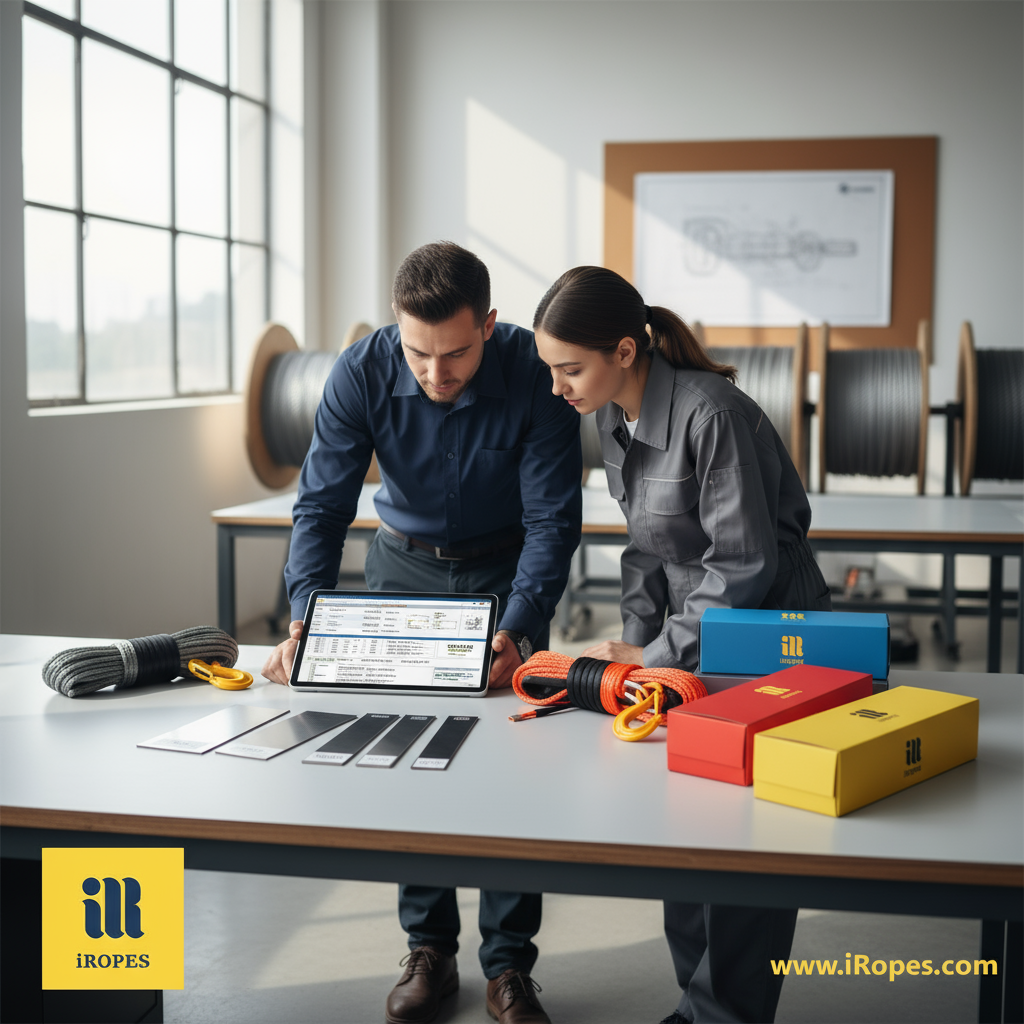
For an American rope, you can select from carbon‑steel, stainless, or specialised alloy cores, then decide on a galvanised, black‑oxide, or even a custom‑coloured coating. Diameter, length, and strand count are meticulously calculated against the working load limit, ensuring you never over‑engineer a heavy‑duty sling nor compromise safety.
Tailored Materials
Choose steel grade, stainless finish, or corrosion‑resistant coating that precisely matches your environment and load profile.
Exact Dimensions
Specify diameter, length, and strand count to achieve the required working load limit without adding excess weight.
OEM/ODM Flexibility
Our dedicated design team converts your drawing into a production‑ready specification while safeguarding your intellectual property.
Global Delivery
Factory‑direct pallets are shipped on schedule to ports worldwide, reducing lead‑time and optimising inventory costs.
Our OEM and ODM programmes provide you with a single point of contact for prototype development, tooling, and full‑scale production. We protect your designs with non‑disclosure agreements and can ship the finished rope in plain bags, colour‑coded boxes, or custom‑branded cartons, depending on how you wish your brand to appear on‑site.
Customisation
Build‑your‑spec solutions
Material
High‑grade carbon steel, stainless steel, or alloy options with optional anti‑corrosion coating.
Size
Diameter and length tailored to precise load calculations; strand count adjusted for optimal flexibility.
Finishes
Galvanised, black‑oxide, or custom colour coating for branding and enhanced durability.
Partnership
Why iRopes
IP Protection
Full confidentiality agreements protect your proprietary designs throughout the entire production process.
Quality Assurance
ISO 9001 certified processes guarantee traceable testing and consistent performance.
Dedicated Support
Our specialists guide you from concept through delivery, ensuring a seamless and satisfactory experience.
If you’re ready to move from theory to a rope that bears your exact load, simply request a custom quote or reach out to our rope specialists. We’ll translate your specifications into a finished product that meets the rigour of American standards while reflecting your brand’s unique identity. For more on selecting the right winch cable, check out Choosing the Best Crane Winch Cable for Your Needs.
Need a customised rope solution?
By now, you understand that American wire rope and sling delivers unmatched strength and heat resistance, while synthetic winch rope shines where weight, flexibility, and low‑temperature performance are paramount. This article walked you through the construction options of wire rope and sling, the certification standards that define an American rope, and a practical decision matrix for choosing the right material in various lifting scenarios. If you need a customised solution that leverages these insights, our specialists can fine‑tune diameter, core type, and branding to match your exact load profile. Explore our range of synthetic options in Discover High‑Strength Synthetic Winch Rope for Sale.
For personalised assistance, simply complete the enquiry form above and our iRopes team will help you design the perfect rope for your application.