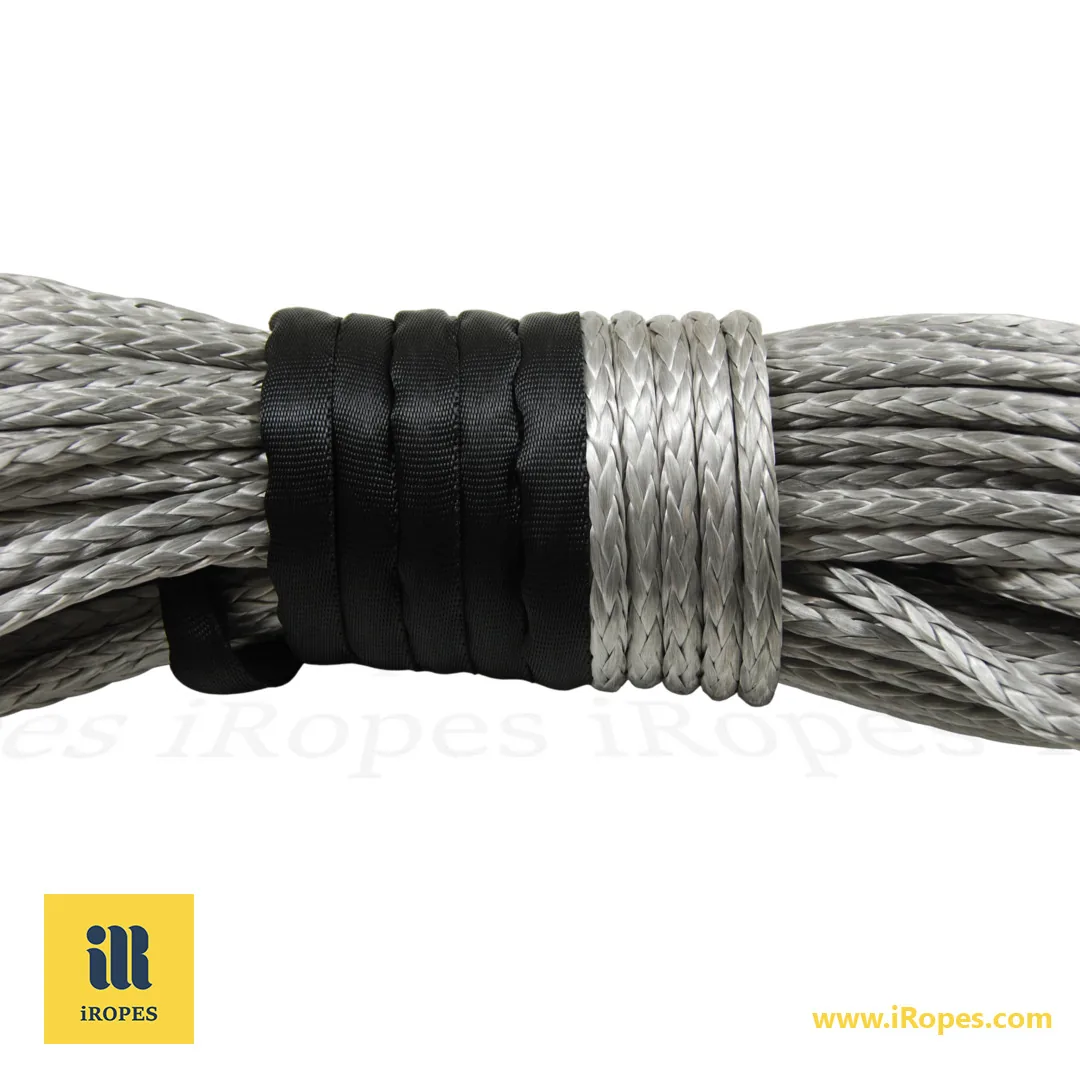
Wire rope slings deliver up to 2.3× the breaking strength of comparable fibre slings while tolerating 400 °F, versus just 180 °F for fibre.
Key gains – ~5 min read
- ✓ 2.3× higher tensile strength
- ✓ 30 % longer life in abrasive use
- ✓ Handles up to 400 °F vs 180 °F
- ✓ Custom OEM cuts downtime by 15 %
Yet, fibre slings still win in corrosion-heavy marine work. Could that be the edge you need? We'll expose the hidden trade‑offs and show how iRopes custom-fits each material to maximise your lift efficiency.
Understanding sling wire rope: Definition and Core Components
A sling wire rope is a steel‑cable assembly engineered to lift and rig heavy loads in demanding industrial settings. Simply put, it is a collection of tightly twisted steel wires that form a flexible yet exceptionally strong rope, typically terminated with an eye or hook. This definition answers the common query, "what is a wire rope sling?" by highlighting its core purpose: safe, repeatable hoisting of substantial weights.
The strength of a wire rope sling stems from its internal architecture. Typically, six strands, each composed of multiple wires, form the core. Common configurations include 6x19 (six strands of 19 wires) for a balance of flexibility and abrasion resistance, and 6x37 for enhanced durability in larger diameters. Two primary core types are available: Independent Wire Rope Core (IWRC), which offers superior crush resistance and higher temperature limits, and Fibre Core (FC), which provides a lighter, more flexible alternative but with lower temperature tolerance. Selecting the appropriate construction directly influences load capacity, bending performance, and service life.
- EIPS – Extra Improved Plow Steel, the industry-standard grade offering a reliable strength-to-weight ratio for most lifting tasks.
- EEIPS – Extra-Extra Improved Plow Steel, a higher-strength alloy used when maximum load capacity and fatigue resistance are required.
- Stainless steel – Provides corrosion resistance for marine, offshore, or highly humid environments; often finished in a bright or black coating for visual distinction.
Finishes such as galvanised, bright, or black‑oxide are applied to protect the rope from environmental wear and to meet aesthetic or regulatory preferences. The choice of material grade and surface treatment is a critical step in tailoring a sling to its intended service conditions.
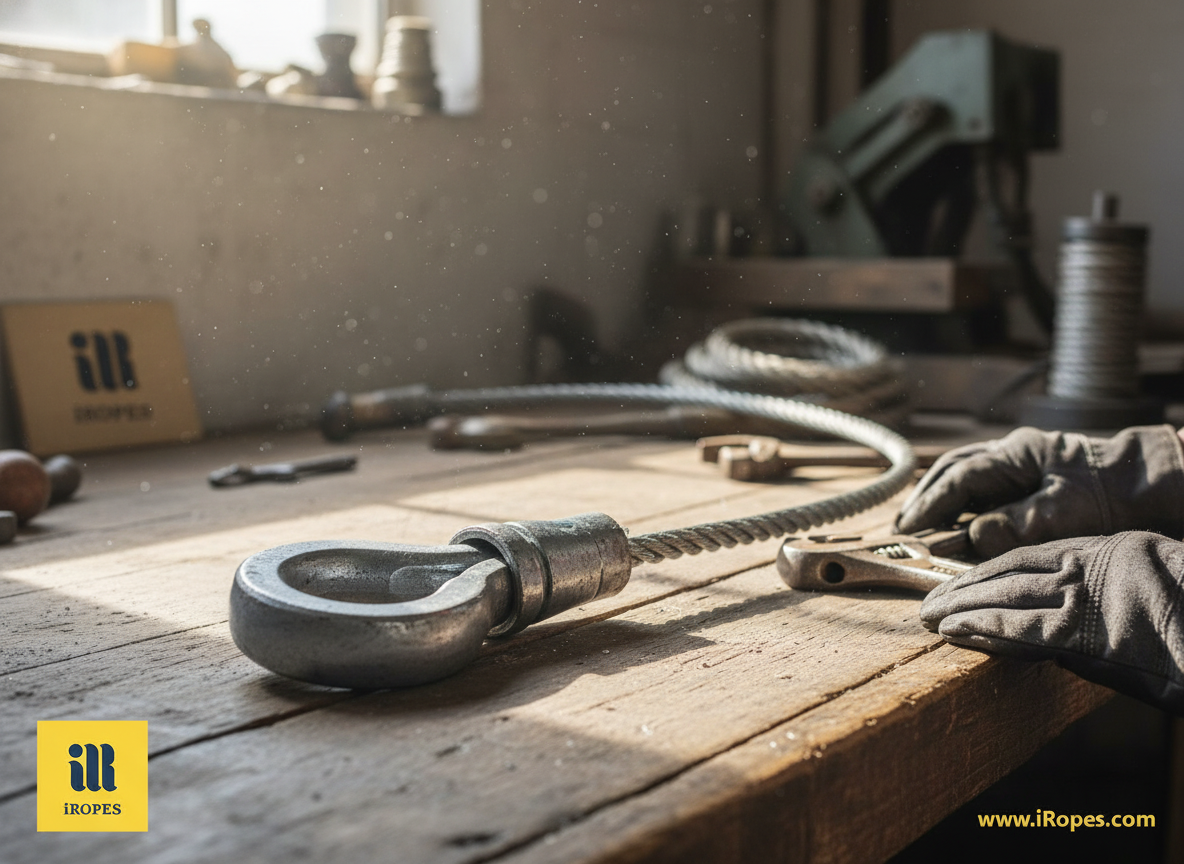
iRopes leverages its ISO-9001-certified facilities to customise every element of a sling wire rope—from strand count and core type to colour‑coded finishes—ensuring each product aligns perfectly with a client’s engineering specifications and branding.
By understanding these foundational components, engineers can confidently specify the appropriate rope wire sling for any load scenario. The next section explores the myriad configurations—single‑leg, multi‑leg bridle, and specialised eye types—that translate these core characteristics into practical lifting solutions.
Choosing the right wire rope sling: Types, Configurations, and Applications
Having explored the core construction of a sling wire rope, the next logical step is to match those mechanical attributes to real‑world lifting scenarios. Engineers select a configuration that balances load distribution, flexibility, and ease of rigging, ensuring the sling performs reliably throughout its service life.
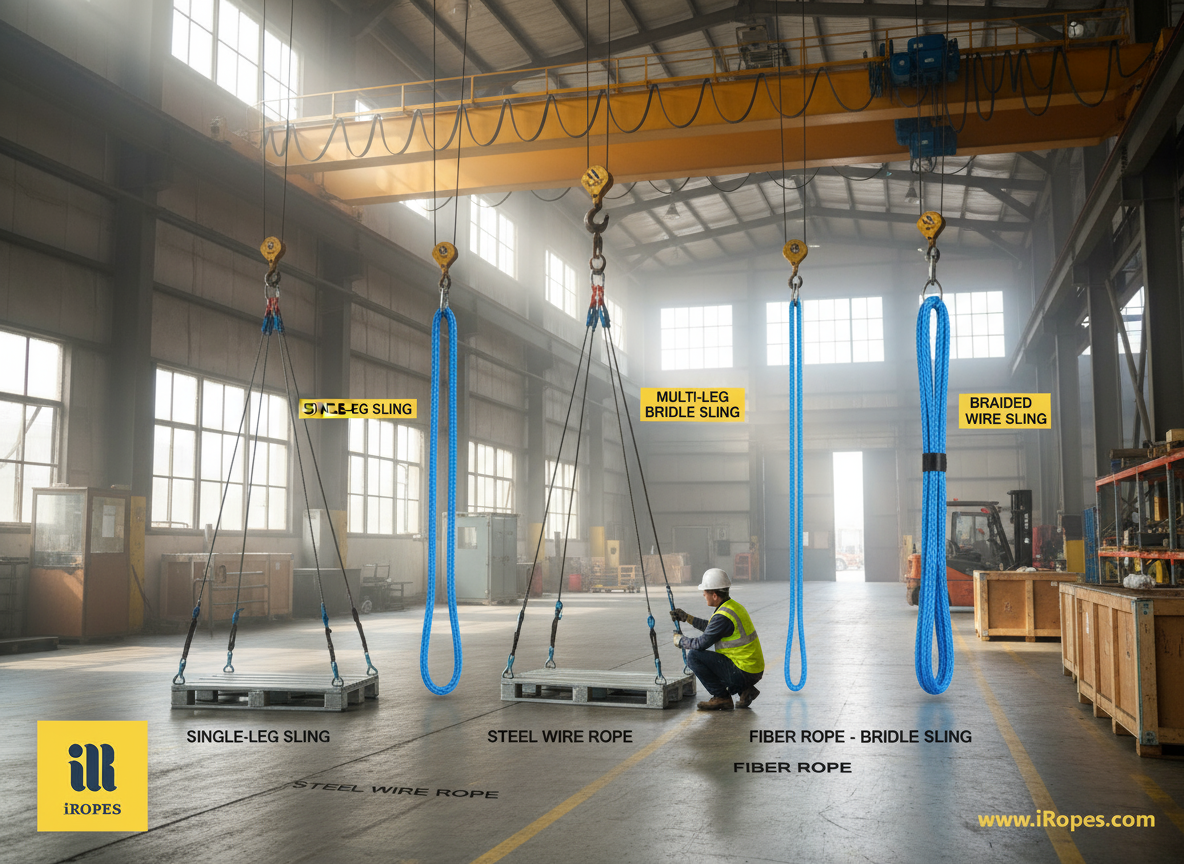
The most common families of a rope wire sling are:
- Single‑leg sling
- Multi‑leg bridle sling
- Braided sling
A single‑leg sling features one eye at each end and is ideal when a vertical lift is required or when space constraints limit the use of a bridle. Multi‑leg bridle slings—available in double, triple, or quad arrangements—distribute the load across several legs, reducing stress on any single point and providing greater stability for irregular or off‑centre loads. Braided slings consist of three to nine interwoven strands, delivering exceptional flexibility while maintaining the high tensile strength characteristic of steel wire, which makes them popular for applications that demand frequent bending, such as rigging on yachts or in off‑road recovery.
Standard Eye
Soft-eye termination that fits most hooks; easy to install and inspect.
Thimbled Eye
A metal thimble protects the eye from wear, extending service life in abrasive environments.
Off‑Road
Heavy-duty bridle slings resist mud, sand, and sharp debris encountered on recovery sites.
Yachting
Braided slings provide the flexibility needed to navigate tight deck spaces while withstanding marine corrosion.
iRopes’ OEM/ODM capability transforms these generic configurations into bespoke solutions. Clients can specify strand count, core type, eye termination, colour‑coding, and even reflective inserts. All products are processed through ISO‑9001‑certified production lines that guarantee repeatable quality and full IP protection. By aligning the chosen configuration with the demands of off‑road recovery, yacht rigging, or defence logistics, customers receive a rope wire sling that is engineered for the exact load path, environment, and handling routine they face.
The discussion of configurations naturally leads to the next critical topic: how safety standards, inspection routines, and capacity calculations ensure that every customised wire rope sling delivers its promised performance throughout its operational life.
Ensuring safety and performance with rope wire sling: Standards, Inspection, and Capacity
Compliance with recognised safety standards forms the foundation of any reliable lifting operation. In the realm of industrial rigging, the two benchmarks that dictate design, testing, and marking requirements are ASME B30.9 – the standard for wire rope slings – and OSHA 1910.184, which enforces workplace safety for lifting equipment. Both documents demand that a rope wire sling carries a clearly stamped Working Load Limit (WLL), that its construction be verified by proof‑testing, and that routine inspections be documented in accordance with a fixed schedule.
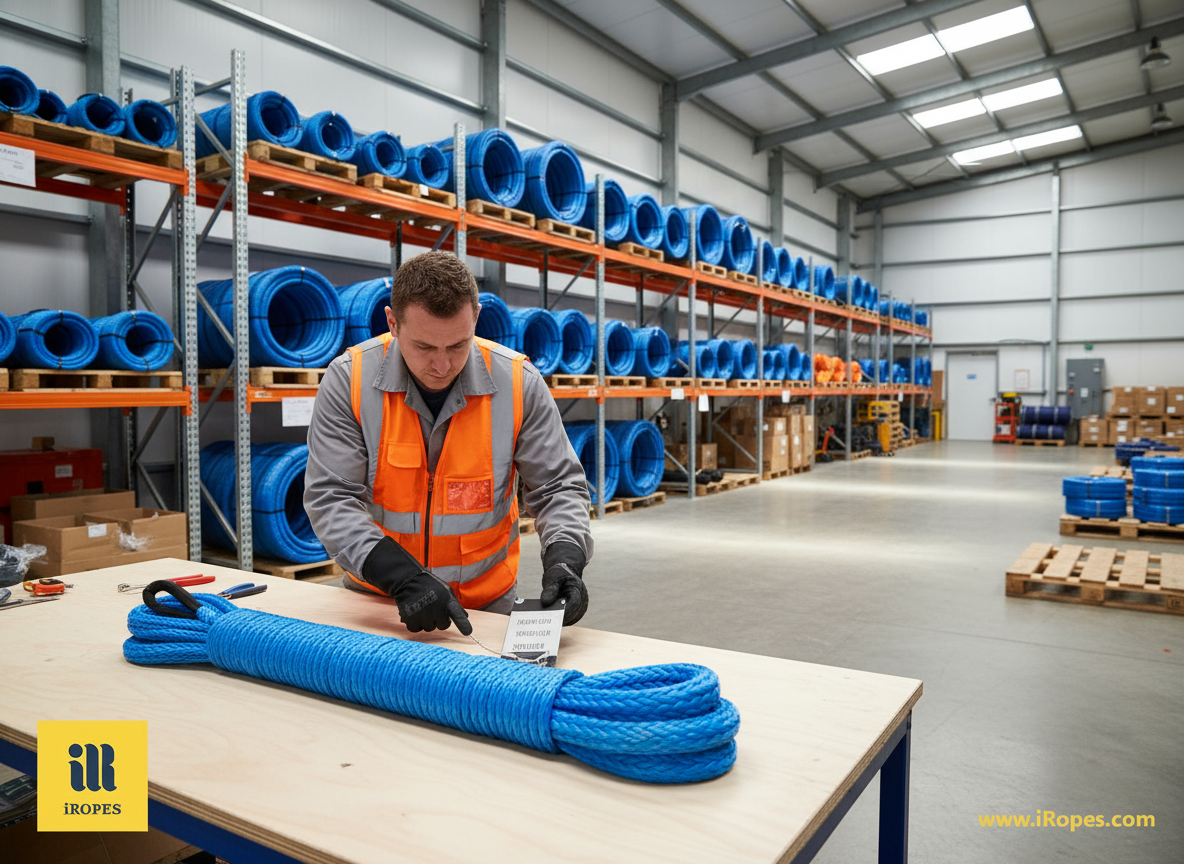
When a sling is taken out of service, the inspection routine is the first line of defence against catastrophic failure. The following points form a concise checklist that aligns with both standards:
Inspection Essentials
Confirm that the identification tag is legible and matches the marked WLL. Look for broken or kinked wires, corrosion at the eye or thimble, and any abrasion on the sheath. Verify that the core is intact and that no oil, grease, or chemicals have soaked the rope. Check that the eye termination (Flemish splice, thimble, or standard eye) shows no cracks or deformations. Ensure that the sling is stored on a rack that prevents crushing or exposure to sharp edges.
Beyond inspection, accurate capacity calculation is vital. The WLL printed on the sling assumes a vertical lift. When the sling is used as a choker or basket hitch, the effective capacity drops because the load is shared across an angle. A common industry rule is to multiply the vertical WLL by the cosine of the hitch angle. For example, for a 30° choker, the capacity is roughly 86% of the vertical rating, and at 45°, it falls to about 71%. Basket hitches introduce even larger reductions, typically 60‑70% of the vertical WLL, depending on the number of legs and the angle between them. Engineers must apply these factors before certifying a lift.
iRopes reinforces every safety step with its own quality ecosystem. All rope wire slings leave the factory under ISO 9001‑certified control, meaning each batch undergoes proof‑testing, dimensional verification, and traceable documentation. The company’s IP protection policy guarantees that bespoke designs – such as custom colour‑coding, reflective inserts, or proprietary eye configurations – remain exclusive to the client throughout production and delivery. Moreover, iRopes’ expertise in tailoring ropes means you can customize your perfect rope to meet exact performance, branding, and regulatory needs.
Having clarified the regulatory backdrop and the practical steps for maintaining capacity, the next discussion will explore how iRopes’ custom‑engineering approach translates these safety principles into tailor‑made solutions for niche industries.
Need a Bespoke Sling Solution?
After reviewing the core construction, configurations, and safety standards of a sling wire rope, it’s clear why a high‑grade wire rope sling remains the go‑to choice for demanding lifts. However, fibre ropes can offer lighter weight and superior flexibility for applications such as rescue, camping, or marine rigging. To understand the trade‑offs, compare the two in our Steel Cable Rope vs Synthetic Rope guide. iRopes’ ISO‑9001‑certified engineering can blend these benefits, delivering a customised rope wire sling that meets your exact load, environment, and branding requirements.
For personalised guidance on the ideal rope type or a fully custom‑designed sling, please complete the enquiry form above, and our specialists will be in touch.