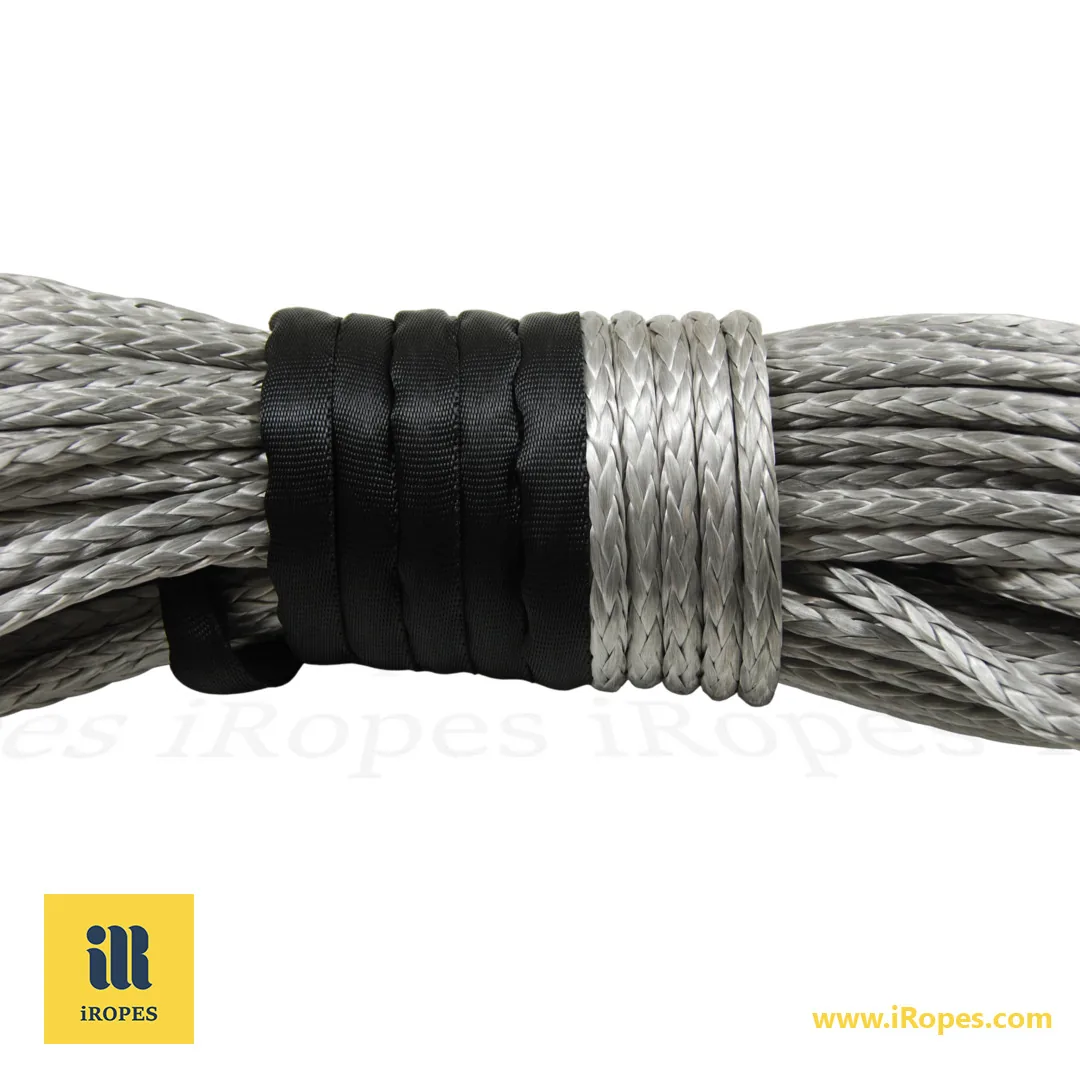
HMPE‑core double‑braid ropes can deliver up to 5× the breaking load of polyester (and roughly 4× nylon), while polyester offers low stretch and strong UV stability for everyday pulling.
What you’ll gain – approx. 3‑minute read
- ✓ Boost pull capacity by up to 500% by selecting the optimal core material.
- ✓ Keep elongation under 1% for precision work and smoother control.
- ✓ Avoid over‑specifying and keep total rope spend under control.
- ✓ Request a custom quote through iRopes’ OEM/ODM team.
When evaluating double braid rope core strength, some teams default to a nylon core on price. That choice can leave performance on the table and raise maintenance over time. A switch to polyester or HMPE can lift pulling capacity while cutting stretch. In the sections below, we outline the calculations, material trade‑offs, and how iRopes tailors a rope that outperforms the status quo.
double braid rope core strength
Before diving into numbers, it helps to understand why the core matters. In a double‑braid, the core largely determines how much pull the rope can safely deliver.
What is a double braid rope? It is a rope built from two concentric braids: an inner core braid and an outer sheath braid, braided in opposite directions to create a torque‑balanced lay for a smooth, predictable pull.

The inner braid typically carries the majority of the load, translating into a measurable strength advantage.
- Core contribution – roughly 70 % to 85 % of the total breaking strength originates from the inner braid.
- Load distribution – the outer sheath picks up the remaining 15 % to 30 %, enhancing abrasion resistance.
- Safety implication – a strong core yields a higher safe working load (SWL) at a given safety factor.
Below is a quick reference for common diameters of a polyester‑based double‑braid. Breaking‑load figures align with widely published industry specifications consistent with Cordage Institute practice; SWL uses a 10:1 safety factor. Always follow applicable standards for your application.
| Diameter (inches) | Breaking load (lb) | SWL (lb) |
|---|---|---|
| 3/16" | 1 450 | 145 |
| 1/4" | 1 935 | 193 |
| 5/16" | 2 720 | 272 |
| 3/8" | 3 560 | 356 |
| 1/2" | 6 250 | 625 |
| 5/8" | 11 250 | 1 125 |
| 1" | 28 100 | 2 810 |
“In a double‑braid, the inner core typically carries 70–85 % of the rope’s breaking strength, and polyester designs can keep elongation below 2 %. That balance is why professionals trust it for high‑pull applications.” – Industry guidance aligned with Cordage Institute practice
Understanding that the core supplies the lion’s share of strength makes material selection the next critical decision. In the following section we’ll compare common core materials—nylon, polyester woven rope, flat tape, and HMPE—to see how each influences the numbers you just reviewed.
braided core
Building on the insight that the inner braid supplies most of the pull capacity, the material chosen for that braid becomes decisive. Different fibres balance tensile strength, stretch, and environmental resistance, allowing engineers to match a core to the exact demands of a pulling application.

Material Options
Core choices for double‑braid rope
Nylon
High elasticity (≈3 % stretch at 50 % load) gives shock absorption, and ultimate tensile capacity is typically about 20 % higher than polyester.
Polyester Woven
Balanced strength and low elongation (≈2 % at 50 % load); excellent UV resistance makes it a workhorse for outdoor rigs.
Flat Tape
Flat‑profile construction reduces bulk, ideal for tight sheaves; strength is similar to woven polyester with potentially faster abrasion wear.
Performance Highlights
How the materials stack up
HMPE (Dyneema)
Approximately five times the tensile strength of polyester, with elongation under 1 %; the premium choice for the strongest double‑braid pulling rope.
Strength Ratio
HMPE ≈ 5× polyester; nylon ≈ 1.2× polyester. These factors shape double braid rope core strength tables and sizing decisions.
Durability
Polyester and HMPE resist UV degradation; nylon excels in dynamic loading but weathers faster under sunlight.
- HMPE (Dyneema) – the strongest type of braided rope, delivering the highest tensile capacity with minimal stretch.
- Nylon – higher strength than polyester with useful elasticity for shock‑absorbing applications.
- Polyester – a well‑rounded option offering low elongation and excellent weather resistance.
When iRopes engineers a custom double‑braid pulling rope, the material selection for the braided core directly determines the figures that appear in the double braid rope core strength tables. By matching HMPE for maximum pull, nylon for higher strength with more elasticity, or polyester for balanced low‑stretch performance, customers obtain a rope that aligns precisely with their operational safety margins.
double braid pulling rope
Having explored the merits of nylon, polyester woven rope and HMPE cores, the next logical question is how the load travels through a double‑braid system. Understanding the internal mechanics helps engineers size the rope correctly and choose the right termination.

When users ask whether “the load is shared equally on both the inner and outer cores”, the answer is a qualified no. In a typical double braid pulling rope the inner braided core bears roughly 55 % of the tension, leaving the outer sheath to handle the remaining 45 %. This split stems from the torque‑balanced construction, which channels most of the axial force through the tighter‑packed core fibres.
The way the rope is terminated can shift that balance. An eye splice, cut and tapered to follow the rope’s fibre direction, preserves the original 55/45 ratio and usually retains up to 95 % of the rope’s breaking load. By contrast, a mechanical or swaged fitting concentrates stress at the metal‑to‑fibre interface, which can nudge the share toward an even split and reduce the overall efficiency.
Splice Type
Eye splice retains up to 95 % of the rope’s breaking load, preserving the core‑share ratio.
Load Share
Core ≈ 55 %; sheath ≈ 45 % under typical tension, shifting slightly with splice geometry.
Eye Splice
Creates a smooth termination, minimising stress concentrations and maintaining high efficiency.
Mechanical
Swaged or metal‑fitted ends can increase load on the sheath and reduce overall efficiency compared to a splice.
With the load‑share ratio clarified, calculating a safe working load (SWL) becomes straightforward. The industry‑standard formula is:
SWL = Breaking Load ÷ Safety Factor
For example, a 5/16 in double‑braid rope with a certified breaking load of 2 720 lb and a safety factor of 10:1 yields an SWL of 272 lb. Applying a 10:1 factor accounts for dynamic shocks, wear and any splice‑induced stress.
Always apply an appropriate safety factor (commonly 5:1 to 10:1) when calculating SWL, and follow applicable standards for your industry.
These calculations feed directly into iRopes’ OEM design tools, ensuring that every customised double braid pulling rope meets the exact load‑capacity and splice‑type requirements of the end‑user. The next section will showcase how those specifications translate into real‑world applications across arborist pull‑lines, marine winches and industrial rigging.
customisation and applications
Having clarified how load is shared inside a double‑braid pulling rope, the next logical step is to look at how iRopes turns those engineering numbers into a product that fits a specific job. From the moment a client defines a required breaking load, the company can tweak everything – core material, diameter, colour, and finishing accessories – with dedicated IP protection and ISO 9001‑backed quality assurance.

iRopes’ OEM/ODM platform lets engineers select the exact braided core they need – whether it is a high‑modulus polyethylene (HMPE) filament for maximum tensile capacity, a polyester weave for balanced performance, or a nylon strand when shock absorption is critical. Once the core is fixed, the outer sheath can be specified in common diameters from 3/16 in to 1 in, with custom colour options to align with brand guidelines. Accessories such as thimbles and looped terminations are added on the production line, and every step is protected by iRopes’ dedicated IP safeguards.
Packaging is treated as part of the service rather than an afterthought. iRopes can provide non‑branded or customer‑branded packaging in bags, colour boxes, or cartons. For wholesale customers, palletised shipments are arranged directly to the destination, with punctual order fulfilment to locations worldwide.
OEM / ODM Highlights
• Material selection – choose HMPE, polyester, nylon or flat‑tape cores.
• Diameter & colour – precise control across common diameters (e.g., 3/16 in to 1 in) and custom colours.
• Accessories – eye splices, metal thimbles, looped terminations.
• IP protection – confidential design and branding support throughout production.
Real‑world users illustrate the breadth of iRopes’ custom solutions. Arborists trust a 5/16 in polyester‑core rope, colour‑coded lime‑green, for pulling dead‑tree limbs through dense canopy because the sheath’s abrasion resistance prolongs service life. A marine salvage crew specified a 7/8 in HMPE‑core line with a bright‑yellow sheath to increase visibility during night‑time winch operations, while an industrial rigging team requested a flat‑tape core to reduce bulk when threading through narrow sheaves. Rescue organisations often select a nylon‑core rope for added elasticity, paired with eye splices to maintain high efficiency.
One of iRopes’ demanding projects involved supplying a utility company with a 5,800‑ft double‑braid rope, custom‑coloured navy‑blue and terminated with reinforced eye splices. The line had to sustain repeated pulling cycles on a high‑voltage line‑maintenance winch; the chosen HMPE core provided substantial reserve strength, while the outer polyester sheath delivered abrasion protection against steel‑cable drums. The order shipped in stackable cartons on pallets and arrived on schedule at the utility’s regional depot.
Ready to tailor your rope?
Answer the question “Can I customize the core material or colour?” with a simple yes – iRopes’ design team will build a specification sheet that matches your exact pull‑capacity and branding needs.
These examples demonstrate that whether the application is high‑rise arboriculture, offshore winching, heavy‑industry rigging, or emergency rescue, iRopes can translate a load‑share calculation into a rope that arrives ready to perform. The next part of the guide will recap the key takeaways and invite readers to start their own custom‑quote journey.
Get a personalised double‑braid solution
You've seen how the inner core supplies the lion's share of pull, why material choice – from nylon to polyester woven rope or flat tape – drives the double braid rope core strength, and how load‑share ratios influence safe working loads. By selecting the right braided core and finish, iRopes can turn those calculations into a double braid pulling rope that meets your exact performance, branding and IP requirements.
For a custom specification sheet or advice on the ideal core material for your application, simply complete the enquiry form above – our engineers are ready to help you optimise every metre.