Proper terminations can preserve about 95% of a rope’s MBL when spliced correctly and markedly reduce slippage compared with poorly fitted hardware.
What you’ll gain (≈3 min read)
- ✓ Clear steps for choosing and installing rope end clamps
- ✓ Practical guidance to configure a reliable winch rope end
- ✓ A proven double braid end to end splice method for high strength
- ✓ iRopes OEM/ODM support backed by ISO 9001 quality systems
Most rigs still rely on generic metal fittings that can compromise performance, even though smarter terminations are within easy reach. In the sections below, we outline clamp selection, winch rope end engineering, and a seven‑step splice. Together, these practices help you keep more of the rope’s strength and improve reliability without redesigning the entire system. You’ll see where rope end clamps excel, how to build a robust winch rope end, and why a double braid end to end splice often delivers the highest strength retention.
Choosing the Right rope end clamps for Strength and Safety
After highlighting how a poorly terminated rope can cause failure, the next step is to focus on the hardware that locks the rope in place. Selecting the proper rope end clamps preserves tensile strength and simplifies maintenance throughout the rope’s service life.
Types of clamps and their ideal applications
Three families dominate the market: U‑bolt clamps for static, high‑load scenarios; screw‑type clamps that offer fine torque adjustment; and spring‑type clamps prized for quick installation on temporary rigs. Each design balances ease of use with load‑bearing capacity, letting you match the clamp to the job’s specific demands.
Material selection, diameter matching and safety factor
Stainless steel provides corrosion resistance in marine or humid environments, while alloy‑based clamps deliver a high strength‑to‑weight ratio for lightweight applications. The clamp’s inner throat must accommodate the rope’s diameter without pinching or crushing fibres. Applying a safety factor of at least 5× the expected load (WLL = MBL ÷ 5) keeps rope end clamps working within safe limits.
Installation – positioning, torque and tightening sequence
Correct installation is a three‑step routine that eliminates slippage and uneven wear. Follow the numbered guide below, then verify the assembly with a calibrated torque wrench.
- Align the clamp evenly over the rope strands, ensuring no fibres are trapped.
- Secure the bolt or screw to the manufacturer‑specified torque value.
- Inspect the finished joint, then re‑tighten after the first load cycle.
Maintenance, inspection and the answer to “What are the best rope end clamps?”
Regular visual checks for corrosion, bolt loosening or fibre gouging keep the system safe. When asked which clamps perform best, the answer depends on load, environment and accessibility. Below is a side‑by‑side comparison that summarises reliable options for common use‑cases.
U‑bolt & Spring‑type
Simple, high‑load options
U‑bolt clamp
Bolted over the rope; suitable for static loads up to about 4 kN.
Spring clamp
Self‑tightening, quick install for temporary or medium‑duty tasks.
Heavy‑duty alloy
High strength with excellent wear resistance for demanding conditions.
Screw‑type & Alloy
Adjustable, corrosion‑resistant
Screw‑type clamp
Precise torque control; easy to re‑torque after inspection.
Stainless‑steel screw
Corrosion‑resistant performance for outdoor and marine applications.
Compact low‑profile
Fits tight spaces on winch drums and rigging loops.
By pairing the right clamp material with proper torque and periodic inspection, you protect the rope’s integrity and minimise downtime. Once the clamp is securely in place, the same attention to detail will guide you through engineering a robust winch rope end for heavy‑duty tasks.
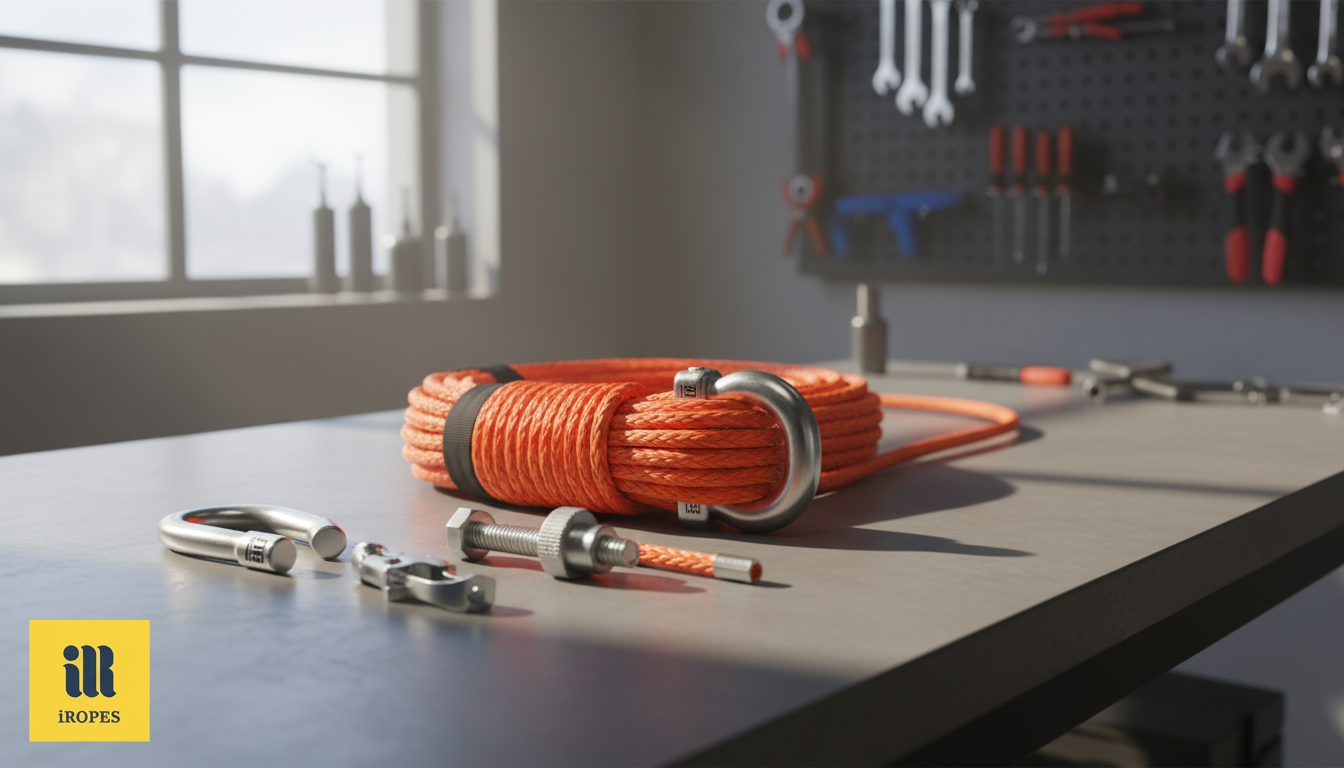
Designing a Reliable Winch Rope End for Heavy‑Duty Applications
When the clamp discussion ends, the focus shifts to the component that bears the pull – the winch rope end. A winch rope end is the terminating arrangement that connects a rope to a winch drum, commonly presented as a single wrap with an anchor, a double wrap for added grip, or a spliced eye. Selecting the right configuration determines how smoothly power is transferred and how long the system lasts.

Definition and common configurations
In a single‑wrap setup the rope anchors directly to the drum for straightforward installations. A double‑wrap increases contact area on the drum and helps spread load. A spliced eye pairs with a thimble or hook, saving weight while keeping most of the rope’s strength.
Material and size considerations
Polyester offers excellent UV resistance and low stretch, making it a go‑to for marine winches. Double‑braid constructions combine a high‑strength core with a protective outer cover, delivering the rigidity required for high‑torque applications. HMPE ropes (for example, AmSteel) provide very high strength‑to‑weight ratios where minimal elongation matters. Match the rope diameter to the drum groove and fittings; avoid grooves that are too tight or too loose, which can cause edge‑cutting or flattening.
Installation and tensioning procedure
- Position the rope – lay the rope flat on the drum, ensuring the wrap or eye sits evenly without twists.
- Secure the eye or anchor – fasten through the drum’s anchor point and tighten to the manufacturer’s torque specification.
- Apply tension – rotate the winch slowly while monitoring alignment; stop if the strands distort or bind.
- Verify fasteners – re‑check the fastening torque after the first load cycle to confirm stability.
- Document settings – record final torque and rope condition in the maintenance log for traceability.
Strength calculations and safety factor
Engineers commonly calculate the working load limit (WLL) by dividing the rope’s minimum breaking load (MBL) by five. For a 12 mm polyester rope with an MBL of 30 kN, the WLL works out to 6 kN. This figure guides the selection of both the rope size and the winch drum rating, helping keep the assembly within safe limits, even under moderate shock loads.
“A well‑designed winch rope end can extend service intervals and reduce unplanned adjustments.” – Senior Rigging Engineer, iRopes
By pairing the appropriate material with a configuration that matches the winch’s duty cycle, operators gain both strength and durability. iRopes offers OEM‑engineered winch rope ends that integrate with custom drum designs, delivering the exact performance required for heavy‑duty tasks.
Mastering the double braid end to end splice for Maximum Load Retention
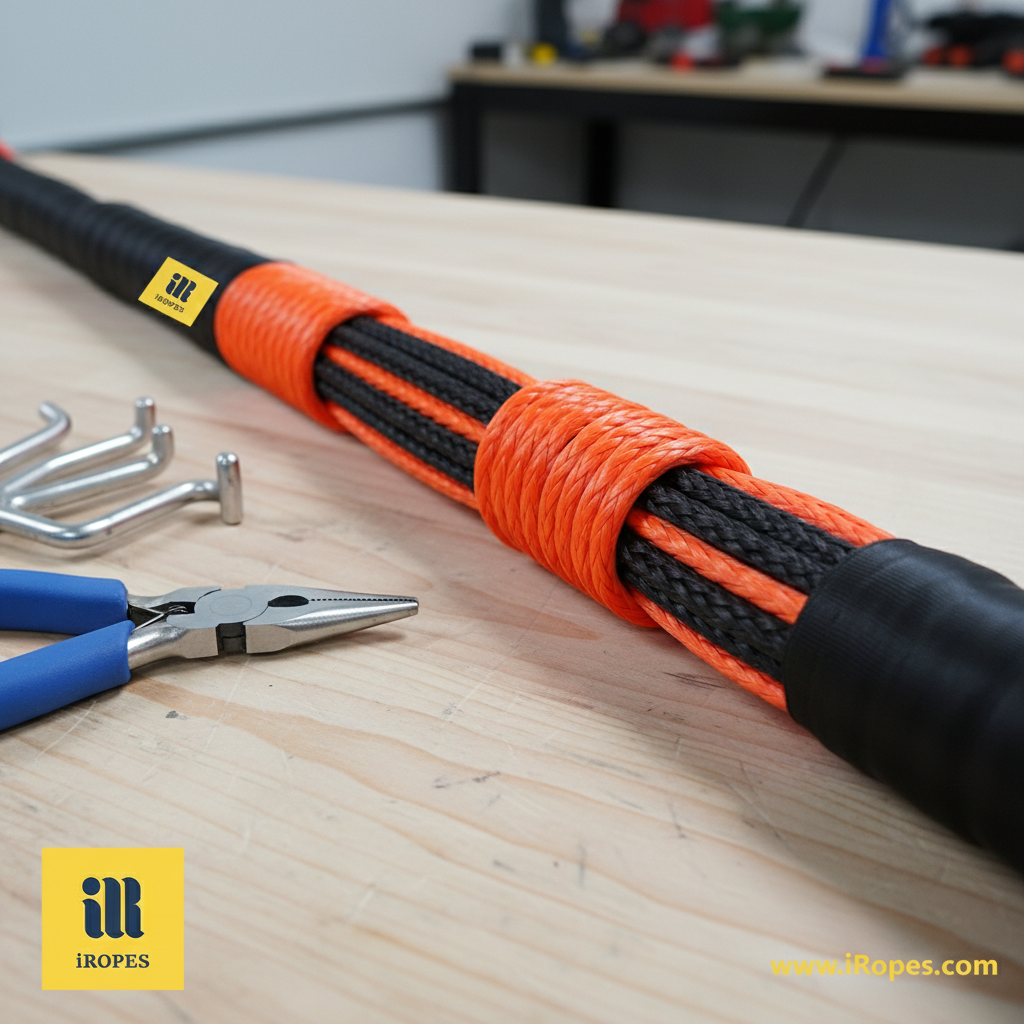
After you’ve fitted a robust winch rope end, the final upgrade is the splice that locks two rope ends together without a metal fitting. A double braid end to end splice is favoured when the load path must stay fibre‑to‑fibre, when weight savings matter, or when you need a low‑profile termination that still meets a high safety factor. Compared with a rope end clamp, the splice eliminates bulky hardware and often reduces stress concentrations, which translates into longer service life.
Before you start, give the rope a quick visual inspection – look for frayed strands or contaminated sections. Then follow these preparation steps: mark both ends, tag the strands to keep the lay order, and create a gradual taper so the fibres interlock smoothly during the bury. A smooth taper helps the splice seat evenly under load.
7‑Step Double‑Braid End‑to‑End Splice
1. Measure and mark – set bury and taper lengths appropriate to rope diameter.
2. Extract cores – open the cover and mark crossover points on each rope end.
3. Bury covers – bury each cover tail into the opposite cover to the marked depth.
4. Core‑to‑core join – interlock or long‑bury the cores, keeping the original braid angle.
5. Taper tails – gradually taper both core and cover tails for a smooth transition.
6. Milk and set – milk the covers over the buries, then tension the splice to seat it fully.
7. Secure and inspect – lock‑stitch or whip the splice and check for uniform diameter.
The answer to the common query “How do you splice two rope ends together?” is essentially the seven steps outlined above, each designed to keep the load path continuous and the fibres aligned. For a deeper dive, see our guide on different rope splicing techniques. When performed correctly, the splice retains roughly 95% of the original rope strength. For example, a 12 mm double‑braid rope with a 30 kN minimum breaking load will still support about 28.5 kN after splicing.
Strength retention: splice ≈ 95% of rope MBL; use WLL = MBL ÷ 5 for conservative design.
With the splice completed, the system can align with ISO 9001 quality processes and applicable OSHA, ASTM and EN guidelines, ensuring every termination – clamp, winch end or splice – is straightforward to inspect and maintain for the long term.
Safety Standards and Best Practices for All Rope Terminations
After perfecting the splice, verify that every termination follows recognised safety rules. By aligning your rope system with established standards, you protect people and equipment while keeping downtime to a minimum.
Key references include ISO 9001 for quality management systems and OSHA guidance for safe equipment use and inspection routines. ASTM rope test methods define performance characteristics such as tensile strength and elongation, while EN 12385 addresses wire rope and termination practices relevant to certain winch systems. For fibre ropes, ISO 2307 sets out test methods and performance measurements. Together, these references help set sensible limits on load ratings, inspection intervals and documentation.
ISO 9001
Ensures every manufacturing step – from raw fibre to final clamp – follows a documented quality system.
OSHA
Requires safe equipment, regular inspections and records for any load‑bearing component used in the workplace.
ASTM rope standards
Define test methods for tensile strength, elongation and environmental performance for synthetic ropes.
EN‑12385
Addresses wire‑rope and termination practices; consider where winch systems use steel wire or related fittings.
iRopes builds its custom‑engineered clamps, winch rope ends and even double braid end‑to‑end splices to meet—or exceed—these benchmarks. Every batch leaves the factory with an ISO 9001 audit trail, and our engineering team validates installations against manufacturer torque specifications and applicable safety guidelines.
- Visual inspection – check for fibre fraying, clamp corrosion, or uneven wear at the winch rope end.
- Torque verification – use a calibrated wrench to confirm each bolt meets the manufacturer’s specification.
- Wear monitoring – measure rope diameter near terminations; significant reduction, glazing or flat spots indicate replacement.
Beyond the checklist, a few best‑practice habits can add years to your rig’s service life. Always store spare rope in a dry, shade‑protected rack to avoid UV‑induced weakening. When tightening rope end clamps, follow the recommended sequence: tighten opposite bolts a quarter‑turn at a time, then re‑check after the first load cycle. For winch rope ends, keep the loop or wrap centred on the drum groove; a misaligned eye accelerates edge‑cutting. Finally, if you employ a double braid end‑to‑end splice, trim any loose fibres flush with the cover and secure the splice with lock stitching or whipping before service.
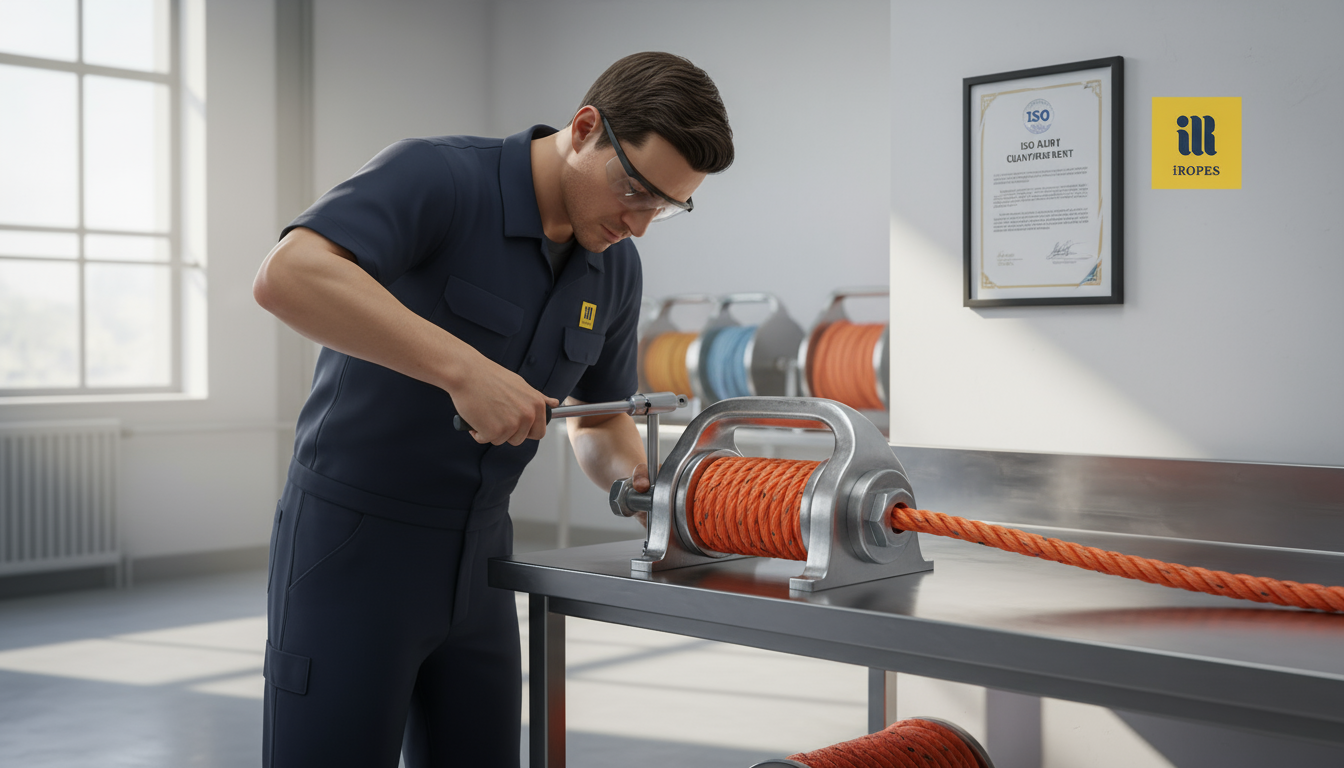
By embedding these standards into your daily workflow and choosing iRopes’ certified components, you create a safety net that supports heavy‑duty lifts, offshore winches and any application where rope failure is simply not an option.
Get a personalised rope termination design
By pairing the right rope end clamps with a properly sized winch rope end and mastering the double braid end‑to‑end splice, you can retain up to 95% of the rope’s strength and align with ISO 9001, OSHA and relevant ASTM/EN standards. Fibre braided ropes are at the core of our expertise, and we can offer a variety of higher‑strength buckle methods to suit demanding applications. Our OEM/ODM services deliver custom designs, precise manufacturing, brand‑ready packaging and dedicated IP protection, so your rig benefits from a fully integrated, compliant system.
If you’d like a custom design or technical support, simply fill out the form above and our specialists will get in touch to help you optimise your rope system.
