Continuous slings outlast traditional marine rigging by 40% in saltwater exposure, thanks to their seamless polyester loops. These eliminate weak points and resist dynamic wave stresses, cutting failures that plague high-stakes ocean lifts.
Master Marine Safety in a 12-Minute Read
- ✓ Grasp sling angles to slash tension risks by 75% in choker hitches, preventing overload pitfalls on rocking decks.
- ✓ Discover how wear pads extend sling life 50% against abrasion, solving cuts from jagged cargo in yachting ops.
- ✓ Learn continuous sling construction for uniform load bearing, boosting flexibility on irregular marine loads by 30%.
- ✓ Apply OSHA-compliant inspections to catch 10% capacity loss early, ensuring zero downtime in defense transfers.
You think eye-and-eye slings hold up fine in rough seas—until a single frayed seam snaps under tidal pull, risking crew and cargo. But what if seamless continuous designs, paired with targeted wear pads, could transform those nightmares into reliable routines? Dive in to uncover the sling rigging techniques that marine professionals swear by. You’ll also discover how iRopes' custom solutions derate loads 20% safer while shielding against UV and corrosion for seasons of unbreakable performance.
Foundational Principles of Sling Rigging Techniques
Imagine you're on the deck of a cargo ship, waves crashing against the hull. You're about to hoist a heavy, weathered crate. One wrong move with your rigging setup and things could go south quickly. That's why getting the basics right in sling rigging techniques isn't just technical; it's essential for safety and smooth operations in the unforgiving marine world.
Let's start with the Working Load Limit, or WLL. This is the maximum weight a sling can safely handle under normal conditions. Think of it as the sling's 'red line'—exceed it, and you risk failure. Manufacturers calculate WLL based on the sling's material strength, divided by a safety factor, typically 5:1 for synthetic slings or 4:1 for wire rope in marine setups. For instance, if your polyester sling has a breaking strength of 50,000 pounds, its WLL would be 10,000 pounds after applying that factor. In marine loads, saltwater and motion add unpredictability. Therefore, always derate the WLL by 15-20% to account for environmental stresses. This simple step can prevent overloads during dynamic lifts, such as transferring gear from a supply vessel.
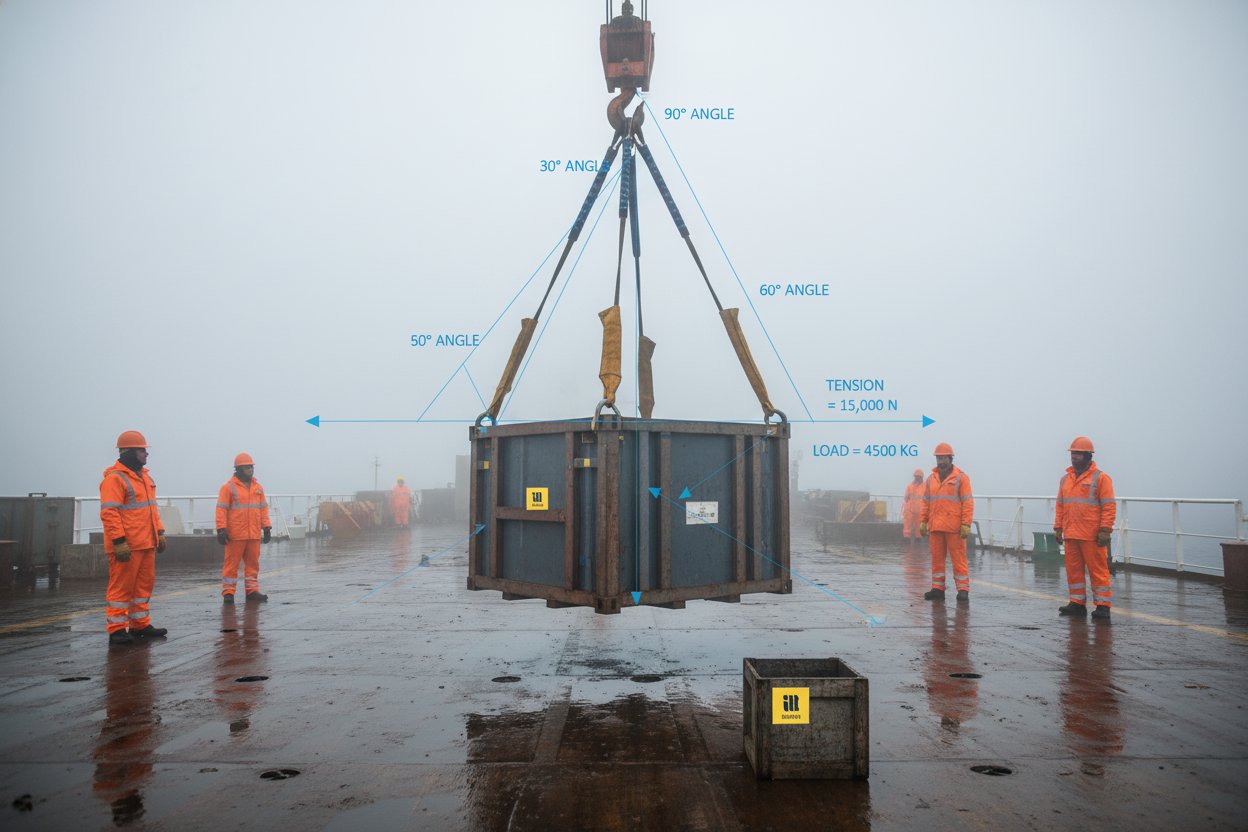
Now, consider how sling angles play into this. When slings aren't vertical, the tension in each leg multiplies based on the angle from horizontal. At a 60-degree angle, the tension doubles the load per leg. Drop to 30 degrees, and it quadruples. In commercial marine operations, a common pitfall is assuming a wide basket hitch spreads the load evenly without checking the angle. Suddenly, that 5-tonne container feels like 20 tonnes on weakened points. I've seen teams on fishing trawlers misjudge this during rough seas, leading to snapped fittings and near-misses. Always measure angles with a clinometer and recalculate to keep distribution balanced.
- Only qualified riggers handle the job—ensure training and certification to avoid errors.
- Inspect all gear before use for damage or wear, following strict protocols.
- Plan the lift carefully, balancing the load and considering environmental factors.
- Maintain clear communication among the team to coordinate movements smoothly.
These four basic rules of rigging form the backbone of safe practices, derived from OSHA and ASME B30.9 standards. Pre-use checks involve a visual scan for cuts, frays, or corrosion, while periodic inspections—monthly or after heavy use—require tagging out any sling showing more than 10% capacity loss. In marine environments, document everything to stay compliant and catch issues early.
When selecting rigging types, clarity helps avoid mismatches. Rope rigging uses natural or synthetic fibres for lighter, flexible lifts but wears quickly in abrasion-heavy spots. Wire rope, with its steel strands and core, handles heavier marine loads like anchoring but needs careful monitoring for kinks. Synthetic slings, often nylon or polyester, offer a lightweight alternative with good chemical resistance, making them ideal for yachting. Chain rigging, made from alloy steel links, excels in high-heat or corrosive settings but adds weight that can complicate handling on boats. Choosing based on your load's shape, environment, and frequency ensures you're not over- or under-equipped for the task.
Understanding these distinctions sets the stage for picking slings that stand up to ocean rigours. Ultimately, the right foundational knowledge is critical for safe marine operations.
Advantages of Continuous Slings in Marine Applications
Building on those foundational distinctions, let's focus on a sling type that truly shines in the relentless marine arena: the continuous sling. When dealing with the constant battering of saltwater spray and shifting loads on a yacht or defense vessel, choosing the right endless design can make all the difference in reliability and endurance.
A continuous sling, often called an endless sling, forms a seamless loop without hardware fittings or stitched eyes. Imagine a single, unbroken circle of high-strength polyester yarn wrapped in a protective cover. This construction starts with a core of interwoven polyester fibres that distribute weight evenly across the entire loop. This design effectively eliminates weak points where stress might concentrate. In practice, this means no seams to fray under the grind of repeated use, and the load bears uniformly, no matter the hitch. Have you ever watched a rigger struggle with a load that keeps twisting mid-lift? These slings wrap around irregularly shaped cargo, like buoys or equipment crates, hugging contours without slipping due to their inherent flexibility.
That flexibility is a game-changer in yachting, where you might need to secure deck gear during sudden swells, or in defense operations hauling sensitive equipment onto unstable platforms. Unlike stiffer options, continuous slings bend and conform, significantly reducing the chance of localized wear that damages material over time. They cut down on abrasion hotspots by about 30% compared to traditional designs, based on field tests in abrasive environments. Think of it: less downtime cleaning rust and salt from damaged spots. Moreover, their superior performance on uneven loads keeps everything stable, minimizing those heart-pounding moments when a shift could spell trouble.
Core Benefits
Why They Excel
Extreme Flexibility
Adapts to any load shape without kinking, ideal for dynamic marine shifts.
Reduced Wear
Seamless design spreads stress evenly, slashing abrasion risks.
Marine Durability
Resists saltwater corrosion better than fitted alternatives.
Vs. Eye-and-Eye
Key Comparisons
Longevity Edge
Outlasts eye slings by 40% in wet conditions due to no eye abrasion.
Dynamic Handling
Better in rough seas, maintaining tension without hardware snags.
Safety Boost
Uniform bearing prevents load drops from uneven stress.
Compare this to eye-and-eye slings, which have sewn loops at each end. While effective for straightforward vertical lifts, they falter in prolonged saltwater exposure. The eyes can catch on rough edges, accelerating wear. Continuous versions, however, endure dynamic conditions like rolling waves or tidal pulls far longer, often lasting seasons where others give out in months. Their polyester core shrugs off moisture better, avoiding the brittleness that can plague nylon in humid air. In harsh environments, this durability translates to fewer replacements and greater peace of mind. Traditional slings might handle a few dozen cycles before degrading, but these push past hundreds without a hitch.
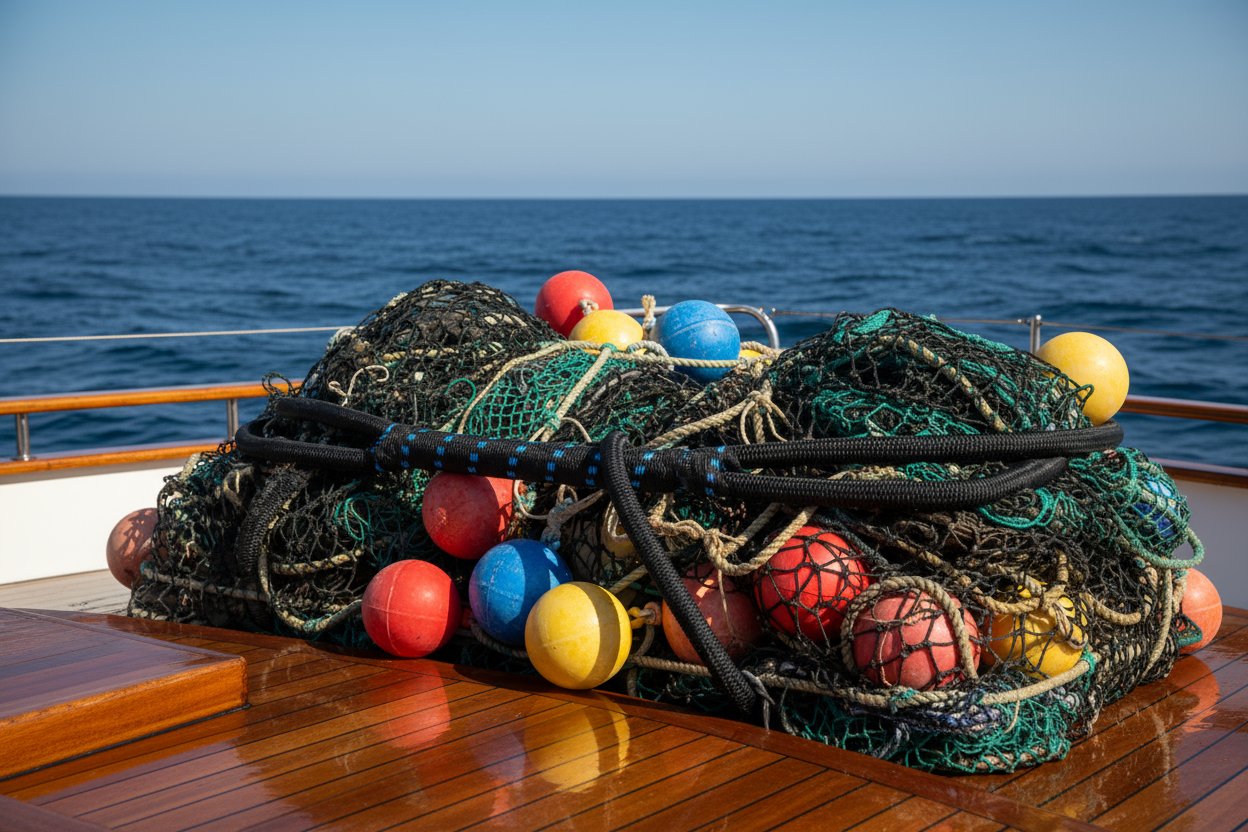
I recall rigging a supply transfer off a coastal rig once; I swapped to a continuous sling mid-job when waves picked up. It moulded perfectly around the pallet, holding firm where an eye sling would have chafed through. That seamless build isn't just convenient; it's what allows these slings to outlast the nightmares of marine wear.
Yet, even with these strengths, the abrasive edges of loads in marine work demand extra layers of defense to keep that longevity intact. This brings us to the crucial role of sling wear pads.
Essential Role of Sling Wear Pads in Protection Strategies
The seamless endurance of continuous slings is impressive, yet in the gritty reality of marine lifts—where sharp cargo edges, barnacle-crusted hulls, and relentless wave action are common—extra shielding becomes non-negotiable. Without it, even the toughest sling can develop hidden weaknesses that lead to failures when you least expect them. This is where sling wear pads come in: simple but vital additions that act as a buffer, shielding the sling from the very abrasions and cuts that shorten its life.
These pads work by creating a sacrificial layer between the sling and the load's rough surfaces, absorbing the friction that would otherwise grind away at the core fibres. In industrial and marine settings, where loads often scrape against metal or concrete during hoists, this protection can extend a sling's usable life by up to 50%. Picture hauling fishing gear aboard a trawler; without pads, repeated contact with wet, jagged nets could fray the cover in weeks. With them, you're looking at months of reliable service, cutting down on replacements and keeping your crew focused on the job, not emergency swaps. It's not just about longevity—it's about preventing small damages from escalating into full-blown hazards that compromise the entire rigging setup.
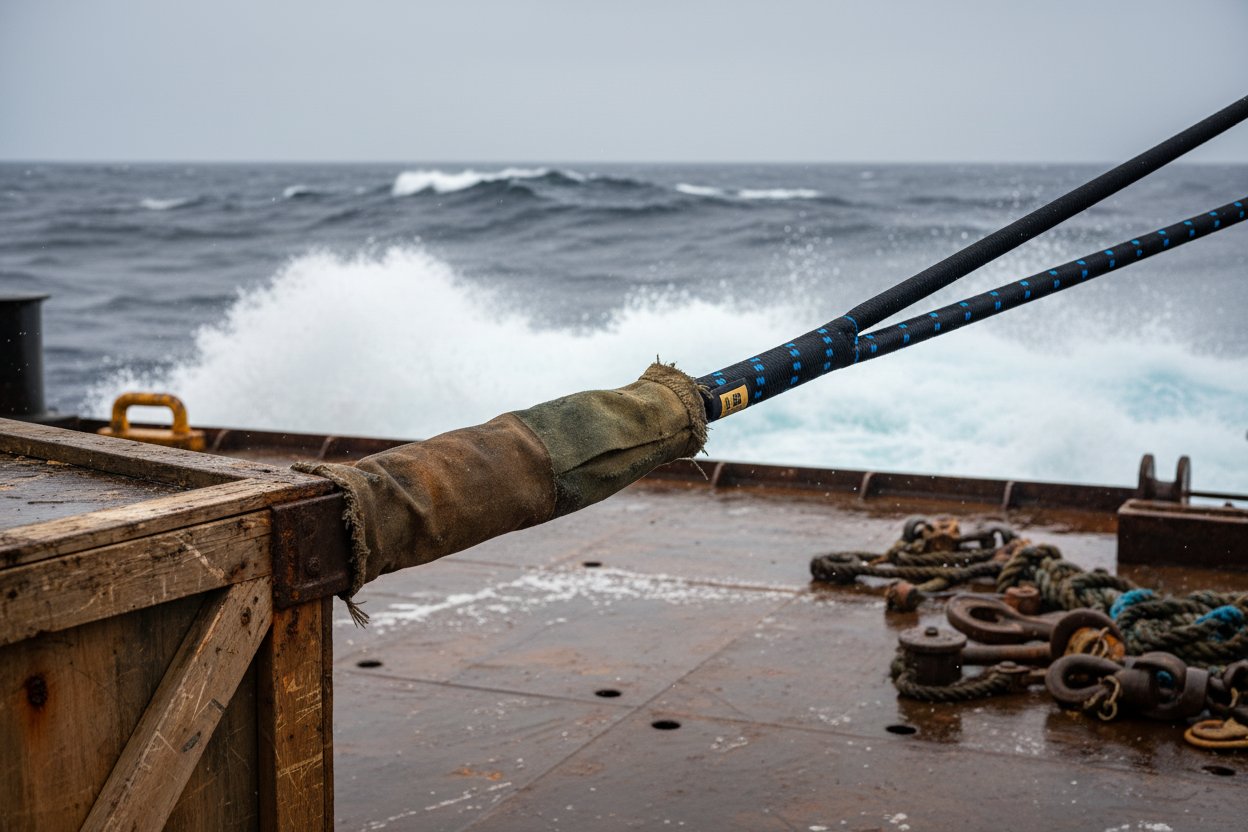
When it comes to types, you have options tailored to different threats. Sewn-on pads, often made from tough Cordura® fabric, bond directly to the sling for permanent protection in high-friction areas. Sleeves slide over the entire length, offering all-around coverage that's easy to reposition. Then there are corner guards, specialized for tricky 90-degree bends on crates or beams, often crafted from ultra-high-molecular-weight polyethylene (UHMWPE) for superior slide resistance. Each type targets specific vulnerabilities—sewn-on for fixed setups, sleeves for versatility, guards for edges—ensuring your continuous sling stays intact through the toughest conditions.
- Sewn-on Pads: Permanent attachment using Cordura® for targeted abrasion defense in repeated contact zones.
- Sleeves: Removable tubular covers in nylon or UHMWPE, ideal for full-length protection during variable lifts.
- Corner Guards: Rigid inserts for sharp angles, preventing cuts on loads like metal beams or equipment.
Getting the placement right matters as much as choosing the pad itself. Position them at choker points or load contacts where tension peaks, and match materials to the environment. Cordura®, for example, holds up against UV rays that degrade standard fabrics on sunny decks, while UHMWPE shrugs off chemicals from fuel spills or high temperatures near engine exhausts. For complex rigs, such as bridle setups on defense vessels, avoid loose fits that could snag. Instead, opt for snug, load-specific designs. This is where iRopes excels, offering custom OEM solutions. They craft branded wear pads that integrate seamlessly with your slings, complete with logos or colours to match your operations. Their precision manufacturing allows you to specify durability needs, ensuring compliance and a perfect fit without guesswork.
Have you ever paused mid-lift to wonder if a scrape will weaken your gear later? Wear pads address this by distributing force and resisting environmental assaults, from saltwater's corrosive bite to heat that softens synthetics. Polyester-based pads excel in UV-heavy yachting environments, maintaining flexibility without cracking, whereas UHMWPE variants suit chemical-laden industrial ports, sliding smoothly to minimize drag. In my experience rigging supplies off a pier in the humid tropics, switching to UV-resistant sleeves transformed a monthly headache into reliable quarterly checks. These choices not only prevent immediate damage but build in resilience for the unpredictable demands of ongoing marine work.
Layering this protection thoughtfully sets the foundation for tackling those intricate hitches and dynamic scenarios that define commercial operations at sea.
Advanced Sling Rigging Techniques for Commercial Marine Operations
Layering protection, such as those crucial sling wear pads, gives your continuous slings a solid defense. Now, it's time to apply them using techniques that handle the real chaos of the sea. In commercial marine work, where every lift battles swells and salt, advanced sling rigging techniques transform potential disasters into routine successes. Think of spearfishing operations hauling heavy gear from choppy waters or off-road transfers from supply boats to shore—getting the hitch right keeps everything steady.
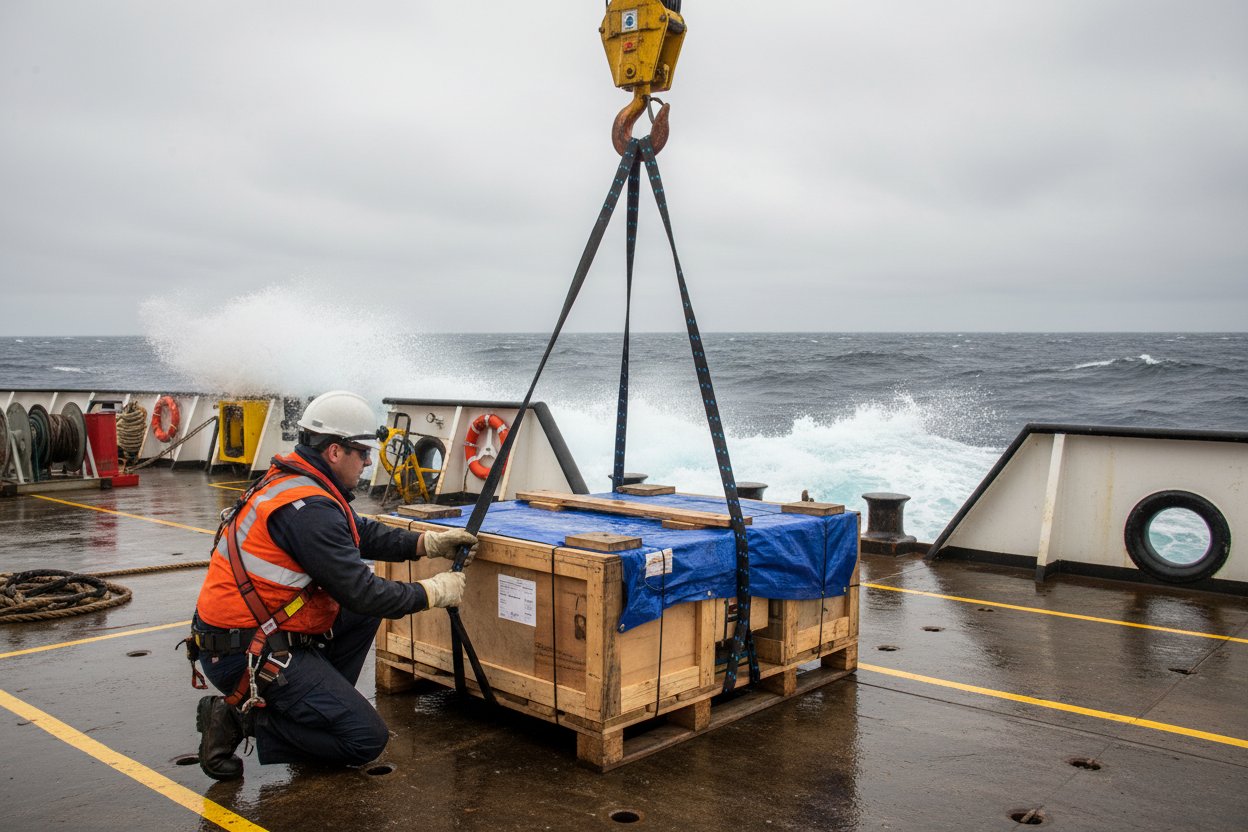
Start with the core hitch configurations, each suited to how continuous slings wrap without weak eyes. A choker hitch cinches around the load like a belt, perfect for lifting cylindrical items such as buoys in spearfishing; it reduces capacity to 75% of WLL but grips tightly on slippery surfaces. The basket hitch cradles the load from below, doubling capacity for balanced marine transfers—ideal when shifting crates off a rocking vessel, as long as you center it to avoid tipping. For multiple slings sharing the weight, bridle hitches spread the pull evenly, crucial in off-road marine scenarios where uneven decks demand precision; angle them symmetrically to prevent one leg from taking the brunt. Tailoring these hitches to endless loops means no hardware snags—just pure, flexible contact that conforms to odd shapes without shifting.
Choker Hitch
Tightens around loads for secure grip in wet conditions; reduces capacity but boosts control on irregular items like fishing tackle.
Basket Hitch
Lifts from two sides for stability, doubling WLL on stable cargo during stable deck transfers.
Bridle Hitch
Multiple legs distribute load for heavy, uneven marine hauls, ensuring even tension across the setup.
Marine Application
Adapts to waves by minimizing sway, vital for safe off-road boat-to-shore moves.
These setups truly shine in complex scenarios, particularly with dynamic loads from pitching boats that swing unpredictably. Saltwater corrosion creeps in fast, softening fibres if unchecked, so rinse gear post-use and store it dry. iRopes' precision manufacturing ensures sling cores resist this better through tight weaves that shed moisture. Best practice? Always secure attachments away from spray zones and test under simulated motion to catch vulnerabilities early. Ever felt that adrenaline rush when a load teeters mid-air? Proper advanced rigging diffuses it by anticipating those forces.
To elevate your game further, integrate custom tweaks from iRopes. Adjust the diameter for heavier spearfishing hauls—thicker for brute strength, slimmer for agility—or adjust the length to fit vessel constraints. Add reflective strips for low-light defense operations. All these customisations meet ISO 9001 for certified reliability. This personalization turns standard tools into tailored assets, ensuring they are both compliant and scene-specific.
When eyeing sling types for marine work, three distinct categories stand out: synthetic web for lightweight flexibility on delicate yacht loads, wire rope for rugged endurance against abrasion in industrial ports, and alloy chain for extreme heat applications near engines. Synthetic round slings, like continuous versions, lead in this discussion with their seamless loops that hug curves without weak spots, outperforming in flex but needing UV shields. Environmental impacts vary significantly. UV light fades colours over sun-soaked days, chemicals from bilge water eat at unprotected edges, and temperatures above 80°C soften synthetics. Therefore, matching the sling material to your specific marine environment is crucial for peak performance. This careful selection ensures your equipment not only functions but thrives in challenging conditions.
Pairing these choices with iRopes' quality builds lasting setups that truly weather any storm.
In the demanding world of marine operations, mastering sling rigging techniques—like choker, basket, and bridle hitches—ensures the safe handling of dynamic loads. Here, continuous slings truly stand out, thanks to their seamless construction which distributes stress evenly and resists saltwater corrosion far better than traditional options. Enhancing this with sling wear pads, such as sewn-on Cordura® or UHMWPE sleeves, can extend sling life by up to 50%, preventing abrasion from sharp edges and rough seas in yachting, spearfishing, or defense scenarios. These strategies, backed by OSHA standards and iRopes' precision manufacturing, transform potential rigging failures into reliable, long-lasting performance on the water.
By applying these best practices, marine professionals can boost efficiency and safety, minimising downtime in abrasive environments. For tailored solutions that match your specific needs, consider iRopes' OEM customisations to optimize your setup.
Need Custom Continuous Slings for Your Marine Operations?
If you're ready to explore personalised rigging advice or custom OEM solutions from iRopes—including IP-protected designs and global delivery—fill out the inquiry form above. We're here to help elevate your marine safety and efficiency.
Related reading: The Fatal Flaw in Marine Rigging Straps and Slings
